In practice, most people experiencing long-term fatigue aren’t lacking motivation or resilience. They’re depleted at a biochemical level. When the body is supported correctly — and given time — energy often returns gradually and sustainably.
Why am I always tired even when my blood tests are normal?
Standard blood tests measure circulating levels of nutrients and markers in the blood, which the body keeps stable even when deeper tissue reserves are depleted. This means blood tests can appear normal while long-term mineral depletion, adrenal stress patterns, and reduced energy production are already present at the cellular level. Hair Tissue Mineral Analysis (HTMA) looks at tissue mineral levels over a 2–3 month window, which can reveal patterns that blood tests miss — including slow oxidation, depleted stress minerals, and nervous system imbalance linked to persistent fatigue.
What is the difference between burnout and chronic fatigue?
Burnout is the process — the long-term depletion that builds when stress exceeds the body’s ability to recover. Chronic fatigue is the signal — the persistent exhaustion, poor resilience, and reduced capacity that results from that depletion. In practice, most people experience both together. Burnout drives the depletion; chronic fatigue is how that depletion shows up day to day. Understanding this distinction matters because it shifts the focus from managing symptoms to addressing the underlying biochemical state that prevents recovery.
Can HTMA detect adrenal burnout?
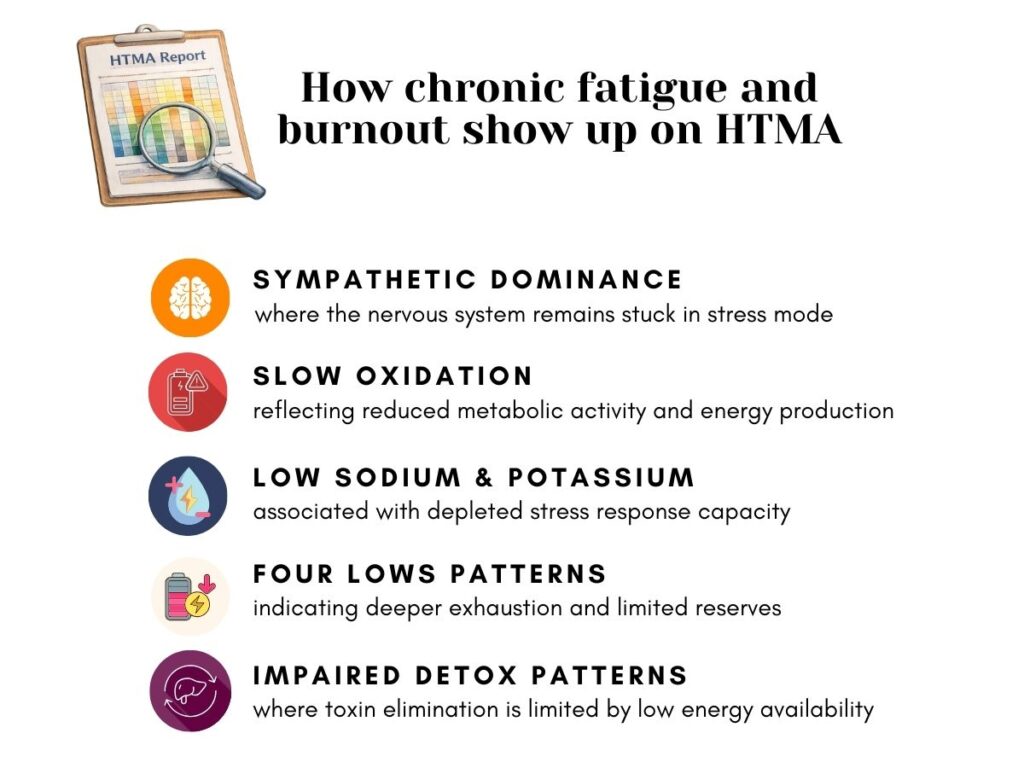
HTMA does not diagnose adrenal burnout directly, but it reveals mineral patterns closely associated with adrenal stress and depletion. Key indicators include low sodium and potassium (linked to depleted adrenal output), a low sodium-to-potassium ratio (associated with chronic stress and reduced stress tolerance), slow oxidation (reflecting reduced metabolic rate and energy production), and Four Lows patterns (indicating deeper exhaustion across all major stress minerals). These patterns, taken together, provide insight into how the body has been responding to stress over time — which standard adrenal tests often cannot show.
What does a Four Lows pattern mean for energy and fatigue?
A Four Lows pattern on HTMA means that calcium, magnesium, sodium, and potassium are all below optimal levels simultaneously. This is one of the more significant fatigue patterns seen in nutritional balancing because it indicates that the body’s primary stress-buffering minerals are all depleted at once. People with a Four Lows pattern often experience deep exhaustion, emotional flatness, poor stress tolerance, and difficulty recovering from even minor demands. It reflects a body that has been running on very low reserves for an extended period and needs careful, gradual rebuilding rather than aggressive intervention.
Why do I feel worse when I try to detox or take supplements?
When energy production is low and mineral reserves are depleted, the body may not have the capacity to safely mobilise and eliminate stored toxins. Attempting detox in this state can increase the toxic load in circulation faster than the body can clear it, leading to worsened fatigue, brain fog, anxiety, or insomnia. Similarly, broad or high-dose supplements taken without understanding your individual mineral pattern can overstimulate already depleted systems or create new imbalances. This is why stabilisation — rebuilding the body’s mineral foundation — typically needs to come before detoxification. HTMA helps identify where the body is in this process so the approach can be sequenced appropriately.
How long does it take to recover from chronic fatigue using nutritional balancing?
Recovery timelines vary significantly depending on how long symptoms have been present, the degree of mineral depletion, overall health history, and how consistently the protocol is followed. Some people notice early improvements within a few weeks; others require several months of consistent effort before meaningful changes become apparent. For people who have been depleted for years, recovery is rarely a straight line — there are often periods of gradual progress, occasional setbacks, and shifts that happen in stages as the body rebuilds capacity. Retesting with HTMA every 3–4 months helps track how patterns are changing and adjust the protocol accordingly.
Is chronic fatigue the same as adrenal fatigue?
They are related but not identical. Adrenal fatigue refers specifically to reduced adrenal gland output — the glands that produce cortisol and other stress hormones become less able to respond adequately over time. Chronic fatigue is broader and refers to persistent exhaustion that can have multiple underlying causes, including but not limited to adrenal involvement. In practice, adrenal depletion is a common driver of chronic fatigue, particularly when symptoms include crashes after stress, low blood pressure, salt cravings, and poor morning energy. HTMA can help identify whether adrenal-related mineral patterns are present alongside other contributing factors.
What minerals are typically depleted in chronic fatigue?
The most commonly depleted minerals in chronic fatigue and burnout include magnesium (essential for energy production and nervous system calm), sodium and potassium (key adrenal and cellular energy minerals), and zinc (important for immune function, thyroid support, and stress resilience). Low calcium relative to other minerals, and poor copper regulation, are also frequently seen. On HTMA, these depletions often appear together as part of recognisable patterns — such as slow oxidation or Four Lows — rather than as isolated deficiencies, which is why individual supplementation without pattern-based guidance is often ineffective or poorly tolerated.