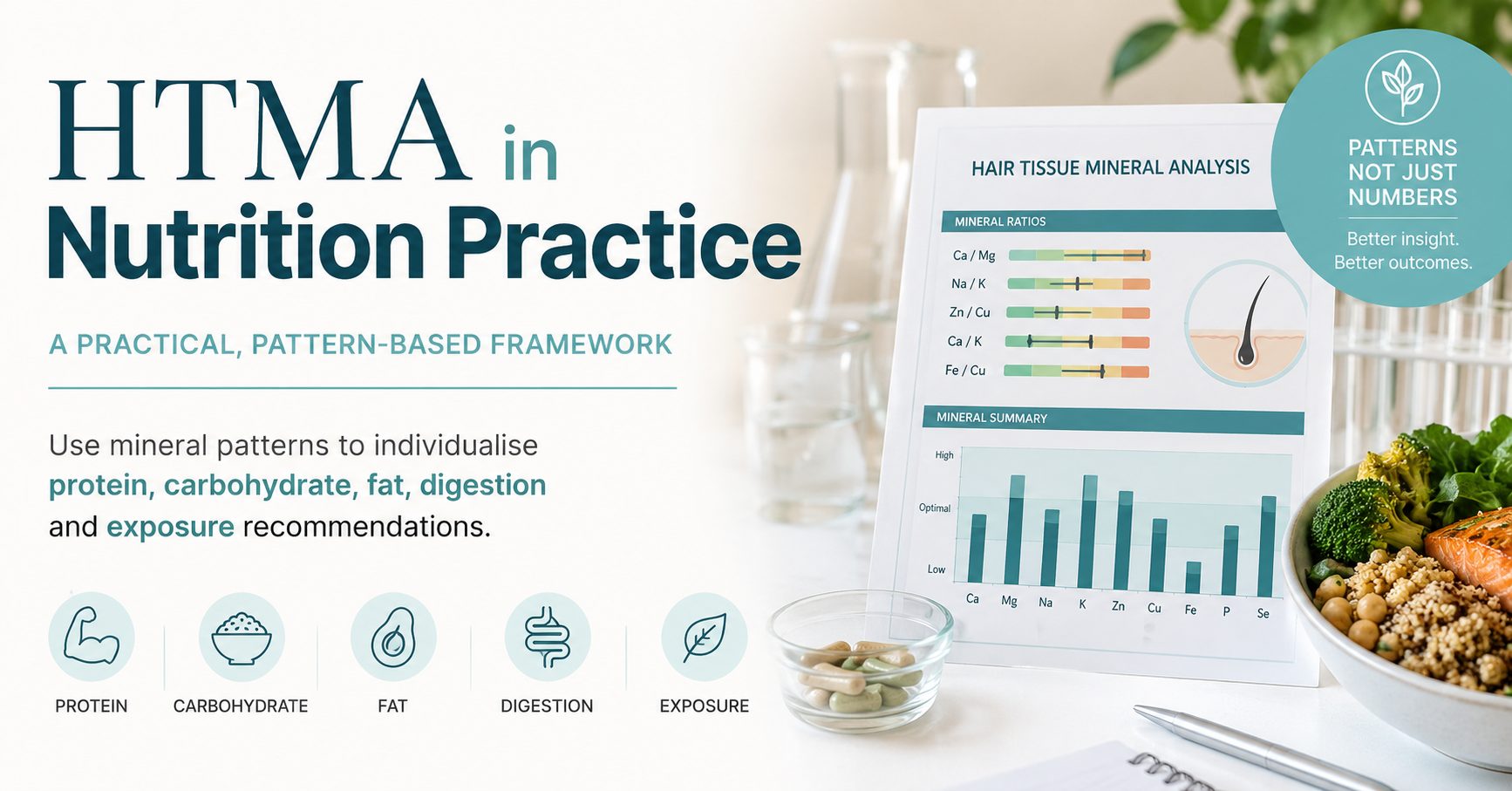
HTMA in Nutrition Practice | Guide for Dietitians & Nutritionists

Hair Tissue Mineral Analysis (HTMA) in Nutrition Practice — a pattern-based framework for individualised nutrition recommendations

A Practical, Pattern-Based Framework for Individualising Nutrition Recommendations

Hair Tissue Mineral Analysis (HTMA) in Nutrition Practice

Written by Koay Yih Zi

Why Do Similar Diets Produce Different Results?

One of the greatest challenges in nutrition practice is that similar recommendations often produce very different outcomes.

Two clients may consume comparable diets, present with similar symptoms, and even share similar laboratory findings, yet respond quite differently to the same nutritional intervention.

One client experiences significant improvements after increasing dietary protein, while another notices little change. Some individuals appear to thrive with a relatively higher-carbohydrate dietary pattern, whereas others respond better to a more moderate carbohydrate intake. Likewise, the optimal amount of dietary fat varies between individuals—what improves energy and satiety for one person may leave another feeling sluggish.

A high-fibre diet improves bowel function in one individual but worsens bloating in another. Some clients feel energised eating large salads, whereas others experience better digestion and sustained energy after switching to warm, cooked meals.

These observations remind us that nutrition is rarely about identifying the “perfect diet.” Instead, it is about determining which intervention is most appropriate for the individual at that particular point in time.

When “Healthy Eating” Isn’t Enough

For nutrition professionals, the challenge is often not knowing what constitutes a nutritious diet. The harder question is which nutritional priorities matter most for the person in front of us.

You may recognise situations such as:

  • a client eating well but still struggling with fatigue, bloating or poor resilience;
  • uncertainty about whether to increase or reduce carbohydrate, fat or protein;
  • a client becoming progressively more restrictive because supposedly healthy foods aren’t well tolerated;
  • adequate nutrient intake on paper, but signs that digestion and assimilation may be compromised; or
  • several nutritional issues competing for attention, making it difficult to decide where to start.

Conventional nutrition assessment already provides valuable information through dietary assessment, symptoms, medical history, medications and laboratory investigations.

Hair Tissue Mineral Analysis (HTMA) is not intended to replace these tools.

HTMA is a laboratory test that measures the concentrations of selected nutrient minerals and toxic elements in a hair sample. Within the Nutritional Balancing approach, these results are interpreted not only as individual mineral values, but also through mineral ratios and broader patterns that may provide additional context for nutrition planning.

I use HTMA as another layer of information that may help identify physiological patterns, ask better nutrition questions and establish which areas deserve priority.

A Different Way of Thinking About HTMA

Perhaps the biggest mistake when first learning HTMA is assuming that it should be interpreted like a conventional blood test.

The thinking often follows a simple pathway:

  • Zinc is low → prescribe zinc.
  • Calcium is high → reduce calcium.
  • Sodium is low → increase salt.

At first glance, this approach seems logical. It assumes that hair mineral levels directly reflect nutrient deficiencies or excesses and that correcting individual values will improve physiology.

However, Dr. Paul Eck‘s clinical observations led him to question this replacement-style approach. He found that individual mineral values did not always behave as expected if they were interpreted simply as direct nutritional deficiencies or excesses.

This led to a different way of looking at HTMA: individual minerals may make more sense when interpreted as part of a larger system of mineral relationships, physiological adaptation and homeostatic regulation.

Eck’s work placed particular emphasis on the relationships between minerals rather than relying on individual values alone. His approach also considered both absolute mineral levels and ratios important when interpreting the overall pattern.
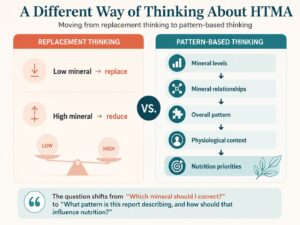
HTMA replacement thinking vs pattern-based thinking infographic showing mineral levels, relationships, overall patterns, physiological context and nutrition priorities

The question shifts from “Which mineral should I correct?” to “What pattern is this report describing, and how should that influence nutrition?”

Dr. Paul Eck, whose research laid the foundation for the Nutritional Balancing approach to HTMA, developed a framework for interpreting these mineral patterns. Rather than viewing the report primarily as a measure of nutrient deficiency or excess, he proposed that the overall mineral pattern could provide information about physiological adaptation, stress and energy metabolism. His published material places mineral relationships, oxidation type and mineral ratios at the centre of this approach.

A note on interpretation: The framework described throughout this guide is based primarily on the Nutritional Balancing approach developed from Dr. Eck’s work. Where I discuss oxidation rate, specific HTMA patterns or mineral ratios, these should be understood as interpretations within that framework rather than as substitutes for conventional diagnostic laboratory testing.

For nutrition professionals, this represents an important shift in thinking.

Instead of asking:

“Which nutrient should I replace?”

we begin asking:

“What physiological pattern is this report describing?”

And then:

“How should this influence my nutrition recommendations?”

This pattern-based approach forms the foundation of the framework that follows.

The Goal Is Not to Correct Numbers

The purpose of HTMA interpretation is not simply to chase individual numbers. It is to understand why those numbers appear together—and what that pattern may suggest about the body’s current nutritional needs.

This changes not only how I interpret the report, but often how clients think about food.

Many people begin their health journey searching for the “perfect” diet—believing that if they simply eat more cleanly, eliminate enough foods or follow the latest nutrition trend, their health will improve.

HTMA encourages a different question.

Instead of:

“What is the healthiest diet?”

we begin asking:

“What kind of nutrition best supports my body’s current needs?”

This shift can transform nutrition from something increasingly restrictive and punishing into something supportive and purposeful.

The goal is no longer dietary perfection.

The goal is to provide the body with the right nutritional support at the right time.

The right diet is not the same for every person—and it may not be the same for the same person at every stage of their health journey.

What Can HTMA Add to Nutrition Practice?

HTMA may provide additional context when deciding:
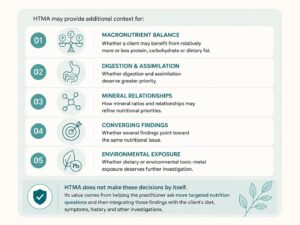
HTMA nutrition practice infographic showing macronutrient balance, digestion and assimilation, mineral relationships, converging findings, and environmental exposure

How I Translate an HTMA Report Into Nutrition Decisions

When reviewing an HTMA report, I work through it in a consistent sequence.

Each step answers a different question.
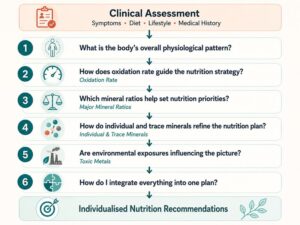
HTMA nutrition assessment workflow showing clinical assessment, physiological pattern, oxidation rate, mineral ratios, trace minerals, toxic metals and individualised nutrition recommendations

Notice that nutrition recommendations appear at the end, not the beginning.

Each layer provides additional context before decisions are made.

1. What Is the Body's Overall Physiological Pattern?

The overall HTMA pattern provides the context in which individual minerals, ratios and oxidation rate are interpreted. I use it to assess the broader nutritional picture before deciding which findings deserve the greatest attention.

The first question I ask is not:

“Which mineral is abnormal?”

Instead:

“What is the overall physiological picture?”

HTMA patterns are identified by looking at groups of minerals and their relationships rather than interpreting each mineral independently. These broader patterns provide the physiological context for what follows.

Importantly, this is not merely a classification exercise. The overall pattern may already influence whether I prioritise greater nutritional support, easier-to-digest foods, regular meals or digestive support. Oxidation rate, ratios and individual minerals then help refine that direction.

Three Lows and Four Lows: When Digestion Becomes a Priority

Two patterns I pay particular attention to are Three Lows and Four Lows.

Four Lows occurs when calcium, magnesium, sodium and potassium are all below their respective ideal values, while Three Lows occurs when three of these four major minerals are low.

Within the Nutritional Balancing framework, these patterns are associated with a more depleted physiological state and reduced digestive capacity.

Rather than making the diet more restrictive or asking an already compromised digestive system to work harder, I generally focus on nutrient-dense foods in forms that are easier to digest.

This may include:

  • emphasising high-quality animal protein;
  • favouring cooked vegetables over large quantities of raw vegetables;
  • reducing foods that appear inflammatory, allergenic or poorly tolerated;
  • avoiding overly light diets, skipped meals or prolonged fasting where these may add further nutritional stress; and
  • considering digestive support such as pancreatin and ox bile, where appropriate.

The principle is simple:

A food can be highly nutritious on paper without being the most appropriate food for that person’s current physiological state.

A large raw salad, for example, provides fibre, vitamins, minerals and phytonutrients. But if a client with reduced digestive capacity consistently experiences bloating or discomfort after eating it, a plate of well-cooked vegetables may provide a more supportive starting point.

The goal is not to avoid raw foods indefinitely. It is to meet the body where it is, support digestion and gradually broaden the diet as capacity improves.

Looking Beyond Food

When the overall picture suggests significant physiological stress, I also consider whether the client’s lifestyle supports rest, recovery and parasympathetic activity.

Nutrition does not operate in isolation. The broader pattern helps answer:

“What kind of support does this person need right now?”

2. How Does Oxidation Rate Guide the Nutrition Strategy?

Oxidation rate helps establish the broad macronutrient direction of the nutrition plan. Within the Nutritional Balancing framework, it can help guide the relative emphasis on protein, carbohydrate and dietary fat before other HTMA findings are used to refine the strategy.

Oxidation rate describes a broad metabolic pattern based on key relationships among calcium, magnesium, sodium and potassium.

Eck used the calcium-to-potassium (Ca/K) ratio as an indicator of thyroid effect and the sodium-to-magnesium (Na/Mg) ratio as an indicator of adrenal effect. These relationships form part of the system used to establish broader fast- and slow-oxidation patterns.

These ratios are not diagnostic measures of thyroid or adrenal disease, nor do they replace conventional endocrine testing. Rather, they form part of the metabolic interpretation framework used in Nutritional Balancing.

The goal is not to prescribe an identical diet to every fast or slow oxidiser. Oxidation rate establishes the general direction of the nutrition plan, which is then refined according to symptoms, digestive tolerance, dietary history and the rest of the HTMA pattern.

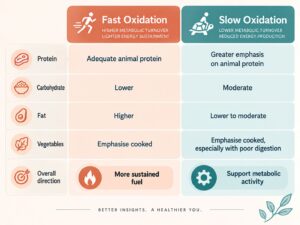
Fast Oxidation: More Fat, Fewer Carbohydrates

Within this framework, fast oxidation is associated with the alarm stage of the stress response and greater sympathetic nervous system activity. Some individuals may experience bursts of energy that are difficult to sustain, alongside tendencies such as feeling wired, anxious, irritable or prone to energy fluctuations.

From a nutrition perspective, I look closely at whether the diet contains too much carbohydrate relative to protein and fat.

For fast oxidisers, I generally favour adequate animal protein, more dietary fat and fewer carbohydrates.

In practice, this may include:

  • reducing sugars and refined carbohydrates;
  • moderating higher-carbohydrate foods;
  • including high-quality animal protein with each meal;
  • emphasising cooked vegetables; and
  • increasing natural dietary fats.

Depending on the existing diet, I may deliberately increase dietary fat at meals using foods such as egg yolks, butter or cream where tolerated, animal fats, tahini, nut butters or appropriate oils.

The general direction is:

Adequate protein + more fat + fewer carbohydrates

Slow Oxidation: More Protein, Moderate Carbohydrate and Less Fat

Slow oxidation represents a different metabolic context. Within the Nutritional Balancing framework, it is associated with a lower-energy stage of the stress response, and individuals may report fatigue, reduced stamina, low motivation or a greater tendency to feel depleted.

Here, I generally place greater emphasis on high-quality animal protein, maintain a moderate carbohydrate intake and reduce excessive dietary fats and oils.

In practice, this may include:

  • including animal protein at each meal;
  • using moderate portions of carbohydrate rather than building meals around starches;
  • limiting sugars and refined carbohydrates;
  • reducing excessive added fats and oils;
  • favouring cooked vegetables, particularly where digestion is compromised; and
  • eating regular, substantial meals rather than relying on very light meals or skipping meals.

The general direction is:

More high-quality protein + moderate carbohydrate + less added fat

Eck’s original dietary discussion likewise differentiated dietary fat according to oxidation pattern, while recognising that individual mineral ratios and levels could modify general recommendations.

The Same “Healthy Diet” May Not Suit Both Patterns

Consider two clients who both report fatigue.

One follows a very low-fat diet dominated by fruit, grains and other carbohydrate-rich foods. If that client shows a fast-oxidation pattern, I may shift the diet toward more protein and fat while reducing the carbohydrate load.

Another already consumes generous amounts of oils, nut butters, avocado and other high-fat foods. If that client shows slow oxidation, simply recommending “more healthy fats” may not be the most appropriate strategy. Instead, I may emphasise animal protein, cooked vegetables and a more moderate intake of added fats.

Neither carbohydrate nor fat is inherently “good” or “bad.” The more useful question is:

“What macronutrient balance is most supportive for this person’s current metabolic pattern?”

Fast vs slow oxidation HTMA infographic comparing protein, carbohydrate, fat, vegetables and overall nutrition direction

Want to See What This Looks Like in Practice?

View a sample practitioner HTMA report to see how mineral patterns are translated into practical nutrition recommendations.

3. Which Mineral Ratios Help Set Nutrition Priorities?

Once oxidation rate establishes the broad dietary direction, mineral ratios can help determine which nutritional priorities deserve greater attention. Two ratios I find particularly useful from a nutrition perspective are sodium-to-potassium (Na/K) and calcium-to-magnesium (Ca/Mg).

Neither is interpreted in isolation. I consider each ratio alongside the overall pattern, oxidation rate, symptoms and dietary history.

Sodium-to-Potassium (Na/K): Stress Response and Nutritional Support

Within the Nutritional Balancing framework, Na/K is an important indicator of the body’s current stress response and resilience. Eck regarded Na/K as one of the major relationships in his mineral interpretation system.

A low Na/K ratio is associated within this framework with a more depleted stress response and may occur alongside low vitality, digestive difficulties, reduced stomach acid and poorer stress tolerance.

From a nutrition perspective, this often shifts my focus toward greater nutritional support rather than further restriction.

Priorities may include:

  • high-quality animal protein with each meal;
  • regular meals rather than skipping meals or fasting;
  • cooked vegetables and easier-to-digest foods where digestion is compromised;
  • reducing sugars and excessive refined carbohydrates; and
  • adequate rest and recovery.

For example, a fatigued client with low Na/K who is already eating very lightly may not benefit from further dietary restriction. The greater priority may be to increase nutritional density and provide consistent nourishment.

A high Na/K ratio represents a different pattern. Within this framework, it is associated more closely with an acute stress response and inflammatory tendency and may occur alongside pain or fluid retention.

From a nutrition perspective, this may shift my attention toward reducing inflammatory and highly processed foods, while emphasising nutrient-dense cooked vegetables and an overall anti-inflammatory dietary pattern. Targeted nutritional support, including zinc and magnesium, may also be considered where appropriate.

As with low Na/K, a high ratio is never interpreted in isolation. Symptoms, diet, oxidation rate and the wider HTMA pattern determine how much significance I place on it.

A useful example of pattern-based interpretation

Eck considered the Na/K relationship more useful for assessing the need for zinc than the hair zinc level alone. Within this framework, this is one reason a low hair zinc value is not automatically treated as a standalone zinc deficiency—the surrounding mineral relationships matter.

Calcium-to-Magnesium (Ca/Mg): Carbohydrate Tolerance

Within the Nutritional Balancing framework, the Ca/Mg ratio is used when evaluating carbohydrate tolerance. Eck historically referred to Ca/Mg as a “blood sugar ratio” within his system.

Both excessively high and excessively low Ca/Mg ratios may therefore prompt me to look more closely at:

  • refined sugars and sweets;
  • white flour and highly processed carbohydrates; and
  • the overall amount and quality of carbohydrate in the diet.

When Ca/Mg is particularly elevated, I also consider the client’s stress load, since ongoing physiological or emotional stress can affect blood sugar regulation and carbohydrate tolerance.

The question becomes:

“Is this client’s current carbohydrate intake appropriate for their metabolic pattern and tolerance?”

Reducing refined and highly processed carbohydrates is generally the first consideration rather than indiscriminately eliminating whole-food carbohydrate sources.

Ratios Help Prioritise—They Don’t Stand Alone

A ratio should not dictate the diet by itself. Its value comes from how it fits with the larger pattern.

For example:

Three/Four Lows + low Na/K + fatigue + poor digestion
may strengthen the case for regular nutrient-dense meals, adequate animal protein, cooked foods and digestive support.

This is where ratios become particularly useful: not because one ratio determines the diet, but because multiple findings can converge on the same nutritional priority.

4. How Do Individual and Trace Minerals Refine the Nutrition Plan?

Individual and trace minerals help fine-tune nutritional recommendations after the broader metabolic strategy has been established. Rather than treating each mineral as a separate problem, I look for several findings that may point toward the same nutritional priority.

Zinc, phosphorus and copper are particularly useful examples.

Zinc: Protein Quality and Digestive Function

Zinc is involved in protein and DNA synthesis, cell signalling and the activity of hundreds of enzymes. Meat, fish, seafood, eggs and dairy foods can provide useful dietary sources of zinc.

However, I do not interpret a low hair zinc level as automatically indicating zinc deficiency. Instead, I consider zinc alongside copper, Na/K, dietary protein intake and digestive function.

For example, a low zinc level in someone eating little animal protein may strengthen the case for improving protein quality and intake, particularly when other findings point in the same direction.

Phosphorus: Protein Intake and Assimilation

Phosphorus plays fundamental roles in cellular energy metabolism and forms part of ATP, DNA, RNA and phospholipid cell membranes. It is also widely present in protein-rich foods.

Within the Nutritional Balancing framework, low hair phosphorus may be associated with reduced protein synthesis and lower vitality.

When I see it, I ask:

“Is this client consuming—and effectively digesting and assimilating—enough high-quality protein?”

If protein intake is low, increasing high-quality animal protein may become a priority. If intake already appears adequate, I look more closely at digestive capacity.

This may shift the focus toward easier-to-digest cooked foods and, where appropriate, digestive support such as pancreatin or ox bile, rather than simply adding more protein.

The distinction matters:

Nutritional adequacy depends not only on what someone eats, but on how effectively those nutrients are digested and utilised.

Copper: Look at the Pattern, Not Just the Number

Copper is one of the clearest examples of why HTMA should not be interpreted using simple replacement therapy.

Within the Nutritional Balancing framework, copper may be low, elevated or poorly bioavailable, and the hair copper level alone may not adequately describe copper metabolism.

I therefore interpret copper alongside zinc, phosphorus, oxidation rate, major ratios and dietary history rather than simply recommending more or less copper.

For example, a diet heavily reliant on nuts, seeds and legumes, with relatively little zinc-rich animal protein, may warrant closer examination of the overall copper-zinc balance.

Look for Convergence

The real value comes when several findings point in the same direction.

For example:

Low zinc + low phosphorus + copper imbalance indicators + low animal-protein intake or poor digestion

Rather than treating these as separate mineral problems, I may see several clues pointing toward the same priorities:

Improve protein intake and quality → support digestion and assimilation → rebalance the overall diet

Individual minerals provide clues. The pattern tells us what those clues mean together.

5. Are Environmental Exposures Influencing the Picture?

After establishing the nutritional framework, I review toxic metals and other potentially harmful elements.

The first question is not:

“How do I detox this metal?”

Instead:

“Is there an ongoing source of exposure that we can identify and reduce?”

Depending on the element and the client’s history, I may review food and water, smoking, occupation, medications, supplements and relevant household or environmental exposures.

Some common examples include:

  • Mercury: Review seafood intake, particularly the species and frequency consumed. Where appropriate, favour lower-mercury fish rather than unnecessarily eliminating seafood, allowing its nutritional benefits to be retained.
  • Arsenic: Review drinking-water sources—particularly private well water where relevant—as well as dietary exposure. Rice can be an important dietary source of inorganic arsenic, while arsenic present in many types of seafood is predominantly in less-toxic organic forms. Where water exposure is plausible, appropriate testing may be warranted.
  • Cadmium: Ask first about smoking and second-hand smoke, followed by relevant occupational or environmental exposure. Dietary sources can then be considered in the context of the client’s history.
  • Aluminium: Review aluminium-containing antacids and other products first. Potential dietary sources include certain processed and commercially baked foods containing aluminium-based additives. Drinking water and cookware may also contribute. If powdered drinks, nutrition products or bars are consumed regularly, I may review their ingredients for potential sources.

The aim is not to create an unnecessarily restrictive diet every time a toxic element appears. It is to identify plausible, avoidable sources and reduce exposure without sacrificing nutritional quality unnecessarily.

For example, an elevated mercury result does not automatically mean removing all seafood. It may instead lead to a targeted change in the species, frequency and source of seafood consumed.

A finding should lead to a better question before it leads to an intervention.

6. How Do I Integrate Everything Into One Plan?

The final nutrition plan comes from integrating HTMA with the client’s symptoms, diet, digestive function, lifestyle, health history, relevant laboratory investigations and practical circumstances. HTMA adds another layer of physiological context; it does not replace comprehensive nutritional assessment.

I integrate HTMA with:

  • symptoms and health history
  • current diet and eating patterns
  • digestive function and food tolerance
  • lifestyle, stress and recovery
  • relevant laboratory investigations
  • the client’s goals and practical circumstances

The HTMA findings are then brought together—from the overall pattern and oxidation rate through to major ratios, individual minerals and toxic metals—and interpreted alongside the client’s broader nutritional and clinical picture.

For example, imagine a client presenting with fatigue, bloating and a diet relatively low in animal protein. Their HTMA shows slow oxidation, Three Lows, low Na/K, low phosphorus and low zinc.

Rather than treating each finding separately, several pieces of information point in a similar direction.

The resulting strategy might prioritise regular nutrient-dense meals, more high-quality animal protein, cooked vegetables, fewer refined carbohydrates and support for digestion and assimilation.

The goal is not to create a diet for an HTMA report. It is to use the report to help create a better diet for the person.

Ultimately, no single mineral, ratio or pattern determines the nutrition plan. It is the convergence of HTMA findings with dietary assessment, symptoms, history, other investigations and the client’s response that guides the recommendations.

Key Principles

If there are five ideas I want nutrition professionals to take away from this framework, they are these:

  • Look for patterns, not isolated numbers. HTMA is interpreted as a system of mineral relationships rather than a collection of individual highs and lows.
  • Move from broad to specific. Overall patterns and oxidation rate establish direction; ratios and individual minerals progressively refine it.
  • Use HTMA to ask better nutrition questions. Findings may prompt closer examination of macronutrient balance, protein intake, carbohydrate tolerance, digestion, meal structure and environmental exposure.
  • Look for convergence. Several findings pointing toward the same nutritional priority are generally more meaningful than one marker in isolation.
  • Keep the client at the centre. HTMA complements—not replaces—dietary assessment, symptoms, medical history, other investigations and clinical judgement.

Closing Thought

Used this way, HTMA becomes more than a list of mineral results.

It provides a framework for asking:

“What does this person’s current physiological pattern suggest about the nutrition support they may need right now?”

That shift—from chasing an ideal diet or correcting isolated numbers to building a diet around the individual’s current needs—is where I find HTMA most valuable in nutrition practice.

Frequently Asked Questions About HTMA in Nutrition Practice

What is HTMA used for in nutrition practice?

HTMA provides information about mineral levels, ratios and patterns that can be considered alongside diet, symptoms, health history and other laboratory investigations when individualising nutrition recommendations. Within a pattern-based approach, it may provide additional context around macronutrient balance, digestion, mineral relationships and environmental exposure.

Can HTMA tell me what diet a client should follow?

Not by itself. Within the Nutritional Balancing framework, findings such as oxidation rate can help establish a broad dietary direction, including the relative emphasis on protein, carbohydrate and fat. This is then refined according to the client’s symptoms, digestion, dietary history and wider HTMA pattern.

What is the difference between fast and slow oxidation on HTMA?

Within the Nutritional Balancing framework, fast and slow oxidation describe different metabolic patterns derived primarily from relationships among calcium, magnesium, sodium and potassium. These patterns can influence how I approach protein, carbohydrate, dietary fat, meal composition and digestive support.

Does a low mineral on HTMA always mean the client is deficient?

No. A low hair mineral level should not automatically be interpreted as a direct dietary deficiency. Within the Nutritional Balancing approach, individual values are considered alongside other minerals, ratios, dietary intake, symptoms and the overall HTMA pattern.

Can HTMA replace blood tests?

No. HTMA is best used as a complementary assessment. It does not replace blood testing, medical diagnosis or other appropriate clinical investigations.

References & Further Reading

Nutritional Balancing & HTMA Framework

  1. Eck, P. C. / Healthview. The Science of Human Energy. Sam Biser Press. Foundational discussion of mineral relationships, mineral levels and ratios, oxidation types and the Nutritional Balancing approach to tissue mineral analysis.
  2. Wilson, L. Nutritional Balancing and Hair Mineral Analysis. L.D. Wilson Consultants, Inc. (multiple editions, 1998–2016). 

Nutrition & Environmental Health

  1. NIH Office of Dietary Supplements. Zinc: Fact Sheet for Health Professionals.
  2. NIH Office of Dietary Supplements. Phosphorus: Fact Sheet for Health Professionals.
  3. NIH Office of Dietary Supplements. Copper: Fact Sheet for Health Professionals.
  4. U.S. FDA / EPA. Advice About Eating Fish and Shellfish.
  5. Agency for Toxic Substances and Disease Registry (ATSDR). Clinician Brief: Arsenic.
  6. Agency for Toxic Substances and Disease Registry (ATSDR). Case Studies in Environmental Medicine (CSEM): Cadmium Toxicity. U.S. Department of Health and Human Services, Public Health Service. 
  7. Agency for Toxic Substances and Disease Registry (ATSDR). Toxicological Profile for Aluminum. U.S. Department of Health and Human Services, Public Health Service, Agency for Toxic Substances and Disease Registry, Atlanta, GA. 

Interested in Using HTMA in Your Practice?

If you’re a dietitian, nutritionist or health practitioner interested in incorporating HTMA into your work, you don’t need to develop an interpretation system from scratch.

Health Balancing provides laboratory testing, comprehensive practitioner reports and interpretation support, helping you translate HTMA findings into practical nutrition recommendations for your clients.

Explore our sample HTMA reports to see how findings are presented and interpreted, or learn more about partnering with Health Balancing.

View Sample HTMA Reports

Partner With Health Balancing


Koay Yih Zi, Hair Tissue Mineral Analysis practitioner

About the Author

Koay Yih Zi is a Hair Tissue Mineral Analysis practitioner and founder of Health Balancing. She specialises in interpreting HTMA mineral patterns and imbalances, and partners with health and pet professionals to integrate hair mineral testing into their services.