In long-term stress or exhaustion, the body sometimes uses short-term strategies to keep functioning. This can include holding onto toxic metals that provide temporary stimulation or support. In this context, toxic metals may reflect adaptation rather than failure — and rushing detox is often less helpful than rebuilding first.
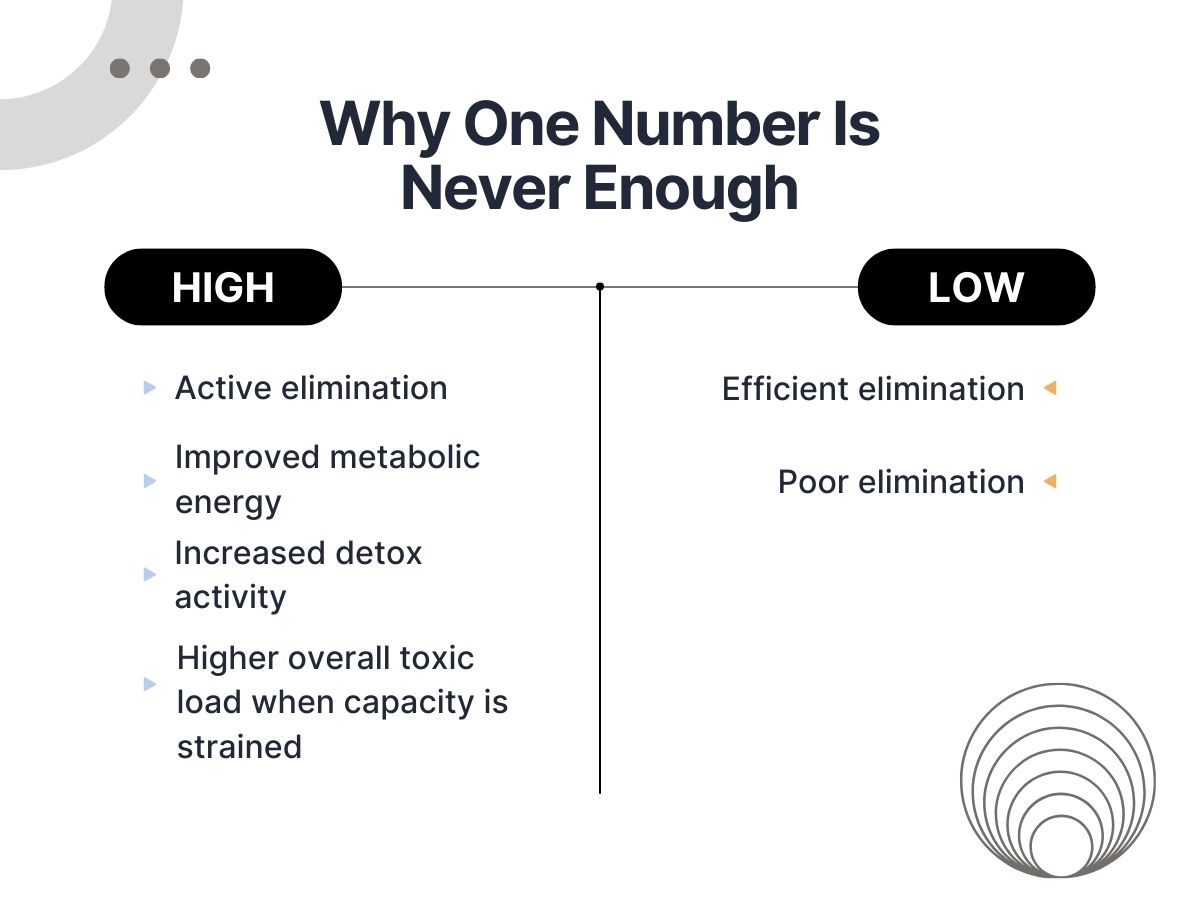
High metals can mean:
- active elimination
- improved metabolic energy
- increased detox activity
- or higher overall toxic load when capacity is strained
Very low metals can mean:
- efficient elimination
- or poor elimination, where metals are being held in tissues
Low metal levels don’t always mean there are no metals. Sometimes the body is holding onto them instead of releasing them. When elimination improves, metal levels can go up on a retest — which often means the body is letting go, not getting worse.
Context determines meaning.

Frequently Asked Questions
Does seeing toxic metals on my HTMA mean I have heavy metal poisoning?
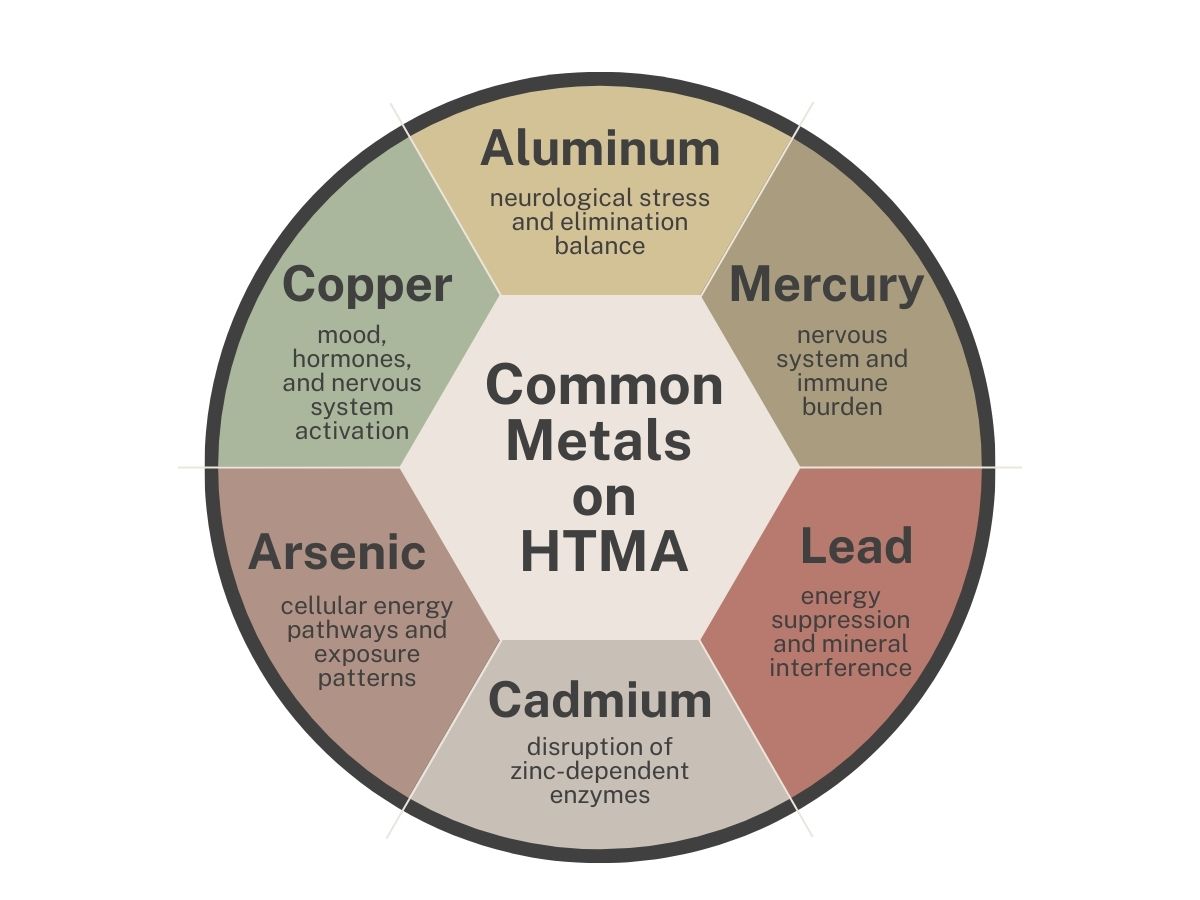
No — HTMA does not diagnose heavy metal poisoning, and seeing metals like mercury, lead, aluminum, or cadmium on your report isn’t a verdict that something is dangerously wrong. Unlike a diagnostic exposure test, Hair Tissue Mineral Analysis offers insight into tissue-level trends over time, how well your body is eliminating, and its overall detox capacity rather than detox urgency. In other words, it’s better understood as a process snapshot than a medical alarm. The presence of a toxic metal can reflect ongoing exposure, but it can just as often reflect long-stored material finally being released, or reduced elimination capacity — which is why the same reading can mean very different things for different people.
Why would my toxic metal levels go UP on a retest after I started a detox or nutritional balancing program?
This usually means elimination is improving, not that your toxic load has worsened. Low metal levels don’t always mean there are no metals present — sometimes the body is holding onto them in tissue rather than releasing them. When elimination genuinely improves, previously stored metals can be released into circulation and show up more clearly on a retest, which is often a sign of progress rather than decline. This is one of the more counterintuitive aspects of interpreting HTMA over time: a rising number can reflect the body finally letting go, which is why single-point readings are far less useful than tracking the broader pattern across multiple tests.
If my toxic metal levels are very low, does that mean I don't have a toxic metal burden?
Not necessarily — very low metal readings can mean either efficient elimination or poor elimination, where metals are being retained in tissue rather than excreted. Because HTMA reflects what’s currently moving through the hair as it grows, a body that is too depleted or overwhelmed to eliminate efficiently may show artificially low metal readings even while carrying a meaningful burden internally. This is why low numbers alone shouldn’t be read as reassuring without considering the broader picture — including energy availability, mineral ratios, and nervous system state — since these factors determine whether a body is actively releasing metals or simply unable to process them yet.
Why would the body hold onto toxic metals instead of getting rid of them?
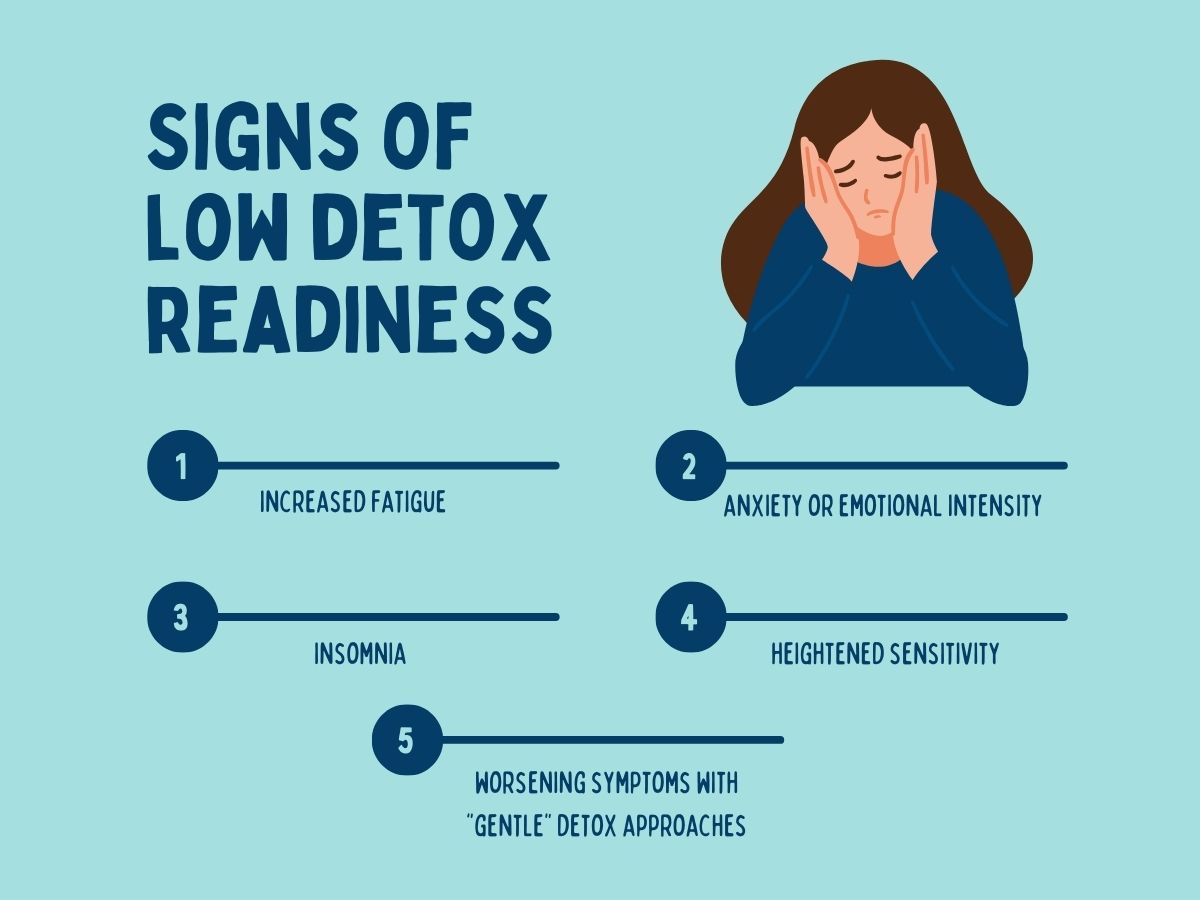
The body sometimes retains toxic metals as a short-term coping strategy during prolonged stress or exhaustion, because certain metals can provide a form of temporary stimulation or functional support when other reserves are depleted. In this context, holding onto metals reflects adaptation rather than failure — it’s the body prioritising immediate functioning over long-term elimination. This is significant because it means rushing detox in this state can backfire: if the body is relying on retained metals to keep functioning, aggressive elimination before energy and mineral reserves are rebuilt can trigger worsening symptoms rather than relief, which is why rebuilding capacity often needs to come before detox is pushed forward.
Can toxic metals cause symptoms even when my blood tests come back normal?
Yes — toxic metals can disrupt thyroid signalling, adrenal response, blood sugar regulation, and inflammatory balance in ways that often go undetected on standard blood testing. This happens because many toxic metals compete with or displace essential minerals like zinc, magnesium, selenium, and iron, disrupting enzyme systems and hormone signalling even when dietary intake looks adequate and blood values appear within range. Retained metals can also interfere with mitochondrial function and energy-producing enzymes, contributing to persistent fatigue or slow recovery that doesn’t correlate with anything visible on standard labs. This gap is part of why people with “normal” bloodwork can still experience real, biologically-driven symptoms that a tissue-level test like HTMA is better positioned to reflect.
Why does context matter more than the actual metal numbers on my HTMA report?
Because interpreting toxic metals in isolation can easily mislead — the same reading can reflect active elimination, improved metabolic energy, or a higher overall toxic load, depending on what else is happening in the body. HTMA interpretation looks at patterns rather than single values, including mineral ratios, oxidation rate, sodium and potassium status, and calcium-magnesium balance, since these factors reveal whether the body is ready to eliminate, temporarily holding, overwhelmed, or still rebuilding capacity. Two people with nearly identical metal readings can feel completely different day to day, because their surrounding mineral picture — and therefore their body’s actual capacity to handle those metals — is not the same.
What does it mean when practitioners talk about "armoring" during heavy metal detox?
Armoring refers to a pattern where one or more minerals, including toxic metals, drop into very low (“poor eliminator”) ranges on a retest compared to a previous test — and it typically reflects a temporary protective pause rather than a problem. When the body doesn’t yet have enough energy or stability to continue actively releasing stored metals, it can essentially pause elimination to conserve resources, similar to how it holds onto metals for short-term functional support during periods of stress or exhaustion. This isn’t a sign that something has gone wrong; elimination typically resumes once energy and mineral reserves are rebuilt, which is why pacing — rather than pushing harder — matters most during this phase.
Is hair mineral testing as accurate as blood or urine testing for detecting heavy metals?
They measure different things, so “accuracy” depends on what you’re trying to learn. Blood and urine tests are better suited to detecting recent or acute exposure, since they reflect what’s circulating in the body at that moment, while hair testing reflects tissue-level trends built up over roughly three months of growth, offering insight into longer-term retention, elimination capacity, and how the body is currently managing toxic load. Rather than replacing blood or urine testing, HTMA is best used as a complementary tool that reveals patterns — such as whether metals are being actively released or quietly retained — that single-point blood or urine results generally can’t capture on their own.