Partnership

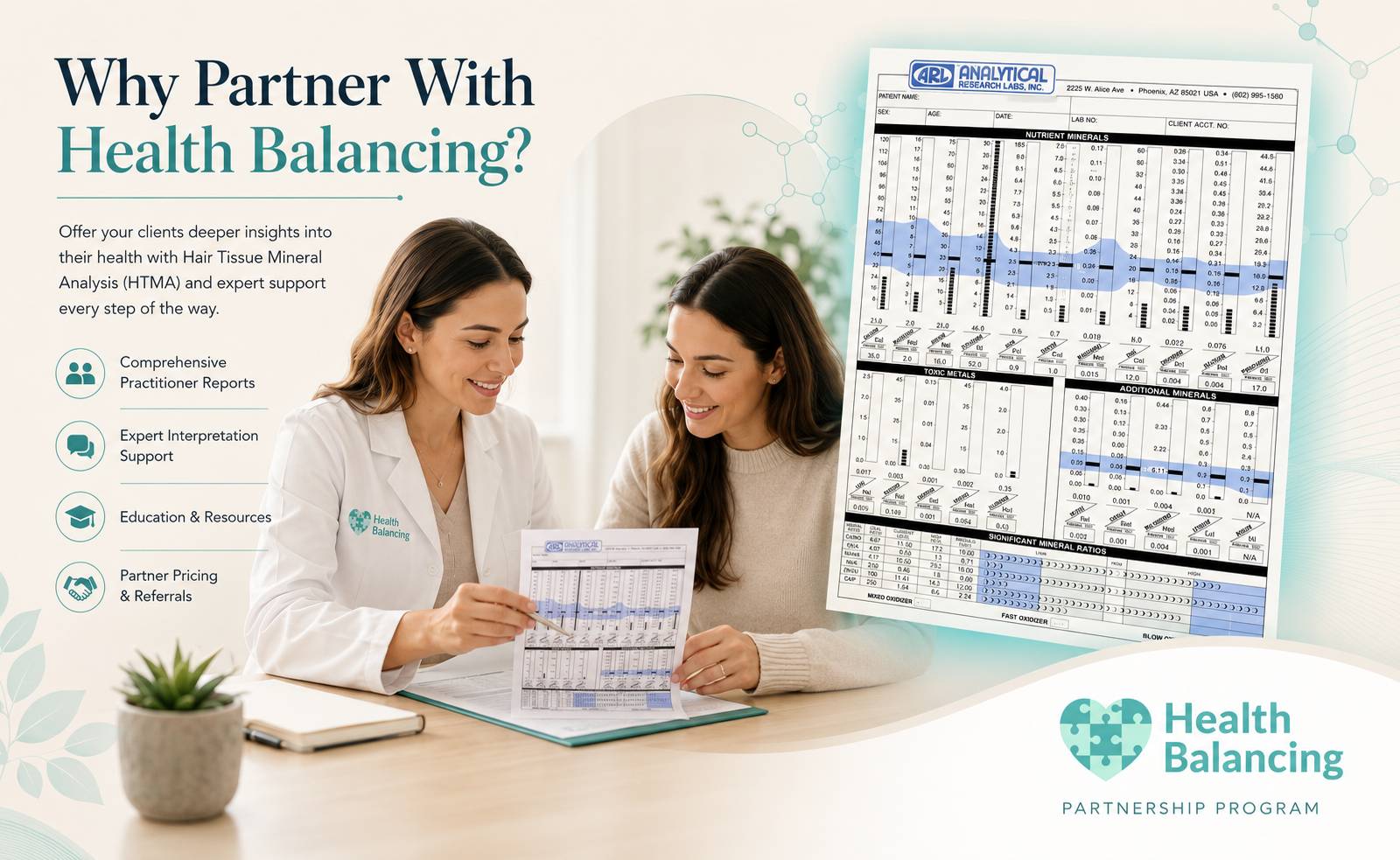
Illustration of health balancing with atomic symbols for calcium, magnesium, potassium, and sodium, emphasizing root-level insight and practitioner support in health partnerships.

PARTNER WITH HEALTH BALANCING FOR HTMA TESTING, INTERPRETATION SUPPORT, AND PRACTITIONER RESOURCES

Help Clients Move Forward When Progress Has Plateaued

Many practitioners reach a point where client progress plateaus despite good compliance. Fatigue, poor recovery, stress sensitivity, cravings, and recurring symptoms often persist longer than expected.

Hair Tissue Mineral Analysis (HTMA) is a non-invasive assessment that provides insight into mineral balance, stress adaptation, metabolic patterns, and toxic metal trends that may help explain why progress has slowed. Rather than focusing on symptoms alone, HTMA helps practitioners better understand how the body may be adapting to long-term stress and nutritional demands.

At Health Balancing, we help practitioners integrate HTMA confidently through testing, interpretation support, educational resources, and practitioner tools.

HTMA doesn’t replace your practice. It helps you see more of the picture.

For practitioners whose clients:

  • Follow recommendations but still plateau
  • Have fatigue, brain fog, cravings, or poor stress tolerance
  • React unpredictably to supplements
  • Need clearer context beyond standard lab work

Apply to Become a Partner

Ready to integrate HTMA into your practice?

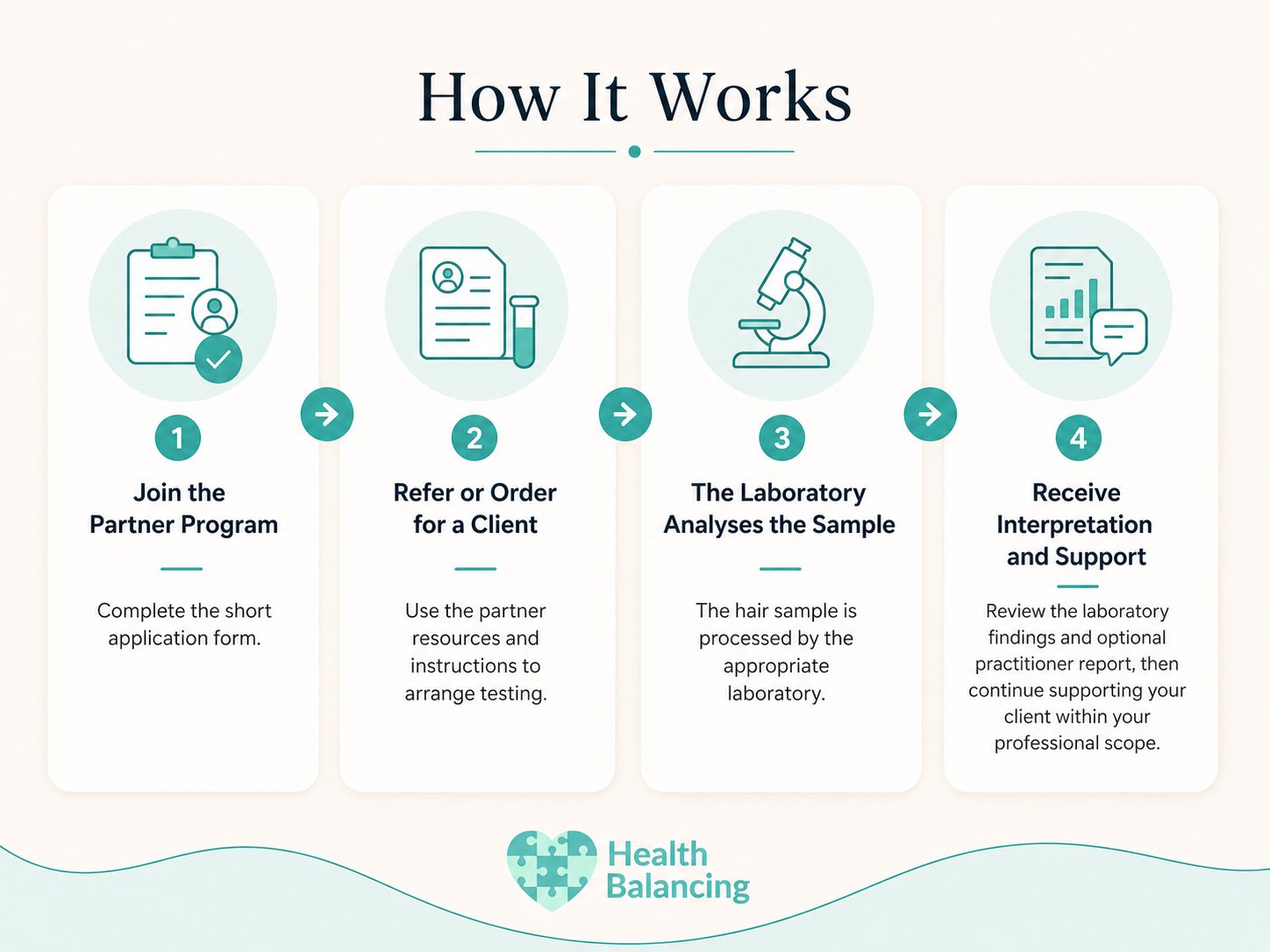
Gain access to practitioner resources, educational materials, interpretation support, and partner pricing.

Who This Partnership Is For

This partnership is designed for professionals working in:

  • Health and wellness practice
  • Functional and holistic nutrition
  • Trichology and hair health
  • Family and paediatric wellness
  • Animal and pet health (dogs, cats, horses, and more)

Whether you work with humans, animals, or hair and scalp health, HTMA provides structured insight that complements your scope of practice.

Common Client Challenges HTMA Can Help Contextualise

Many clients continue to struggle despite following recommendations consistently. While HTMA is not used to diagnose disease, it can provide additional insight into mineral balance, stress adaptation, metabolic patterns, and physiological trends that may help explain why progress has slowed or symptoms persist.

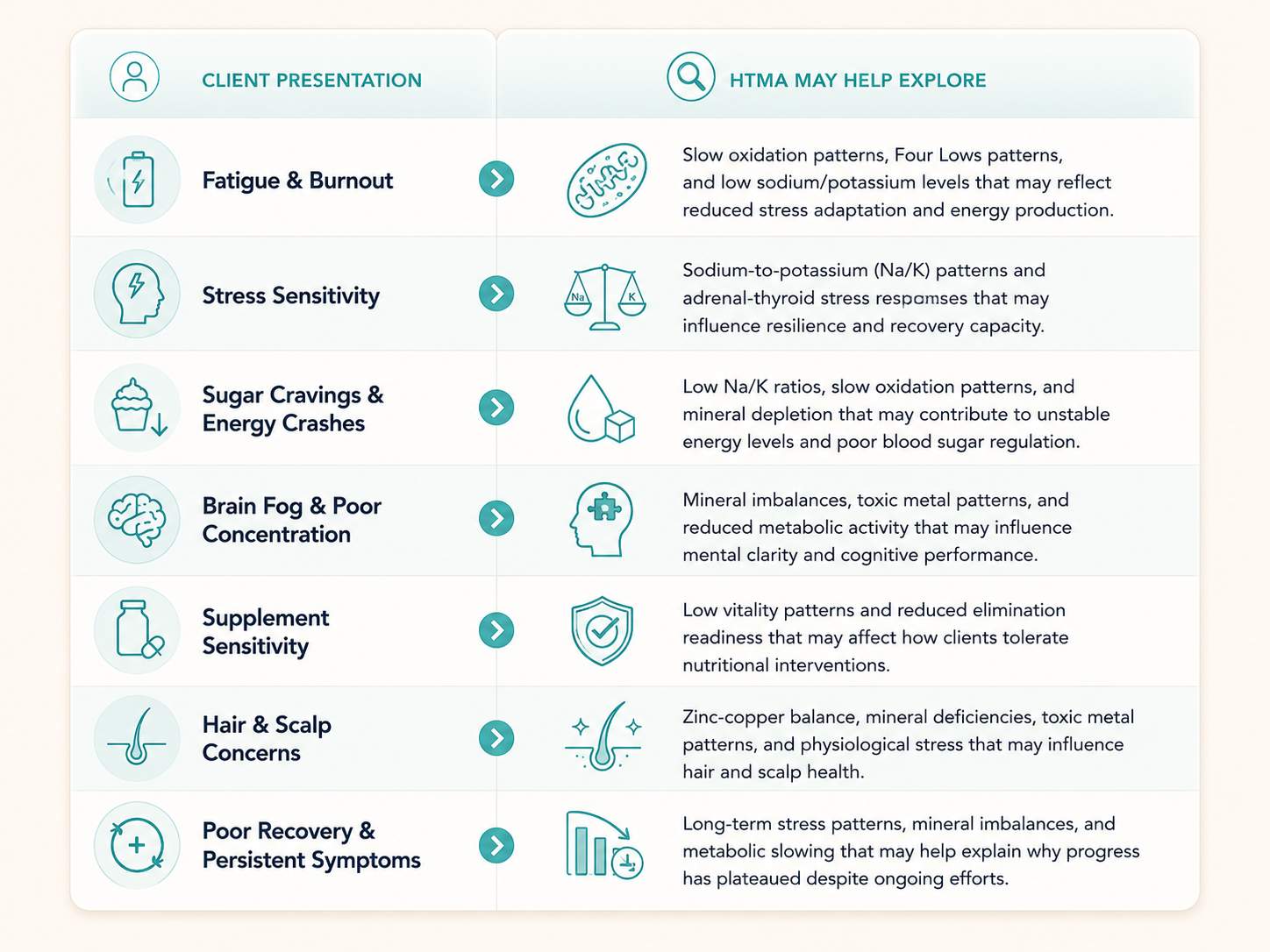
The examples below illustrate some of the common client presentations where HTMA may provide valuable context.

Client Presentation HTMA May Help Explore
Fatigue & Burnout Slow oxidation patterns, Four Lows patterns, and low sodium/potassium levels that may reflect reduced stress adaptation and energy production.
Stress Sensitivity Sodium-to-potassium (Na/K) patterns and adrenal-thyroid stress responses that may influence resilience and recovery capacity.
Sugar Cravings & Energy Crashes Low Na/K ratios, slow oxidation patterns, and mineral depletion that may contribute to unstable energy levels and poor blood sugar regulation.
Brain Fog & Poor Concentration Mineral imbalances, toxic metal patterns, and reduced metabolic activity that may influence mental clarity and cognitive performance.
Supplement Sensitivity Low vitality patterns and reduced elimination readiness that may affect how clients tolerate nutritional interventions.
Hair & Scalp Concerns Zinc-copper balance, mineral deficiencies, toxic metal patterns, and physiological stress that may influence hair and scalp health.
Poor Recovery & Persistent Symptoms Long-term stress patterns, mineral imbalances, and metabolic slowing that may help explain why progress has plateaued despite ongoing efforts.

HTMA findings are interpreted as patterns and trends rather than isolated values and are used to provide additional physiological context alongside practitioner assessment and clinical judgment.

Chart showing how HTMA supports your work by analyzing mineral trends, stress patterns, energy balance, detox capacity, and metal toxicity interpretation.

Why Partner With Health Balancing

Many practitioners recognise the value of HTMA but are unsure where to begin. Learning interpretation, developing workflows, creating client resources, and integrating a new service into practice can take considerable time.

Health Balancing helps simplify that process by providing the tools, support, and resources needed to integrate HTMA confidently into your existing practice.

Whether you are new to HTMA or already familiar with mineral analysis, our goal is to help you use HTMA responsibly, efficiently, and within your professional scope.

Sample Reports

Explore examples of our Human and Pet HTMA reports to see how results, patterns, and recommendations are presented.

Sample Human HTMA Report

Hair Tissue Mineral Analysis (HTMA) report displaying nutrient minerals, toxic metals, additional minerals, and significant mineral ratios. The chart visualizes calcium, magnesium, sodium, potassium, zinc, copper, iron, phosphorus, toxic metal exposure, and metabolic ratio patterns used to assess mineral balance and overall health.

Explore how HTMA can provide insight into mineral balance, oxidation rate, stress adaptation patterns, toxic metals, and key mineral ratios that help guide nutritional balancing recommendations.

Sample Pet HTMA Report

Analytical Research Labs (ARL) Hair Tissue Mineral Analysis (HTMA) report showing nutrient mineral levels, toxic metal levels, and mineral ratios. The report includes bar charts for calcium, magnesium, sodium, potassium, iron, copper, manganese, zinc, chromium, phosphorus, and toxic metals including lead, mercury, cadmium, aluminum, and arsenic. A ratios table compares patient values with reference ranges, illustrating a complete mineral balance assessment.

See how HTMA can be applied to animal health by evaluating mineral patterns, metabolic trends, stress responses, and toxic metal accumulation in dogs and other animals.

Practitioners receive access to sample reports, educational resources, and interpretation support to help integrate HTMA confidently into practice.

Example From Practice: Fatigue & Poor Recovery

Example of how HTMA-guided support helped identify patterns contributing to fatigue and poor recovery.

A client presented with persistent fatigue, sluggishness, poor morning energy, and difficulty recovering from daily stressors. Hair Tissue Mineral Analysis (HTMA) revealed a slow oxidation pattern alongside a low sodium-to-potassium (Na/K) ratio, suggesting reduced metabolic activity and diminished stress adaptation capacity.

The nutritional balancing program included Megapan to support slow oxidation patterns and Limcomin to help support a low Na/K ratio. Within days of beginning the program, the client reported noticeable improvements in energy and morning alertness.

Client Feedback

“My energy levels have quickly increased. I am amazed. I was very sluggish and not able to open my eyes from night’s sleep until after 9am, but now I am waking up at 5, 6, and 7am since day 3 of starting these life-changing supplements.

Cannot wait to see more awesome improvements.

Cannot also wait to take my follow-up hair analysis.”

Individual results vary.

Practitioner Insight

This case highlights the value of identifying underlying metabolic patterns rather than relying on general wellness recommendations alone.

HTMA revealed a slow oxidation pattern alongside a low sodium-to-potassium (Na/K) ratio. These findings helped guide a more targeted nutritional balancing program, including Megapan to support slow oxidation patterns and Limcomin to support a low Na/K ratio.

Rather than using a generic supplement approach, the program was selected based on the client’s individual mineral patterns and physiological needs. This illustrates how HTMA can help practitioners make more informed decisions and provide personalised nutritional support.

Example From Practice: Fatigue, Reduced Stamina & Chronic Health Challenges in a Dog

Example of how HTMA can help practitioners identify hidden stress patterns and monitor progress in animal health.

A dog presented with fatigue, reduced stamina, muscle stiffness, intermittent leg quivering, and ongoing lipoma formation. HTMA revealed a fast oxidation pattern, inflammatory stress, and depleted mineral reserves.

A targeted nutritional balancing program was implemented based on the dog’s individual mineral patterns. Follow-up testing showed improvements in mineral balance, including a Settling Down pattern on the second four minerals, suggesting the body was becoming more balanced and beginning to prioritise deeper repair and recovery.

Owner Feedback

“Energy has improved. Walking time has increased from approximately 8 minutes to 20 minutes, although some breaks are still needed during walks.”

Individual results vary.

Practitioner Insight

This case highlights how HTMA can help practitioners identify underlying metabolic patterns that may not be apparent from symptoms alone.

While the dog presented with fatigue, reduced stamina, muscle stiffness, leg quivering, and lipoma formation, HTMA revealed a broader pattern of fast oxidation, inflammatory stress, and depleted mineral reserves. Follow-up testing also demonstrated measurable improvement in mineral balance and recovery patterns.

Rather than relying solely on symptoms, HTMA helped guide supplement selection, uncover hidden stress patterns, and monitor progress over time. 

What You Receive as a Partner

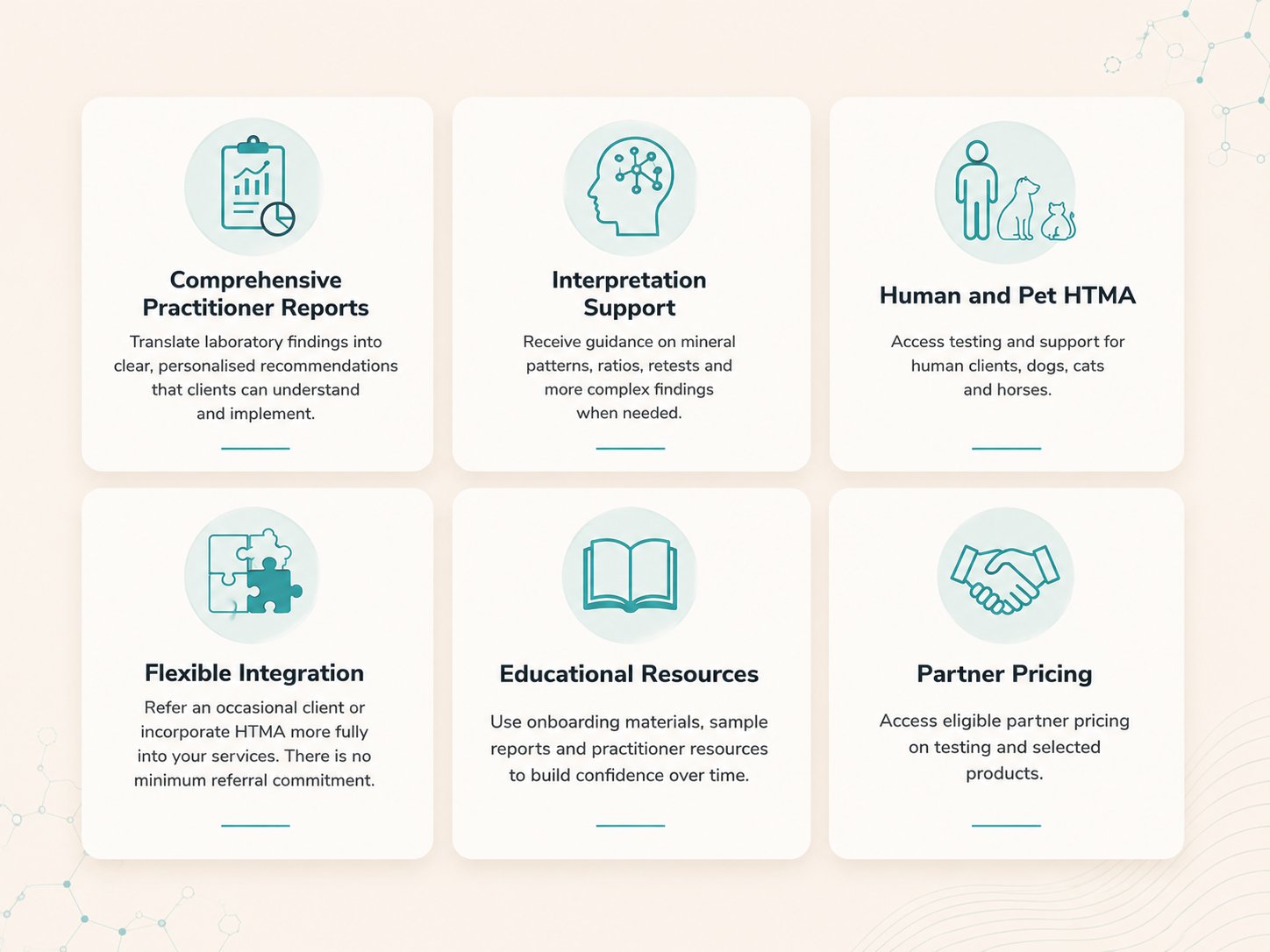
Health Balancing provides more than laboratory testing. Our goal is to give practitioners the resources, support, and infrastructure needed to integrate HTMA confidently into their existing practice.

Whether you are new to HTMA or already familiar with mineral analysis, we provide practical tools to help streamline implementation, improve client communication, and support long-term success.

Resource Description
Practitioner Dashboard Access testing instructions, sample collection guidelines, ordering procedures, practitioner resources, and educational materials through our dedicated practitioner portal.
Interpretation Support Receive email support, report guidance, retest review, and assistance with complex HTMA patterns to help build confidence and improve clinical decision-making.
Optional Practitioner Report System Save time with structured draft reports prepared from your client’s HTMA results. Reports can be reviewed, personalised, and delivered under your own practice while maintaining your professional judgment and recommendations.
Education & Onboarding Access practitioner education, onboarding resources, sample reports, and client-friendly materials designed to help you integrate HTMA smoothly into your existing workflow.
Special Pricing Benefit from partner pricing on eligible HTMA testing and selected products, helping you provide additional value to your clients while supporting your practice.

Our aim is to make HTMA accessible, practical, and sustainable for practitioners while providing the support needed to deliver safe, personalised, and effective client care.

Ready to Integrate HTMA Into Your Practice?

Gain access to practitioner resources, interpretation support, educational materials, and partner pricing through the Health Balancing Partner Program.

Frequently Asked Questions

Do I need to be trained in HTMA?

No. Many partners start with little or no HTMA experience. We provide report interpretations, supplement recommendations, educational resources, and ongoing support to help you confidently introduce HTMA into your practice. Over time, many practitioners naturally deepen their understanding through real-world case experience.

Do I interpret reports myself?

That’s entirely up to you. Some practitioners prefer to review the reports and recommendations themselves, while others simply use our expert interpretations and focus on supporting their clients. You can be as hands-on or hands-off as you prefer.

Can international practitioners join?

Yes. We work with practitioners from many countries and can support clients internationally through our laboratory partners. Whether you work online or in person, you can incorporate HTMA into your practice regardless of location.

Do you support pet HTMA?

Yes. In addition to human HTMA, we also offer HTMA testing and interpretation for dogs. This can be a valuable additional service for practitioners working with pet owners who are interested in a more individualized approach to nutrition and wellness.

Are there registration fees?

No. There are no registration fees or ongoing membership fees to join the partner program. You can start referring clients immediately and access practitioner resources without any upfront cost.

Can I start by referring clients instead of fully integrating HTMA?

Absolutely. Many practitioners begin by simply referring clients and using our interpretation services. This allows you to become familiar with HTMA, observe client results, and gradually decide how deeply you would like to integrate it into your practice.

Will HTMA replace my current approach?

Not at all. HTMA is designed to complement your existing practice, not replace it. Many nutritionists, health coaches, functional practitioners, and wellness professionals use HTMA alongside their current methods to gain additional insight into mineral balance, metabolic patterns, and nutritional needs.

Ready To Explore HTMA Partnership?

Apply below to become a Health Balancing Partner.

Approved practitioners receive access to onboarding resources, the Practitioner Dashboard, educational materials, interpretation support, and partner pricing designed to help integrate HTMA into practice with confidence.

Applications are reviewed to ensure appropriate scope and alignment.

Questions before applying? Contact us.


    Apply to Become a Health Balancing Partner


    Different Way to Work With Us

    Not a practitioner?
    You can still partner with Health Balancing by sharing our work with your audience through our affiliate program.

    Become an Affiliate