Is HTMA accurate for dogs?
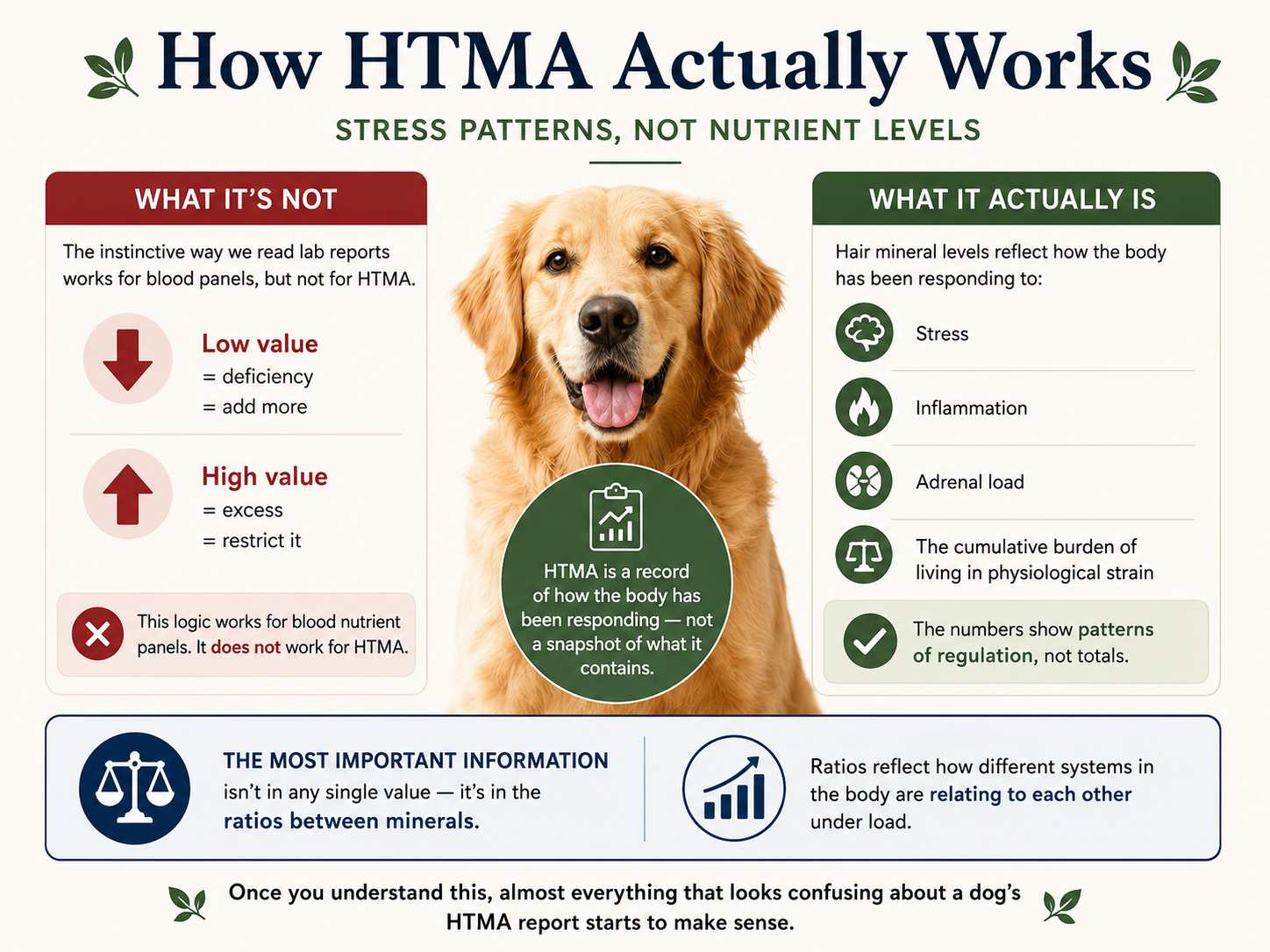
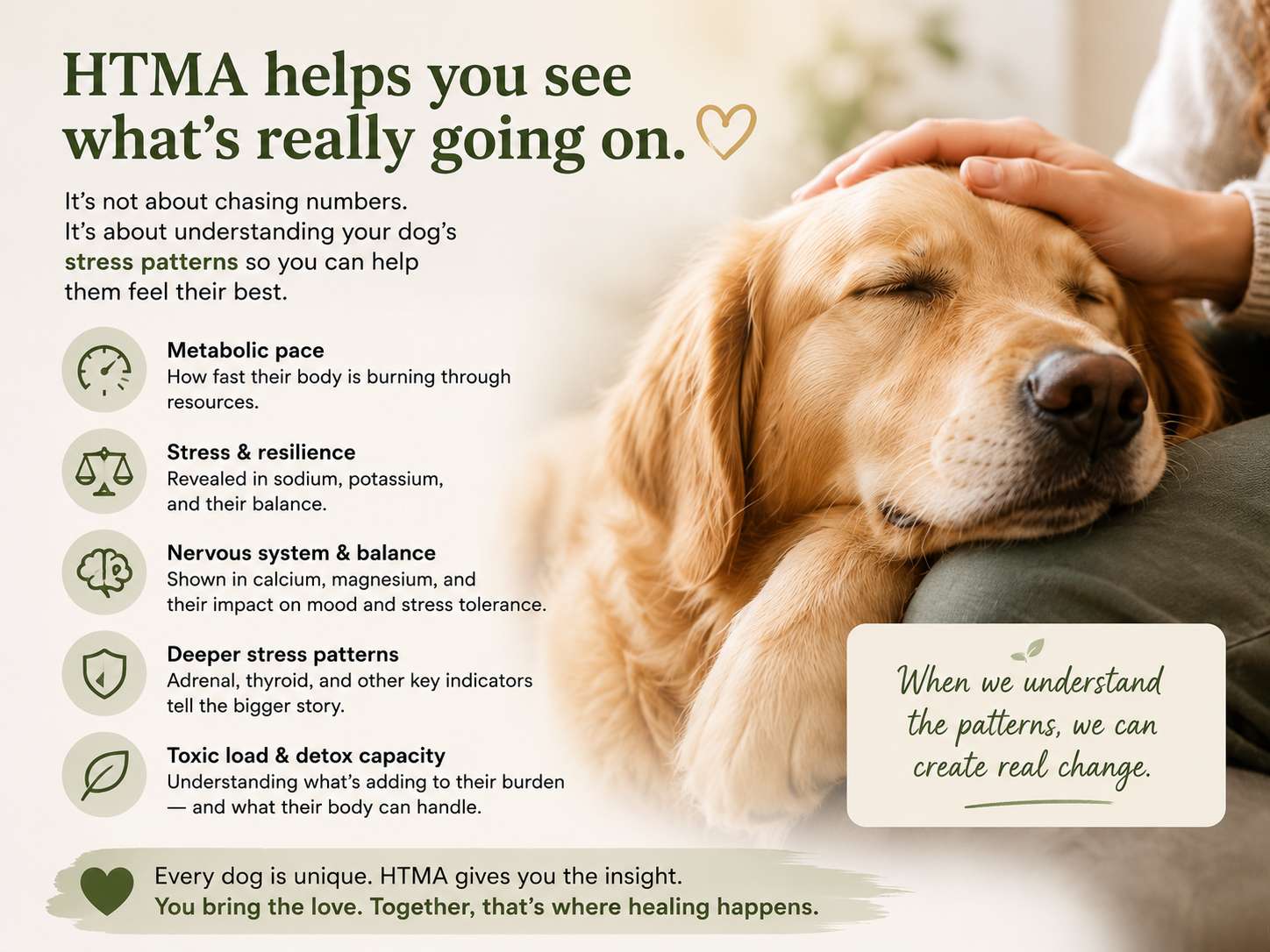
HTMA is a well-established analytical method used in both human and veterinary contexts. Its value lies not in measuring total body nutrient stores — which it is not designed to do — but in revealing metabolic stress patterns, mineral relationships, and regulatory function over time. Interpreted correctly within that framework, it offers clinically useful information that standard blood panels don’t capture. Like any tool, its accuracy depends on correct sample collection, a reputable laboratory, and a practitioner who understands how to read the patterns.
What does high sodium mean on a dog's HTMA report?
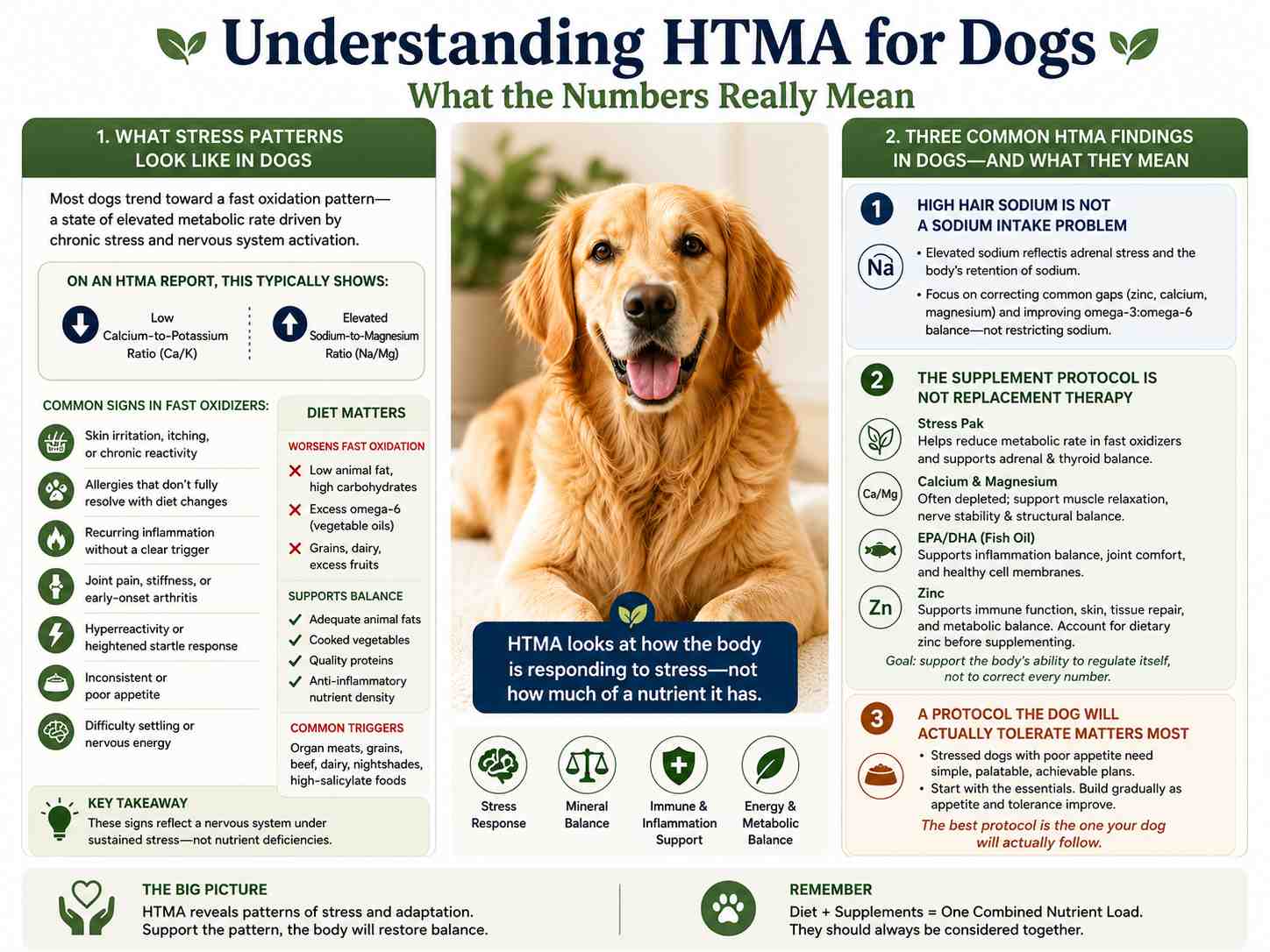
Elevated hair sodium is not primarily a sign that the dog is eating too much sodium. Within the HTMA framework, it is more commonly interpreted as a marker of adrenal stress and sympathetic nervous system activation — the body retaining sodium as part of a stress response. The more relevant question is what mineral gaps and dietary imbalances are sustaining that stress state, and how to address them directly.
My dog's HTMA shows high calcium — should I restrict calcium in the diet?
Not necessarily. A high hair calcium reading in HTMA does not automatically indicate calcium toxicity or excess intake. It may reflect how the body is depositing or sequestering calcium under metabolic stress rather than how much calcium the dog has consumed. Dietary adjustments should follow the overall pattern and clinical context, not individual elevated values in isolation.
How is a dog's hair sample collected for HTMA?
You will need approximately 125 mg of hair — roughly one tablespoon — cut as close to the skin as possible from the top of the head, or the nape if head hair is short. Use clean scissors (avoid brand-new scissors or razors to prevent metal contamination). Hair should be no longer than 1 inch; for long-haired dogs, keep only the inch closest to the scalp and discard the rest. To avoid leaving a bald patch, take small sections from several nearby areas and combine them.
Clean the sampling area with rubbing alcohol and allow it to dry completely before cutting. Place the sample in a small white paper envelope — not a plastic bag, aluminum foil, or taped to paper, as all of these can affect the sample. Label the envelope clearly with your dog’s name, gender, and age, and include the completed laboratory form when mailing. Samples are analyzed by ARL Laboratories in Phoenix, Arizona (US) or LifelineDiag in Poland for international clients.
How often should a dog be retested?
Every 4 to 6 months is the general recommendation. HTMA reflects how the body has been responding over time, and patterns shift as diet, supplementation, and stress load change. Retesting allows you to track progress, adjust the program as needed, and catch any new patterns emerging — particularly important in dogs managing chronic conditions or going through significant life changes.
Can HTMA be used alongside conventional veterinary care?
Yes — HTMA is complementary to veterinary care, not a replacement for it. It offers a different lens: where standard blood panels reflect what is circulating in the body at a point in time, HTMA reflects longer-term metabolic and stress patterns in tissue. Always consult your veterinarian before making significant dietary or supplement changes, particularly for dogs on medication or managing diagnosed conditions.
Does my dog need to be symptomatic to benefit from HTMA?
No. Even for dogs that appear generally healthy, HTMA can reveal which nutrients would be most supportive for long-term health and sustained energy — before deficiencies or stress patterns become symptomatic. Identifying an emerging pattern early is always easier to address than one that has been building for years. For dogs already showing low energy, inconsistent appetite, or slow recovery from stress or illness, testing gives a clearer picture of what the body actually needs rather than guessing.
Koay holds a Diploma in Nutritional Balancing Science from Westbrook University and is a certified nutrition coach through Precision Nutrition. She is a nutritional balancing practitioner at Health Balancing, working with both human and pet HTMA cases. Hair samples are analyzed by ARL Laboratories in Phoenix, Arizona — one of the leading HTMA labs in the United States — or LifelineDiag in Poland for international clients. She welcomes collaboration with veterinarians, canine nutritionists, and rehabilitation professionals.