Frequently Asked Questions
Is the Four Lows pattern dangerous or a sign of disease?
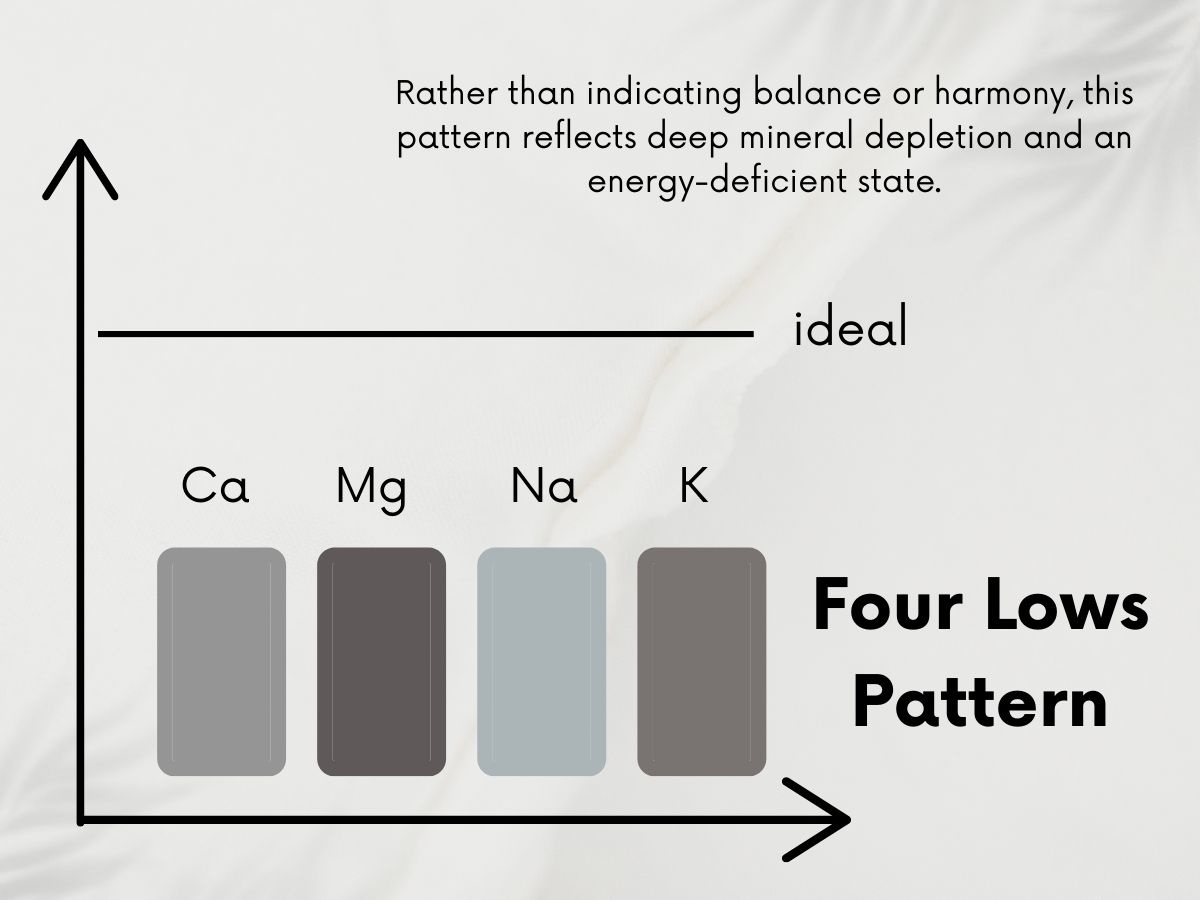
No, the Four Lows pattern is not a disease marker — it reflects a protective metabolic state where the body has reduced output to conserve its remaining reserves. On Hair Tissue Mineral Analysis (HTMA), this shows up as calcium, magnesium, sodium, and potassium all sitting below ideal ranges at once. Rather than the body malfunctioning, it’s responding sensibly to prolonged stress by conserving energy rather than spending it. The Four Lows pattern can therefore be understood as the system being “depleted, not broken.” It’s worth remembering HTMA and Nutritional Balancing are educational tools, not diagnostic ones, so a Four Lows pattern should always be interpreted alongside a person’s symptoms, history, and ideally guidance from a qualified practitioner rather than used to self-diagnose a condition.
How is Four Lows different from Slow Oxidation?
Four Lows differs from Slow Oxidation because it reflects depletion of all four major minerals, while Slow Oxidation reflects the body deliberately conserving energy through a specific ratio imbalance. In Slow Oxidation, the body “applies the brakes,” often with calcium and magnesium elevated relative to sodium and potassium. In Four Lows, there’s no such relative pattern to lean on — all four macrominerals are simply low, and the chart often looks visually “empty” rather than showing clear highs or lows. This matters for interpretation: Four Lows is identified primarily by absolute mineral levels rather than ratios, signaling a more advanced or generalized depletion than the oxidation-rate patterns alone.
Can Four Lows happen even if someone is already eating well and managing stress?
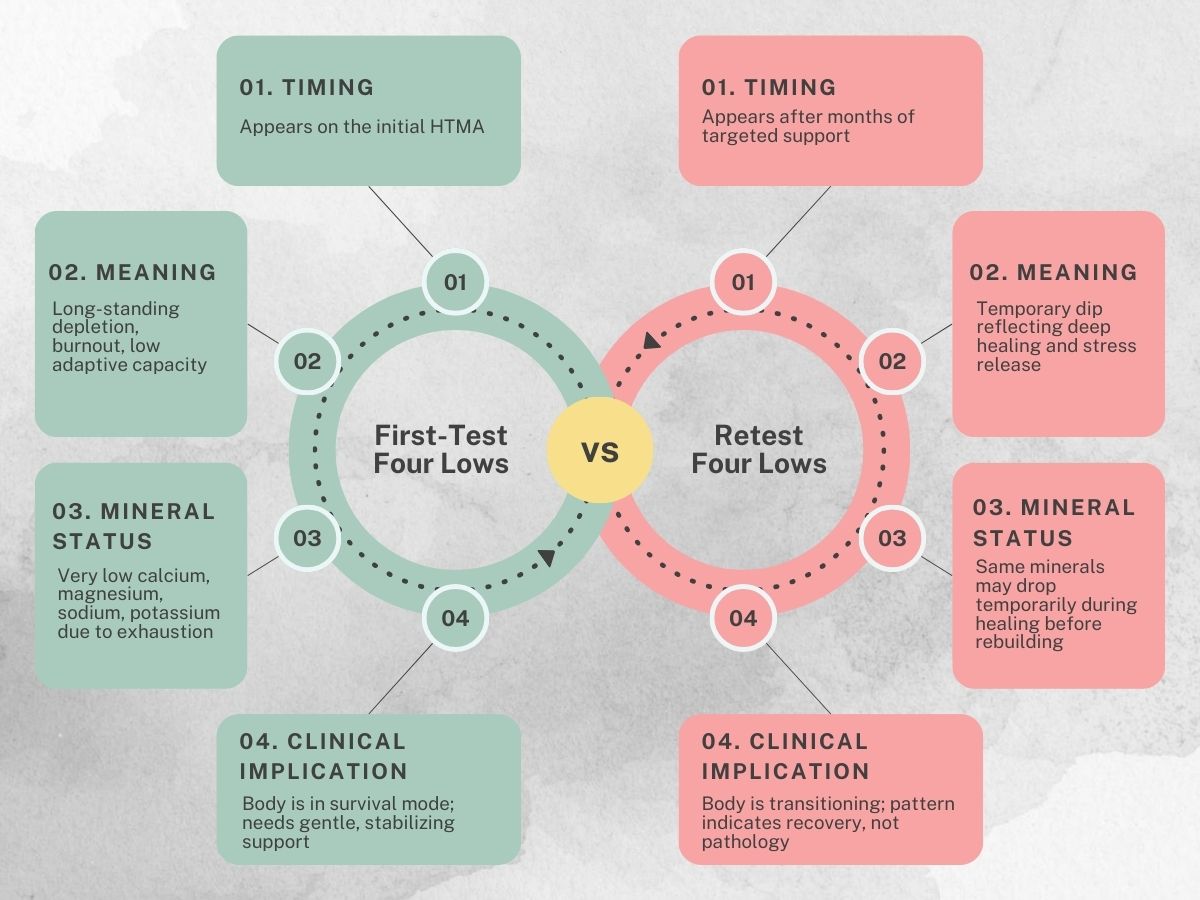
Yes, Four Lows can still appear even with good habits, particularly if it shows up on a retest after a period of targeted support. When this pattern emerges after months of nutritional balancing work, it’s often described as a “celebration pattern” — a sign the nervous system is finally releasing chronic stress chemistry rather than a sign something is going wrong. This is different from Four Lows appearing on someone’s very first test, which usually points to long-standing depletion. Context is essential: the same pattern can mean either ongoing exhaustion or deep healing, depending on when and why it appears.
Why shouldn't someone just push through fatigue from Four Lows with exercise or willpower?
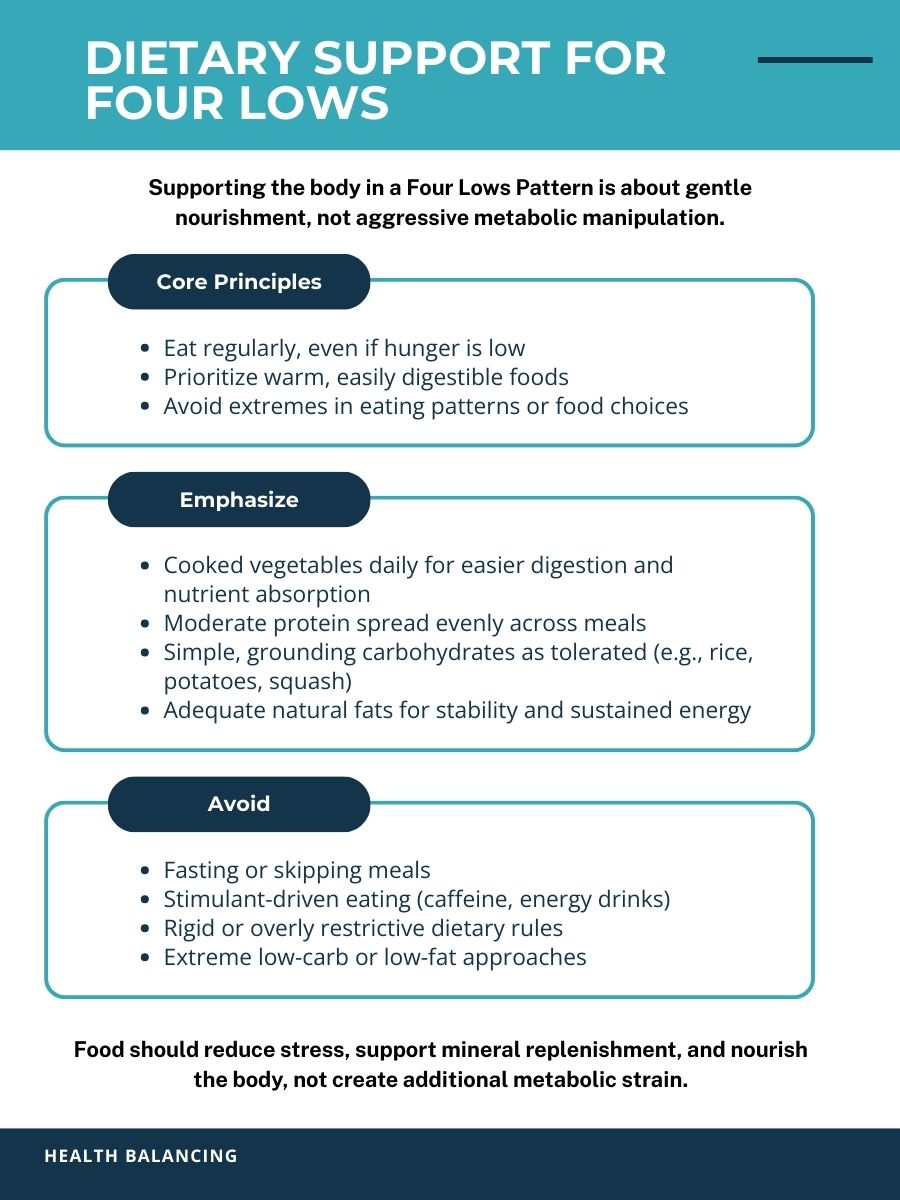
Pushing through doesn’t work in Four Lows because the body isn’t lacking motivation — it’s lacking the mineral and glandular reserves needed to handle additional stress. Forcing exercise, increasing productivity demands, or starting aggressive detox protocols can worsen fatigue, anxiety, or even trigger a shutdown response, because the nervous system has already reduced output to protect itself. The more effective approach is restoring a sense of safety and replenishing reserves gradually, rather than trying to stimulate the system back into activity. This is why support for Four Lows favors gentle, stabilizing steps over intensity-based interventions.
What can cause false readings in a Four Lows HTMA pattern?
A couple of external factors can distort an HTMA reading and make a Four Lows pattern look more or less severe than it actually is. Washing hair at the testing lab can artificially lower sodium and potassium readings, while water softeners in a person’s home can artificially raise sodium or potassium levels. Because of this, absolute mineral levels in Four Lows need to be interpreted carefully and conservatively, often alongside retesting, rather than taken at face value from a single result. This is one reason HTMA practitioners look at context and trends over time rather than relying on one isolated chart.
How long does it typically take to recover from a Four Lows pattern?
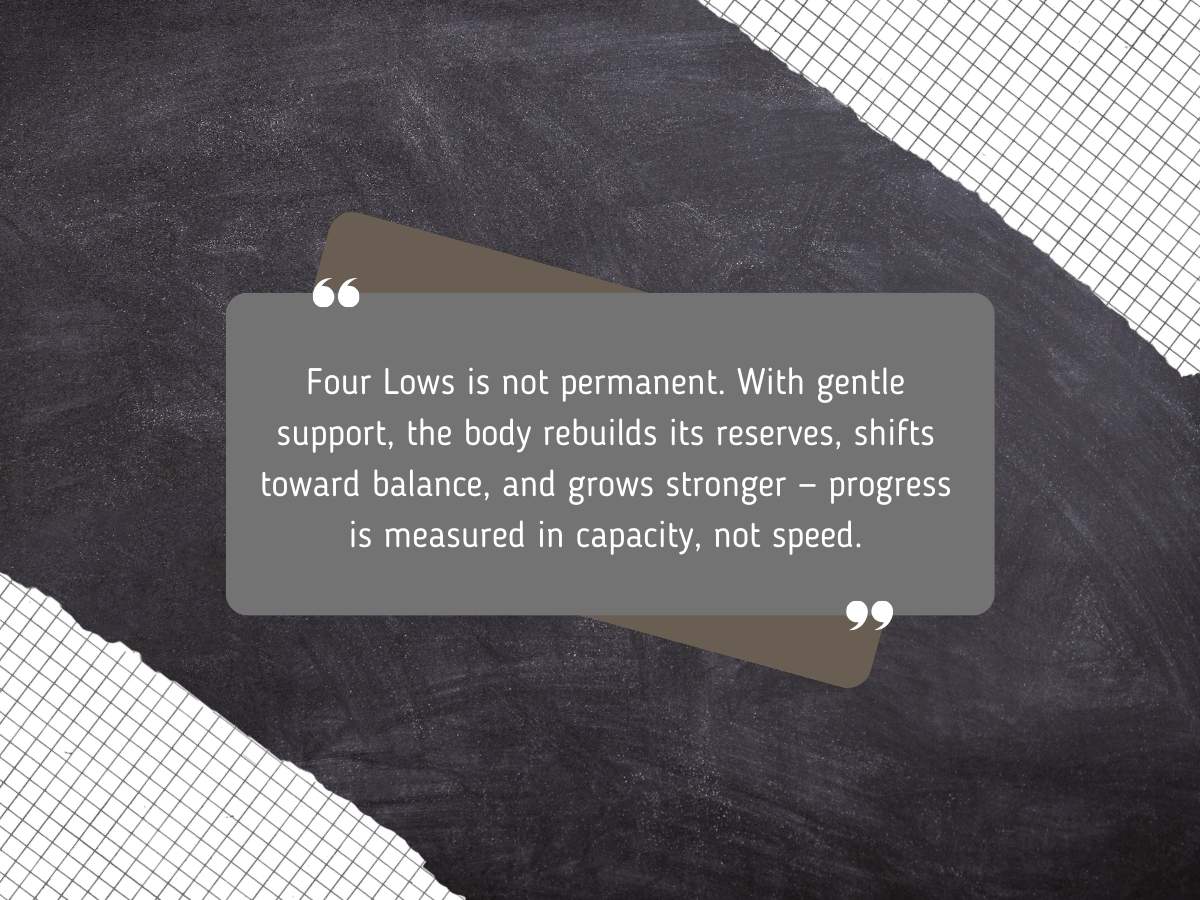
There’s no fixed timeline, but recovery is gradual and sequential rather than fast. With appropriate support, mineral levels rebuild slowly, and oxidation patterns commonly shift toward slow or mixed oxidation before settling further. Energy tends to return before motivation does, and overall resilience builds incrementally over time. Because progress is measured in capacity rather than speed, retesting is used to track these shifts rather than expecting a quick reversal. Pushing for faster results can actually work against the recovery process.
Should someone take a lot of supplements to fix Four Lows quickly?
No — in a Four Lows pattern, less is generally more when it comes to supplementation. Because the body is already in a depleted state, over-supplementing can overwhelm a system with very limited adaptive capacity, rather than helping it recover faster. Effective supplement support in this pattern is conservative, personalized to the individual’s HTMA results, and adjusted slowly over time, often guided by Endo-Met supplements used within a Nutritional Balancing program alongside retesting. The goal is steady, paced support rather than an aggressive correction attempt.
What kind of exercise or movement is appropriate during Four Lows?
Gentle movement, such as walking or light stretching, is appropriate during Four Lows, while intense or demanding exercise should be avoided. Since the body is operating with minimal stress tolerance and reduced adaptive capacity, vigorous training can add to the burden rather than help, potentially worsening fatigue or triggering a shutdown response. Lifestyle support in this pattern focuses on consistency and predictability — steady sleep and wake times, reduced commitments, and avoiding urgency — rather than pushing physical output. As reserves rebuild, capacity for more activity tends to return naturally rather than needing to be forced.