
What Supplements Are Used for Slow Oxidation?
A typical slow-oxidation program may use Megapan, Endo-Dren and Thyro-Complex as part of its foundation, together with mineral support such as Paramin and other nutrients selected according to the complete HTMA pattern.
Megapan provides broad nutritional support, while Endo-Dren and Thyro-Complex provide more targeted glandular support. These may be incorporated as part of the strategy for supporting a slow-oxidation pattern rather than simply being used because someone feels tired.
Importantly, the formula isn’t automatic.
For example, if potassium is very low and a sympathetic dominance pattern is present, I may not use Endo-Dren, because additional adrenal glandular support may be too stimulating for that particular pattern.
Similarly, Four Lows requires a specialised program rather than simply applying the usual slow-oxidation protocol.
What Supplements Are Used for Fast Oxidation?
A fast oxidizer requires a different nutritional direction.
Depending partly on the sodium-to-potassium ratio and overall pattern, the foundational program may use Stress Pak or SBF Formula rather than the formulas typically used for slow oxidation.
Thym-Adren may also be incorporated where appropriate.
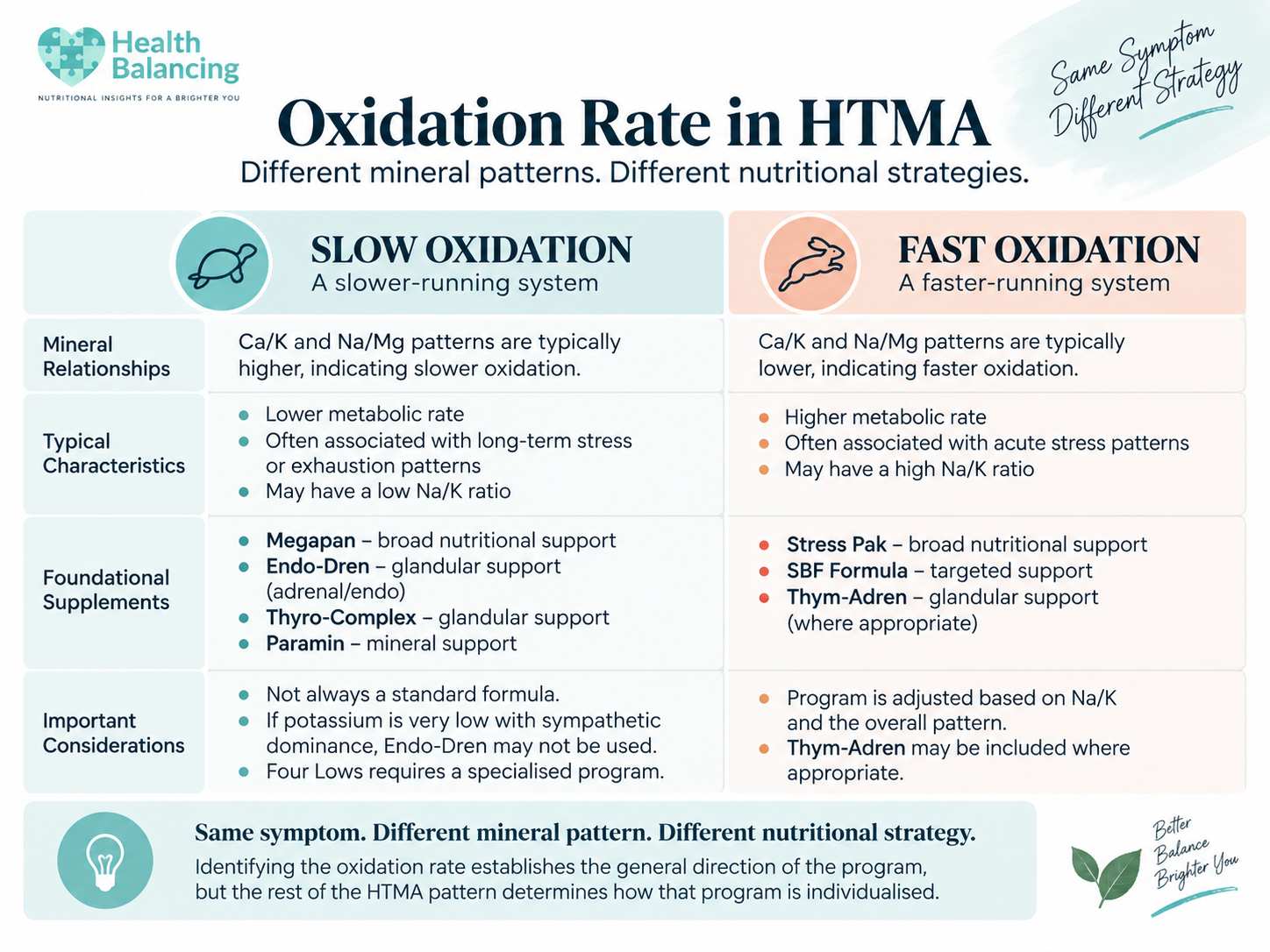
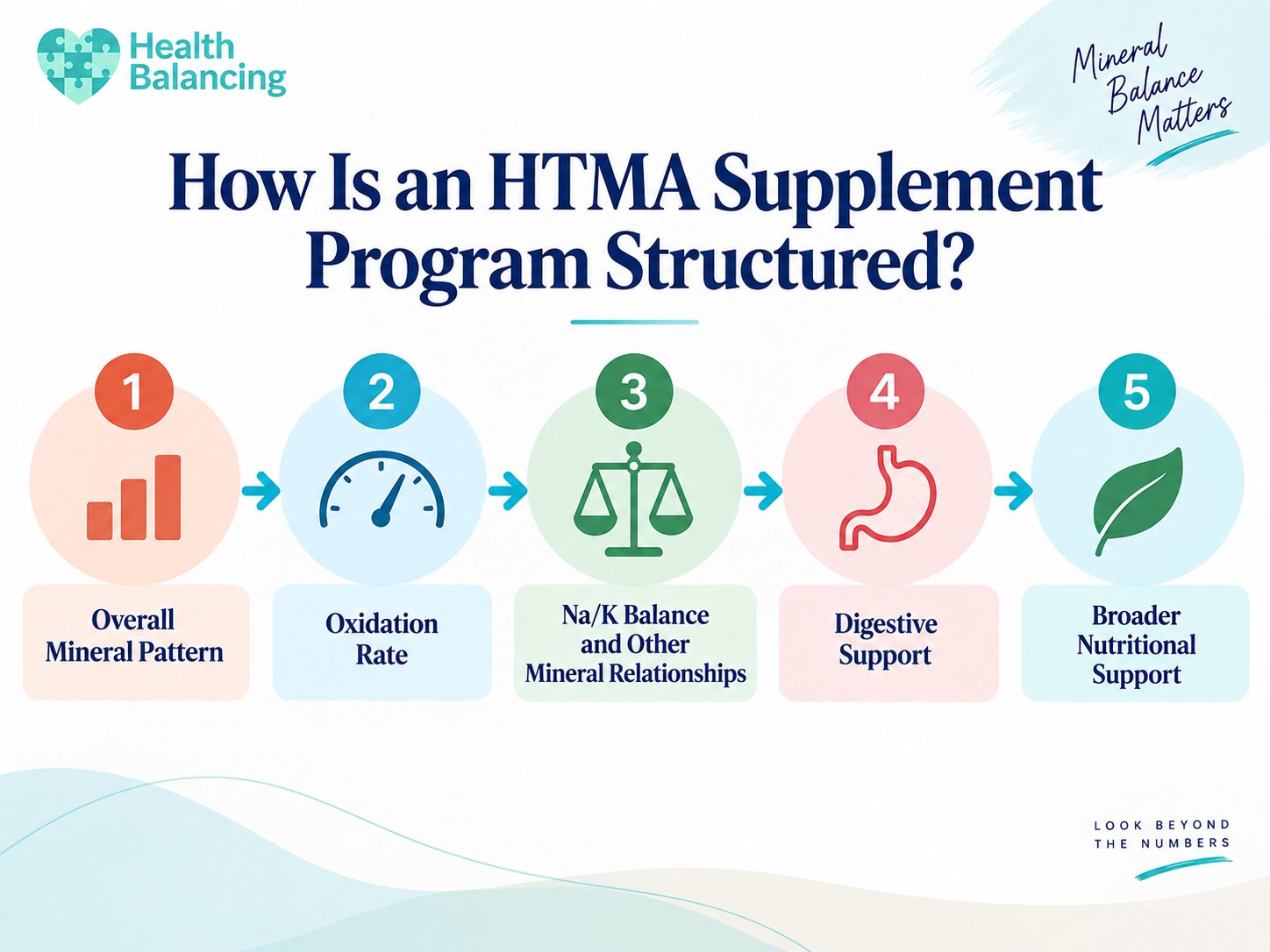
Identifying the oxidation rate establishes the general direction of the program, but the rest of the HTMA pattern determines how that program is individualised.
So two people could both come to me saying:
“I’m exhausted.”
One may receive a slow-oxidation program.
The other may receive a fast-oxidation program.
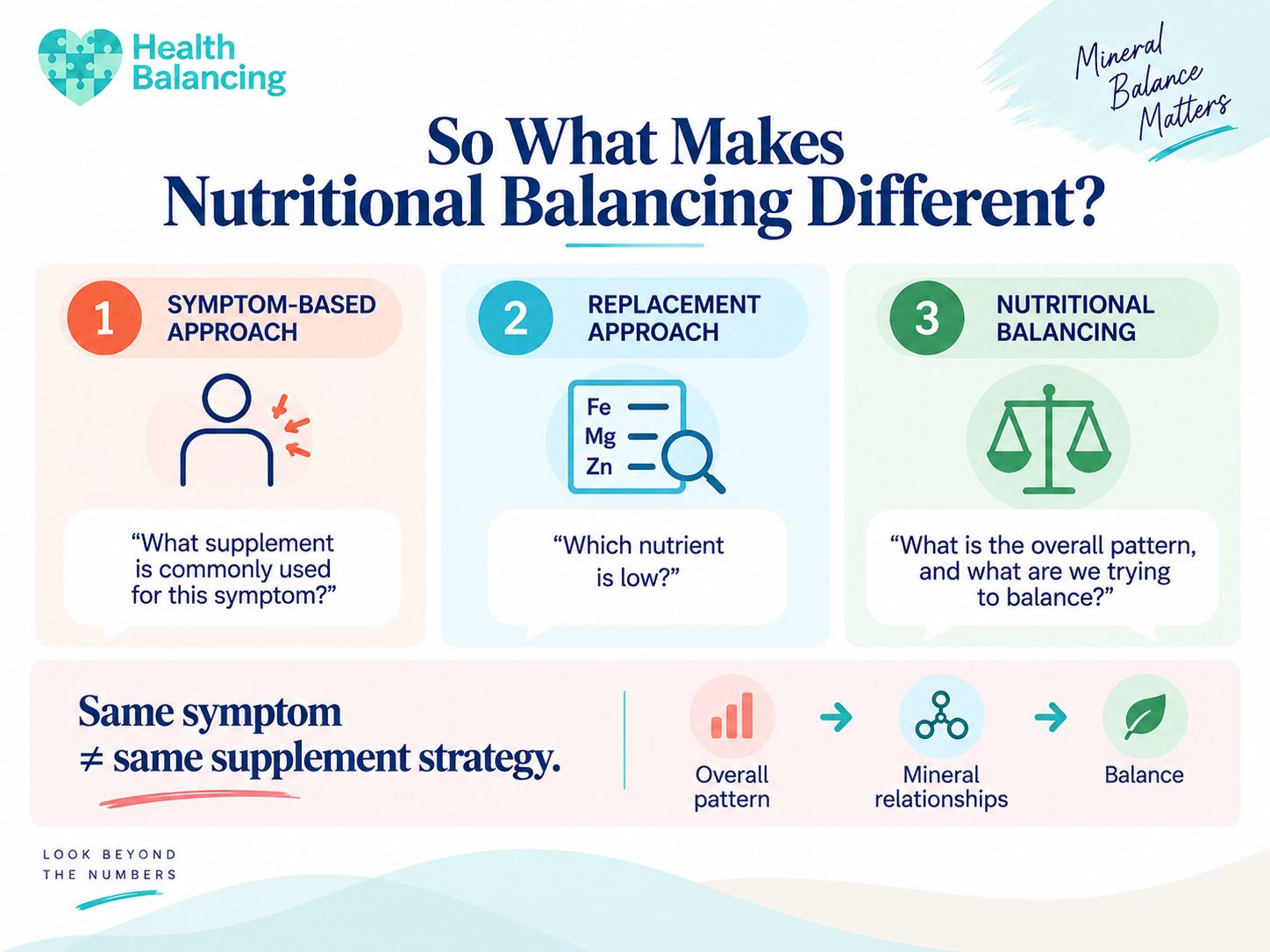
Same symptom.
Different mineral pattern. Different nutritional strategy.
That’s one of the biggest differences between symptom-based supplementation and pattern-based supplementation.
Why Is Zinc Used When Na/K Is High?
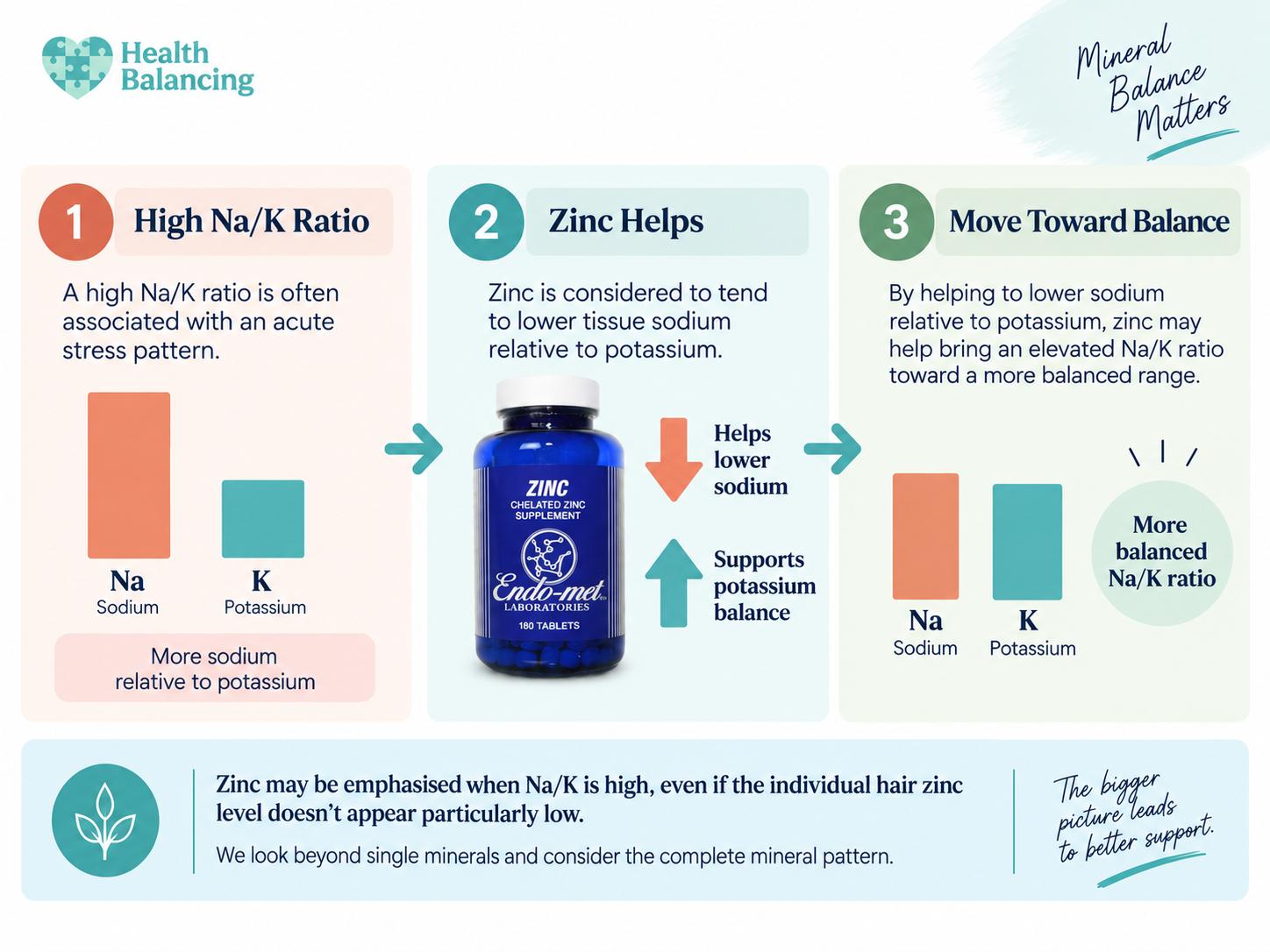
Within Nutritional Balancing, zinc is considered to tend to lower tissue sodium relative to potassium, which can help move an elevated Na/K ratio toward balance.
Zinc may therefore be emphasised when Na/K is high even if the individual hair zinc level doesn’t appear particularly low.
This also helps explain why simply giving more isolated zinc whenever hair zinc appears low may not always make sense.
If someone’s Na/K or vitality ratio is already very low, emphasising additional isolated zinc could work against the direction we’re trying to establish and may be poorly tolerated.
So instead of asking only:
“Is zinc low?”
we ask:
“What role would additional zinc play within this person’s overall mineral pattern?”
Why Is Limcomin Used for a Low Na/K Ratio?
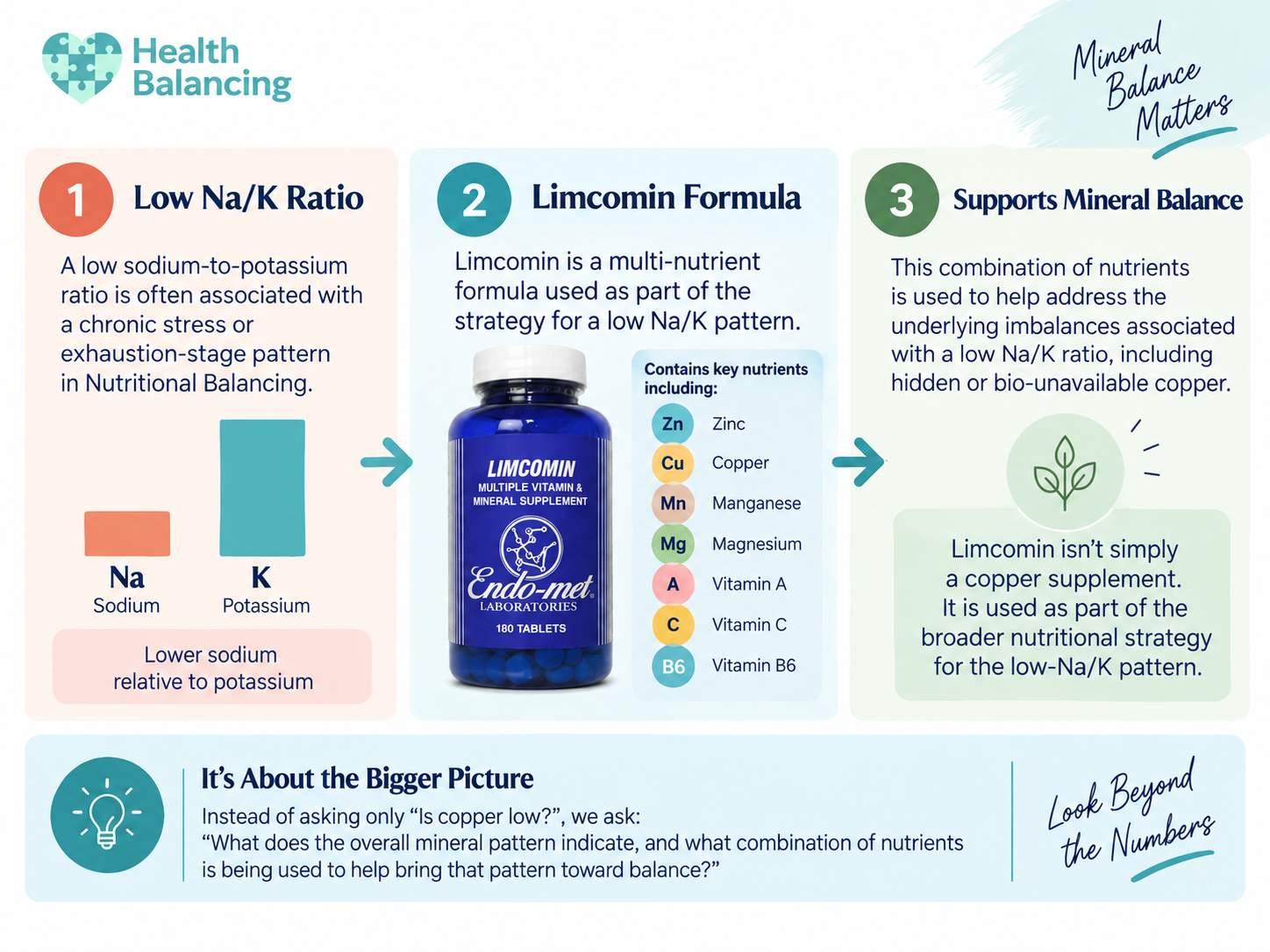
Limcomin is a multi-nutrient formula used in Nutritional Balancing as part of the strategy for a low sodium-to-potassium ratio.
It contains nutrients including zinc, copper, manganese, magnesium and vitamins A, C and B6.
But the important point isn’t simply what’s inside the formula. It’s why that combination is being used.
A low Na/K is associated in Nutritional Balancing with a chronic stress or exhaustion-stage pattern and with what the approach describes as hidden or bio-unavailable copper.
This can create an apparently counterintuitive situation: someone may have an HTMA pattern suggesting copper imbalance—or a hair copper level that doesn’t appear low—yet still receive a formula containing a modest amount of copper.
A simple replacement approach might ask:
“Copper isn’t low, so why give copper?”
Nutritional Balancing asks:
“What does the overall mineral pattern indicate, and what combination of nutrients is being used to help bring that pattern toward balance?”
Limcomin isn’t simply a copper supplement. It is used as part of the broader nutritional strategy for the low-Na/K pattern.
Why Are Calcium and Magnesium Often Given Together?
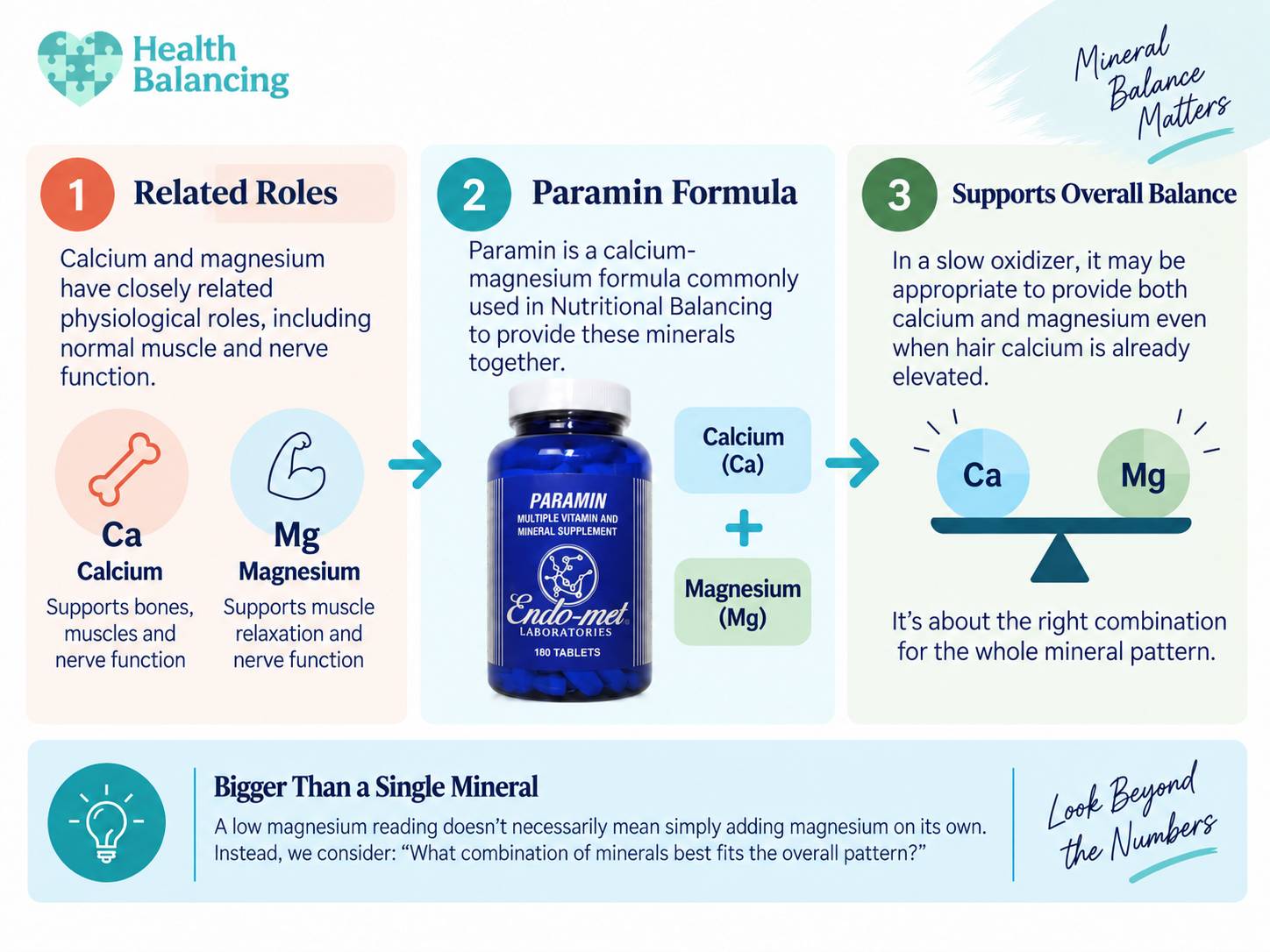
Calcium and magnesium have closely related physiological roles, including normal muscle and nerve function, and their relationship is also considered when interpreting an HTMA.
This is why a low magnesium reading doesn’t necessarily lead to simply adding magnesium on its own.
Paramin, a calcium-magnesium formula, is commonly used in Nutritional Balancing to provide these minerals together.
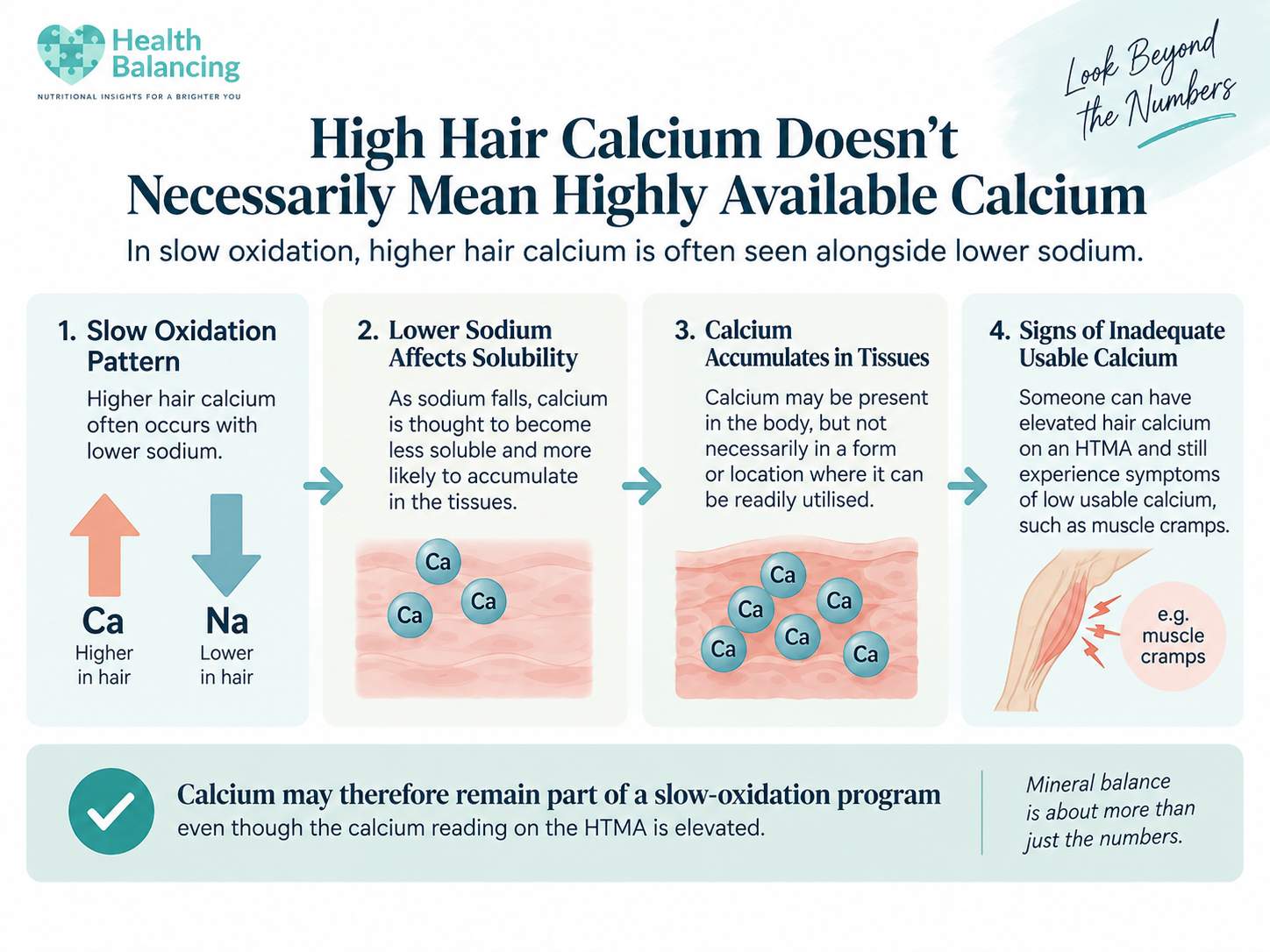
In a slow oxidizer, it may therefore be appropriate to provide both calcium and magnesium even when hair calcium is already elevated.
Once again, the question isn’t simply:
“Which mineral is low?”
It’s:
“What combination of minerals best fits the overall pattern?”
Does HTMA Tell You Exactly Which Supplements You Need?
No. HTMA provides information about minerals and mineral patterns, but it should be interpreted alongside diet, symptoms, health history, medications, existing supplements and other relevant information.
Nutrients that HTMA doesn’t measure, such as vitamin D and omega-3 fatty acids, may also need to be considered separately.
If a Mineral Is Low on My HTMA, Am I Deficient?
Not necessarily.
A low hair concentration shouldn’t automatically be equated with total-body deficiency. The result should be interpreted in the context of oxidation rate, mineral ratios and the overall pattern.
Why Am I Taking Calcium When My Hair Calcium Is High?
In slow oxidation, elevated hair calcium may coexist with reduced calcium bioavailability, so a high hair calcium reading doesn’t automatically mean calcium should be avoided.
Calcium and magnesium are also commonly provided together. Paramin is a calcium-magnesium formula used in Nutritional Balancing for this purpose.
Why Is Zinc Used With High Na/K?
An elevated sodium-to-potassium ratio is associated in Nutritional Balancing with an increased emphasis on zinc.
Additional zinc may therefore be used as part of the strategy to help move Na/K toward balance, rather than being recommended solely according to the individual hair zinc level.
Why Is Limcomin Used With Low Na/K?
Limcomin is a multi-nutrient formula containing zinc, copper, manganese, magnesium and vitamins A, C and B6.
It may be incorporated when Na/K is low as part of the strategy for that mineral pattern, including what Nutritional Balancing describes as hidden or bio-unavailable copper.
Its purpose isn’t simply to replace copper, but to support the broader strategy for bringing the Na/K relationship toward balance.
Why Is GB-3 Commonly Included in Nutritional Balancing?
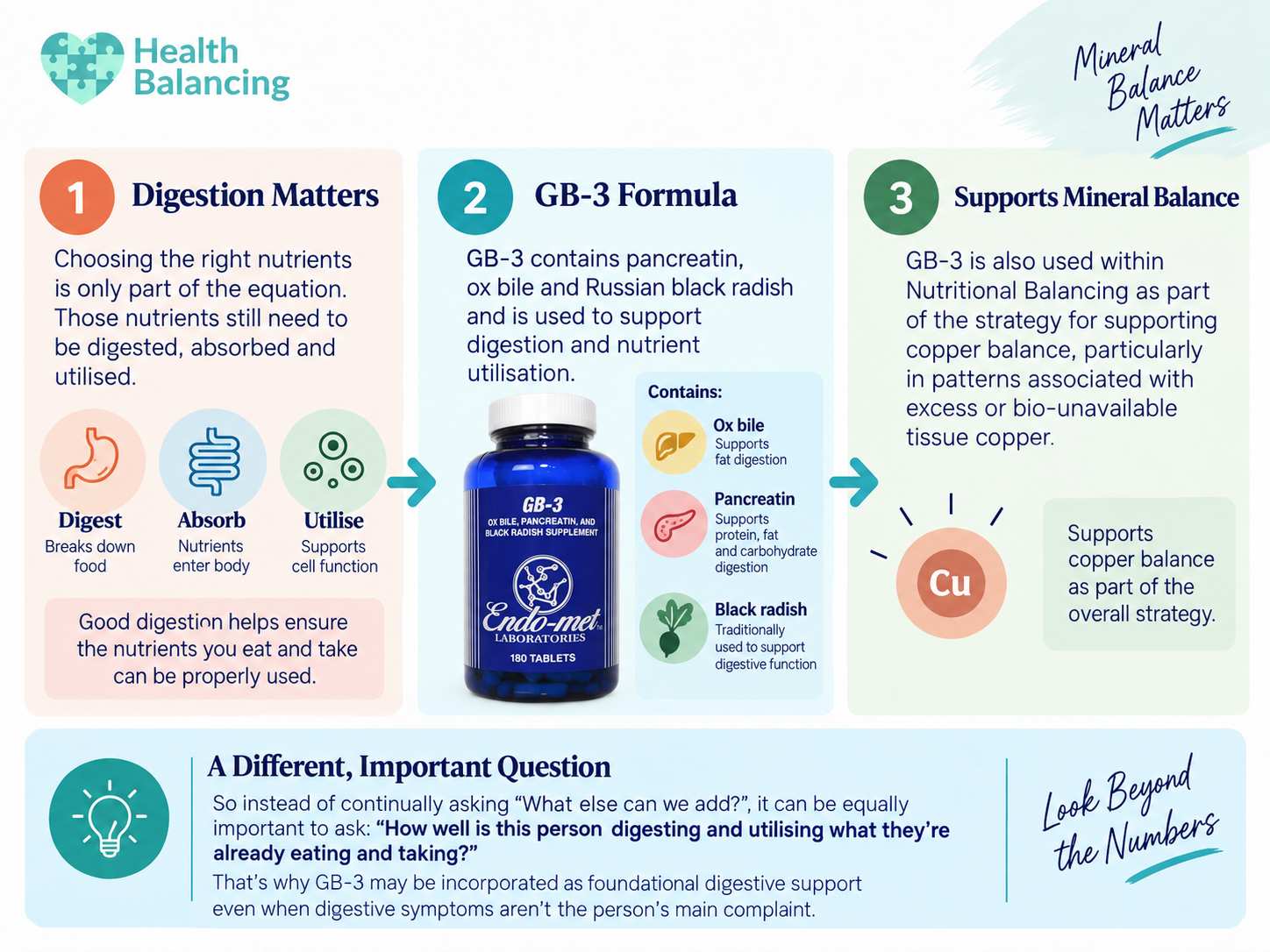
GB-3 combines pancreatin, ox bile and Russian black radish.
It may be included as foundational support for digestion and nutrient utilisation, even when obvious digestive symptoms aren’t present. GB-3 is also used within Nutritional Balancing as part of the strategy for supporting copper balance.
What Supplements Are Used for Slow Oxidation?
A typical slow-oxidation program may include Megapan, Endo-Dren and Thyro-Complex, together with mineral support such as Paramin and other supportive nutrients.
The program still needs to be modified according to other HTMA patterns. For example, Endo-Dren may not be appropriate when very low potassium and sympathetic dominance suggest that additional adrenal stimulation could be poorly tolerated. Four Lows also requires a specialised approach.
What Supplements Are Used for Fast Oxidation?
Fast oxidizers may use Stress Pak or SBF Formula depending on the Na/K ratio and overall pattern. Thym-Adren may also be incorporated where appropriate.
The complete HTMA pattern—not simply the label “fast oxidizer”—determines the final program.
Why Would Two People With Fatigue Receive Different Supplements?
Because fatigue is a symptom, not an HTMA pattern.
One person may show slow oxidation while another shows fast oxidation, with different Na/K ratios and additional mineral patterns. Their nutritional programs can therefore be quite different.
Can I Take Additional Supplements Alongside My HTMA Program?
Sometimes, but they should be reviewed first.
Additional products can duplicate nutrients, interact with medications or other supplements, or work against the intended direction of the program.
The nutrient, total dosage and how it fits the person’s current mineral pattern should all be considered.
How Often Should I Repeat an HTMA?
Retesting is individualised rather than based on an inflexible schedule.
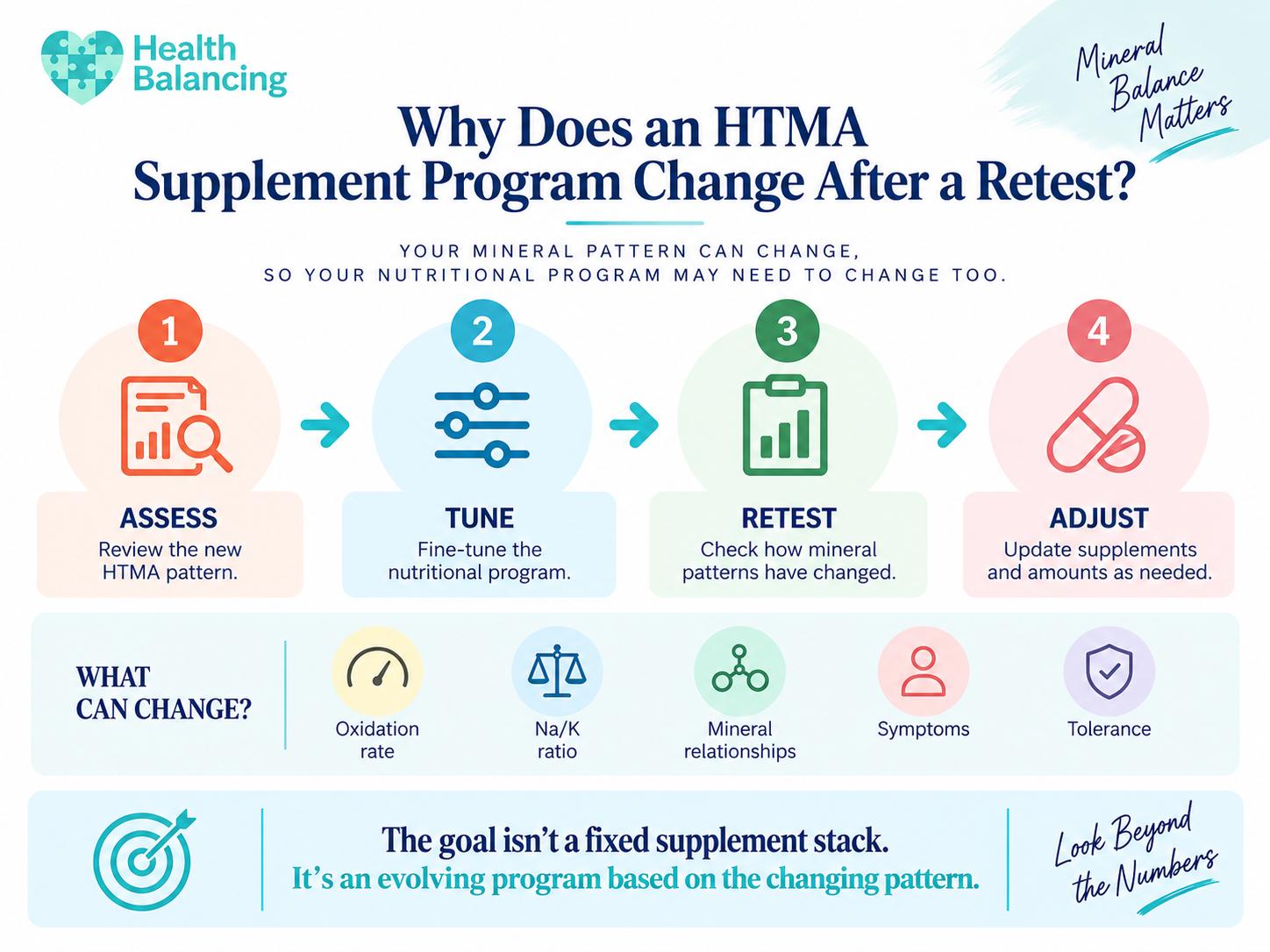
Periodic retesting—often every few months depending on the individual and their progress—allows the program to be adjusted as the mineral pattern changes.
A retest can become particularly useful if symptoms or supplement tolerance change significantly, as this may indicate that the nutritional strategy needs reassessment.