
Written by Dr. Amanda P. Cartwright
When it comes to nutritional health, minerals are often overlooked. People frequently focus on vitamins, protein, calories, and supplements while forgetting that minerals are essential to nearly every function in the human body. From energy production and nervous system function to hormone regulation, immune health, muscle function, and bone maintenance, minerals play an enormous role in keeping the body operating as it should.
But here is something important that many people don’t realize: Having enough minerals is not necessarily the same as having minerals in the right balance.
Minerals work together in an intricate relationship. They interact, compete for absorption, influence one another’s activity, and help regulate countless biochemical processes. When one mineral becomes excessive or deficient, it can influence the levels and functions of other minerals. This is why simply taking more supplements is not always the answer.
The Problem With Supplementing Blindly
Walk into almost any health food store, and you’ll find shelves filled with magnesium, calcium, zinc, copper, potassium, iron, and dozens of other mineral supplements. Many people purchase these products based on something they read online, a recommendation from a friend, or a symptom they are experiencing.
Feeling tired? Try iron. Having trouble sleeping? Take magnesium. Experiencing muscle cramps? Add potassium. Concerned about bone health? Start taking calcium.
Although these minerals are important, supplementing without understanding your individual nutritional status can create unintended consequences.
Minerals do not operate independently. For example, excessive zinc supplementation can interfere with copper absorption and potentially contribute to copper deficiency. High calcium intake can affect the absorption of other minerals, including magnesium, depending on the overall dietary and supplemental intake. Excessive iron supplementation can create problems when iron levels are already adequate or elevated.
Even magnesium, a mineral many people consider universally beneficial, should be evaluated in the context of overall intake, kidney function, medications, and individual nutritional needs.
The bottom line is that more is not always better. Adding one mineral without considering the others can potentially create another imbalance that was not present before.
Minerals Work as a Team
Think of your body’s minerals as members of a team. Each has a particular job, but none works entirely alone.
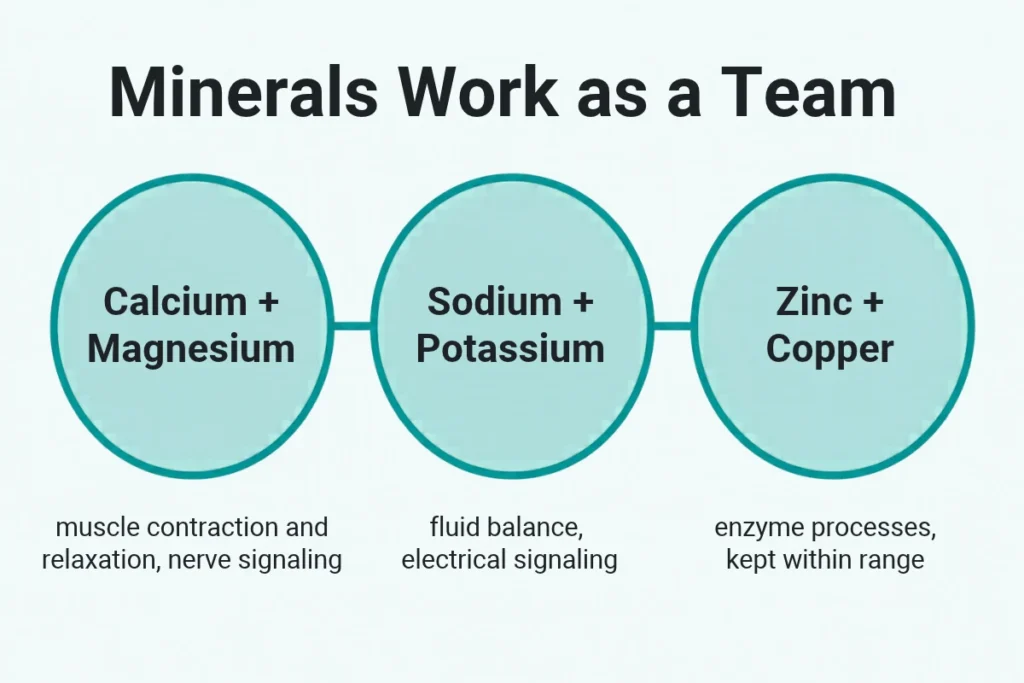
Calcium and magnesium are involved in muscle contraction and relaxation, nerve signaling, and cellular function. Sodium and potassium help maintain fluid balance and electrical signaling throughout the nervous system. Zinc and copper participate in numerous enzymatic processes and must be maintained within appropriate ranges.
These relationships are important because the body depends on a coordinated mineral environment to function properly.
For example, magnesium participates in hundreds of enzymatic reactions and is involved in energy production. Zinc supports immune function, tissue repair, and normal cellular processes. Selenium contributes to antioxidant defense and thyroid hormone metabolism.
When nutritional intake is inadequate, excessive, or poorly balanced, these interconnected processes may be affected.
This is why an individualized approach to mineral assessment is much more useful than randomly adding supplements to an already complicated nutritional picture.
Why Individual Assessment Matters
One of the biggest mistakes people make is assuming that everyone needs the same supplements. Two individuals can experience similar symptoms but have very different nutritional patterns.
Fatigue, poor sleep, muscle discomfort, difficulty managing stress, and changes in energy can have numerous underlying causes. Nutritional status may be one piece of the picture, but symptoms alone cannot identify a specific mineral deficiency.
This is where Hair Tissue Mineral Analysis (HTMA) can offer an additional perspective.
HTMA evaluates mineral concentrations in a hair sample and provides information about tissue mineral patterns over time. Unlike a standard blood test, which measures circulating levels at a particular point in time, hair analysis offers a different type of nutritional assessment.
Blood testing can be beneficial but for certain minerals specifically, it will not show the full picture. Because the body tightly regulates circulating mineral concentrations, blood levels do not always provide the same information as tissue mineral analysis.
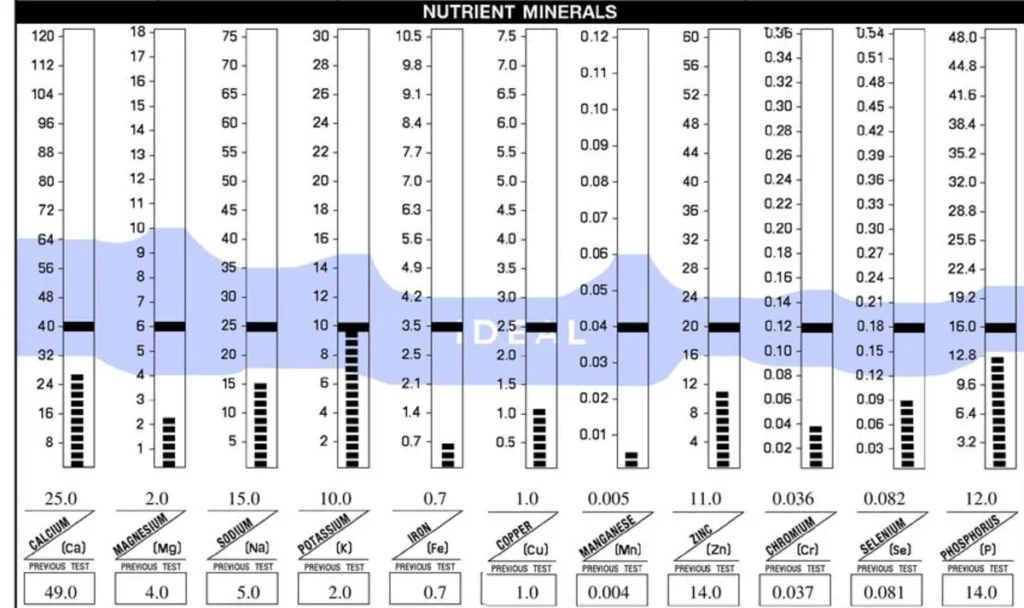
HTMA can help identify patterns involving minerals such as calcium, magnesium, sodium, potassium, zinc, copper, and other elements. It may also provide information about certain mineral relationships and ratios that can be useful when evaluating nutritional patterns.
Importantly, HTMA is not a diagnostic test for disease, and its findings should not be interpreted as a substitute for appropriate medical testing. Results require careful interpretation within the context of an individual’s health history, diet, medications, and other laboratory findings.
Why a Personalized Supplementation Strategy Is Better
Once mineral patterns have been evaluated, nutritional recommendations can be more thoughtfully developed.
Rather than automatically recommending a long list of supplements, the goal should be to determine what an individual may actually need and what factors could be contributing to the observed patterns.
In many cases, the first step may simply be improving dietary habits. Eating a variety of nutrient-dense foods, obtaining adequate protein, incorporating mineral-rich vegetables, and reducing reliance on highly processed foods can provide an important nutritional foundation.
When supplementation is appropriate, the type, amount, and duration should be individualized. More importantly, recommendations should account for potential interactions between minerals and other nutrients.
It is also important to remember that supplements are not automatically harmless because they are sold over the counter. Excessive intake of certain minerals can be harmful, and individuals taking medications or managing medical conditions should consult an appropriately qualified healthcare professional before making significant changes.
Stop Guessing. Start Understanding.
The supplement industry has made it easy to believe that every health concern can be addressed by adding another bottle to the cabinet. Unfortunately, this approach can become expensive, confusing, and potentially counterproductive.
True nutritional support is not about taking the most supplements. It is about understanding what the body needs, recognizing how nutrients interact, and making informed decisions based on individual circumstances.
Minerals are essential, but balance matters. Before adding another supplement to your daily routine, consider taking a step back and looking at the bigger nutritional picture.
The goal isn’t simply to get more minerals into the body. The goal is to support the right nutritional balance for optimal function.
Sometimes the most important step toward better nutritional health isn’t taking another supplement. It’s finding out what your body actually needs.
This is a guest article. The views are the author’s own. It is for information only and is not medical advice.
New to HTMA? Learn more about hair tissue mineral analysis.