Blood Sugar Instability: Symptoms, Causes & the Mineral Connection

Why blood sugar crashes, cravings and “hangry” feelings may be connected to stress, metabolism and mineral balance.

Blood Sugar Instability: Symptoms, Causes & the Mineral Connection

Do you become shaky, irritable, anxious, or exhausted when you go too long without eating? Do you struggle with sugar cravings, brain fog, poor concentration, energy crashes, or feeling “hangry” between meals?

These symptoms are often signs of blood sugar instability. While many people associate blood sugar problems with diabetes, fluctuations in blood sugar can occur long before diabetes develops. In fact, blood sugar imbalances may contribute to fatigue, anxiety, mood swings, sleep disturbances, cravings, and difficulty coping with stress.

At Health Balancing, we frequently see blood sugar symptoms associated with mineral imbalances, chronic stressadrenal dysfunctionthyroid sluggishness, and metabolic patterns identified through Hair Tissue Mineral Analysis (HTMA). Blood sugar regulation is not simply about sugar. It is closely tied to how efficiently your body produces energy.

This guide explains the common symptoms of blood sugar instability, potential underlying causes, the connection with HTMA patterns, and practical strategies that may help support more stable energy and fewer cravings.
What Is Blood Sugar Instability?

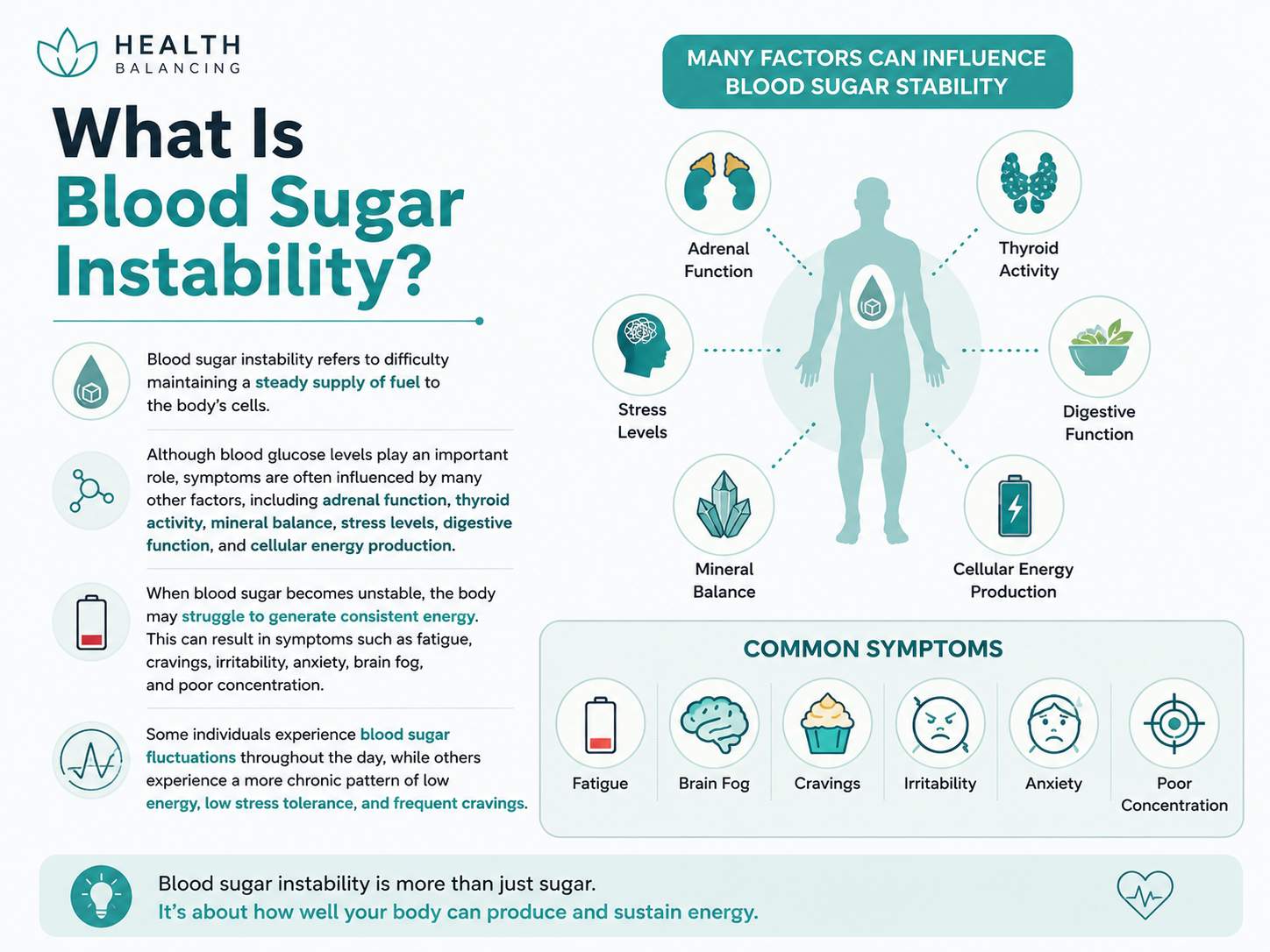
Blood sugar instability refers to difficulty maintaining a steady supply of fuel to the body’s cells.

Although blood glucose levels play an important role, symptoms are often influenced by many other factors, including adrenal function, thyroid activity, mineral balance, stress levels, digestive function, and cellular energy production.

When blood sugar becomes unstable, the body may struggle to generate consistent energy. This can result in symptoms such as fatigue, cravings, irritability, anxiety, brain fog, and poor concentration.

Some individuals experience blood sugar fluctuations throughout the day, while others experience a more chronic pattern of low energy, low stress tolerance, and frequent cravings.

Experiencing fatigue, cravings, anxiety, or energy crashes? Hair Tissue Mineral Analysis (HTMA) can help identify mineral imbalances and metabolic patterns that may be contributing to blood sugar instability.

Infographic explaining what blood sugar instability is, showing that stable energy depends on adrenal function, thyroid activity, mineral balance, stress levels, digestive function, and cellular energy production, with common symptoms including fatigue, brain fog, cravings, irritability, anxiety, and poor concentration.

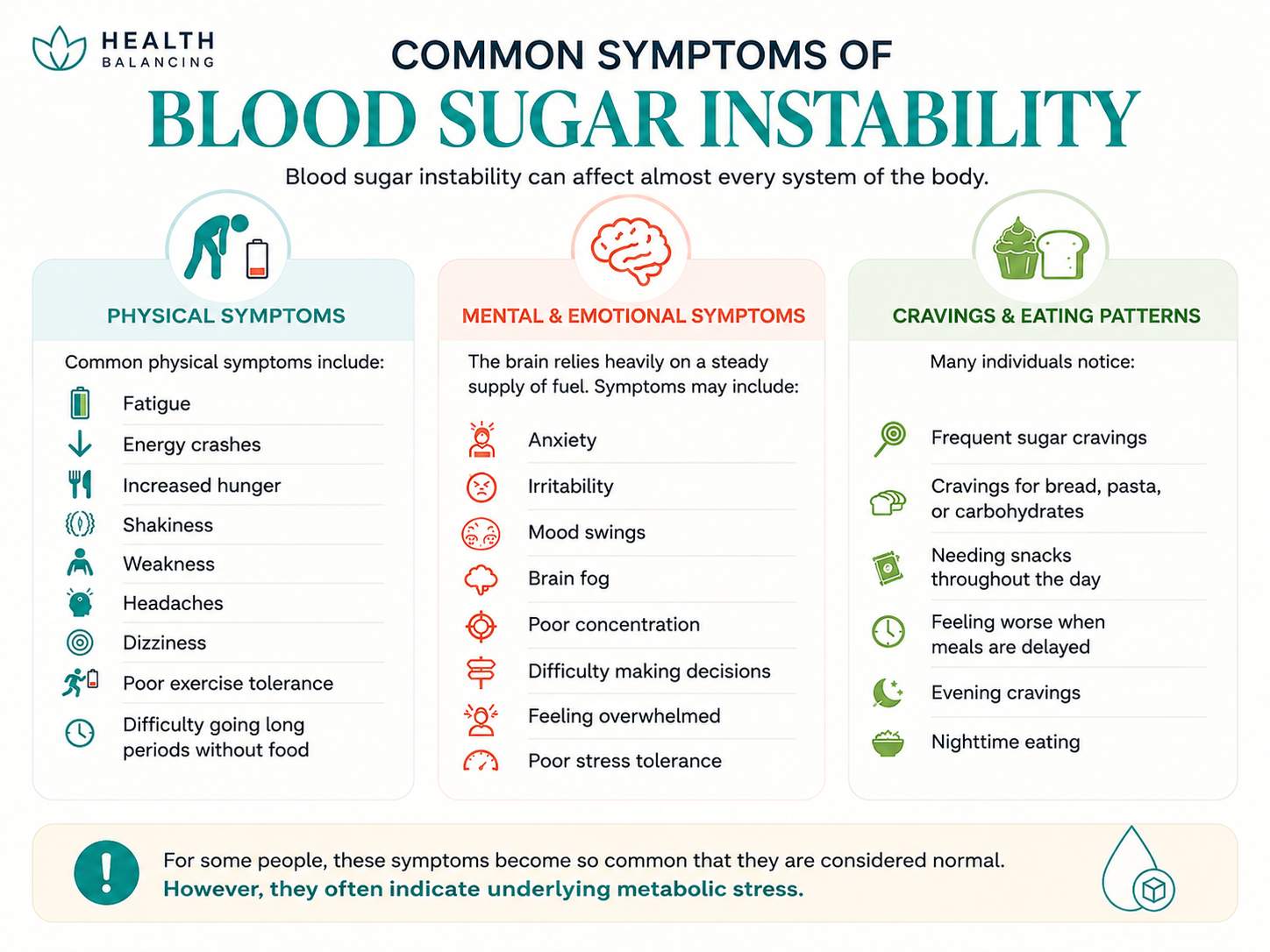
Common Symptoms of Blood Sugar Instability

Blood sugar instability can affect almost every system of the body.

Physical Symptoms

Common physical symptoms include:

  • Fatigue
  • Energy crashes
  • Increased hunger
  • Shakiness
  • Weakness
  • Headaches
  • Dizziness
  • Poor exercise tolerance
  • Difficulty going long periods without food

Mental and Emotional Symptoms

The brain relies heavily on a steady supply of fuel. As a result, blood sugar instability commonly affects mood and cognition.

Symptoms may include:

  • Anxiety
  • Irritability
  • Mood swings
  • Brain fog
  • Poor concentration
  • Difficulty making decisions
  • Feeling overwhelmed
  • Poor stress tolerance

Cravings and Eating Patterns

Many individuals notice:

  • Frequent sugar cravings
  • Cravings for bread, pasta, or carbohydrates
  • Needing snacks throughout the day
  • Feeling worse when meals are delayed
  • Evening cravings
  • Nighttime eating

For some people, these symptoms become so common that they are considered normal. However, they often indicate underlying metabolic stress.

Infographic illustrating the common symptoms of blood sugar instability, including physical symptoms such as fatigue, energy crashes, increased hunger, shakiness, weakness, headaches, dizziness, poor exercise tolerance, and difficulty going long periods without food; mental and emotional symptoms including anxiety, irritability, mood swings, brain fog, poor concentration, difficulty making decisions, feeling overwhelmed, and poor stress tolerance; and eating patterns such as frequent sugar cravings, carbohydrate cravings, frequent snacking, worsening symptoms when meals are delayed, evening cravings, and nighttime eating.

Blood Sugar Instability vs Hypoglycemia

Hypoglycemia technically refers to low blood glucose levels.

However, many people experience symptoms commonly associated with hypoglycemia even when standard laboratory testing appears normal.

From a nutritional balancing perspective, symptoms often reflect reduced cellular energy production rather than simply a low blood sugar reading.

This helps explain why someone can experience shakiness, fatigue, cravings, anxiety, irritability, and poor concentration despite having normal fasting glucose levels.

Blood sugar regulation is ultimately about how effectively the body can produce and maintain energy.

Why Blood Sugar Problems Can Occur Even When Tests Are Normal

Many people are told that their blood sugar is “normal” despite experiencing symptoms.

This occurs because blood sugar regulation involves more than a single glucose measurement.

The body must be able to:

  • Digest and absorb nutrients
  • Transport glucose into cells
  • Produce adequate insulin
  • Maintain healthy adrenal function
  • Maintain healthy thyroid activity
  • Generate cellular energy efficiently

Disruptions anywhere along this pathway may contribute to symptoms.

For this reason, blood sugar symptoms often appear long before laboratory abnormalities become obvious.

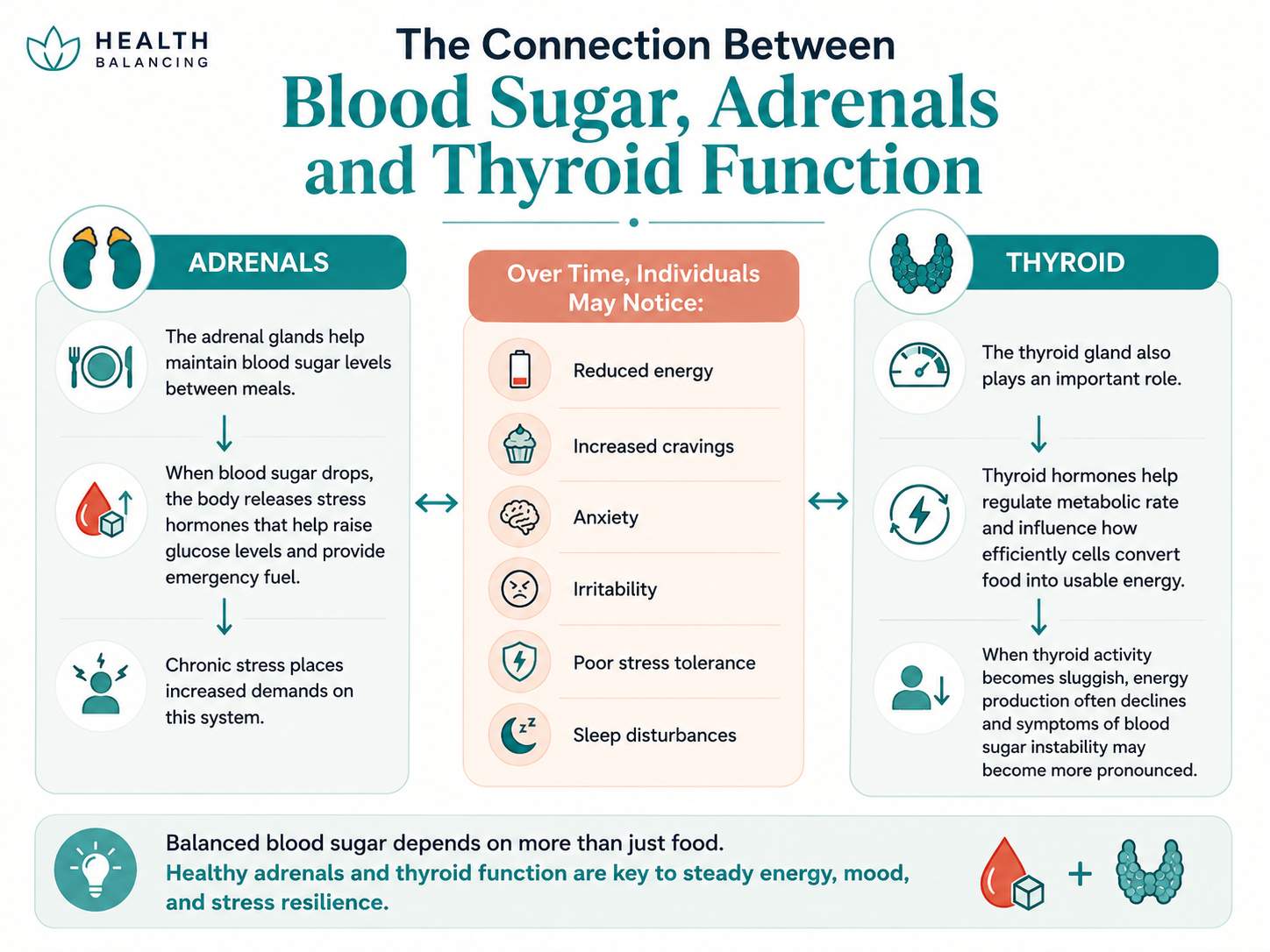
The Connection Between Blood Sugar, Adrenals and Thyroid Function

The adrenal glands help maintain blood sugar levels between meals.

When blood sugar drops, the body releases stress hormones that help raise glucose levels and provide emergency fuel.

Chronic stress places increased demands on this system.

Over time, individuals may notice:

  • Reduced energy
  • Increased cravings
  • Anxiety
  • Irritability
  • Poor stress tolerance
  • Sleep disturbances

The thyroid gland also plays an important role.

Thyroid hormones help regulate metabolic rate and influence how efficiently cells convert food into usable energy.

When thyroid activity becomes sluggish, energy production often declines and symptoms of blood sugar instability may become more pronounced.

Infographic explaining the connection between blood sugar, adrenal glands, and thyroid function. It shows how the adrenal glands help maintain blood sugar between meals by releasing stress hormones when glucose drops, how chronic stress can lead to reduced energy, cravings, anxiety, irritability, poor stress tolerance, and sleep disturbances, and how thyroid hormones regulate metabolism and cellular energy production, with sluggish thyroid function contributing to blood sugar instability.

Blood Sugar Instability and Anxiety

Many people view anxiety as purely emotional or psychological.

However, blood sugar fluctuations can create symptoms that closely resemble anxiety.

When blood sugar drops, stress hormones such as adrenaline and cortisol are released to help restore fuel availability.

This response may cause:

  • Nervousness
  • Restlessness
  • Racing thoughts
  • Shakiness
  • Sweating
  • Rapid heartbeat
  • Feelings of panic

Some individuals notice that anxiety worsens when meals are delayed and improves shortly after eating.

In these cases, stabilising blood sugar may significantly improve emotional resilience and stress tolerance.

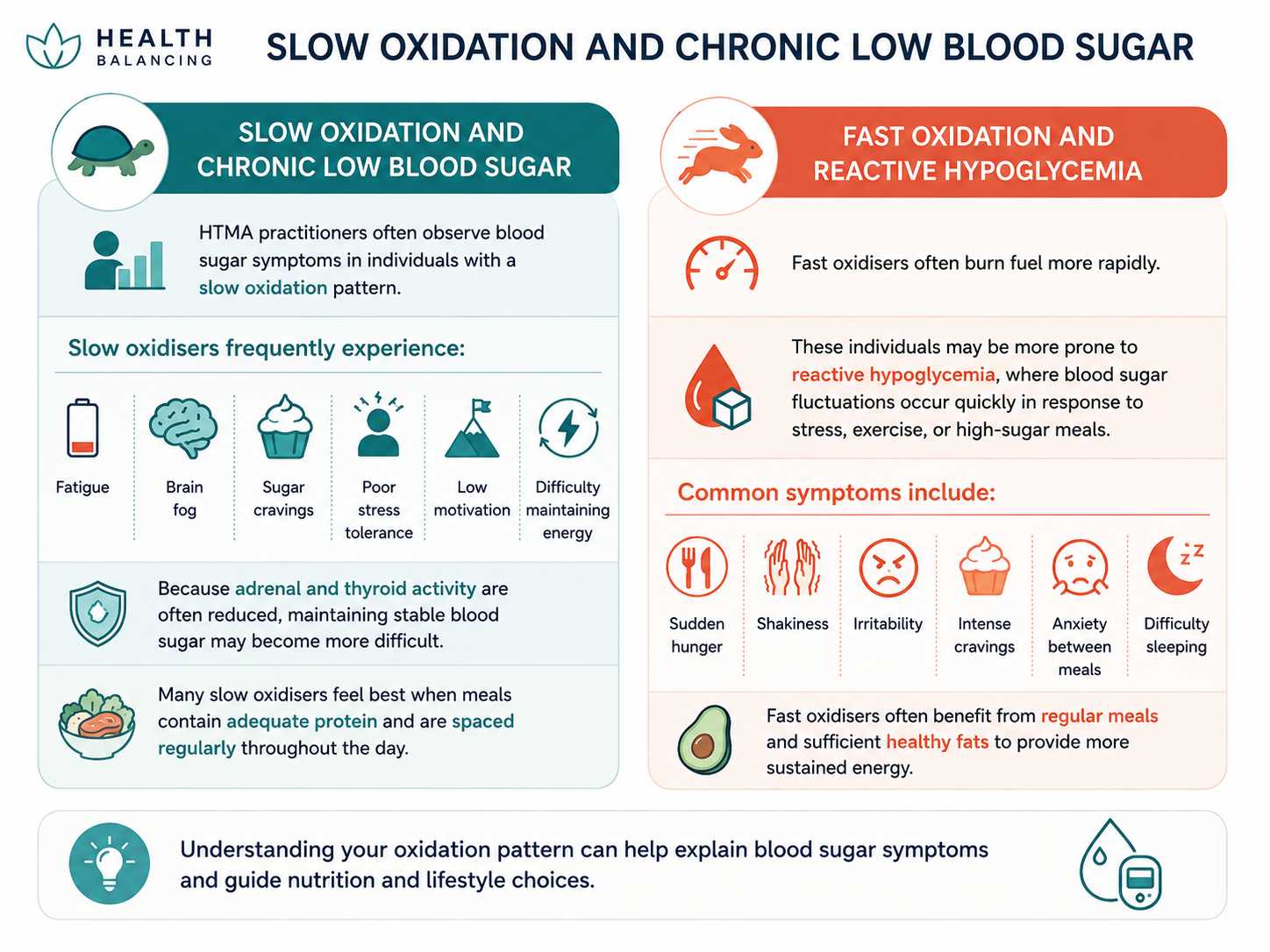
Slow Oxidation and Chronic Low Blood Sugar

HTMA practitioners often observe blood sugar symptoms in individuals with a slow oxidation pattern.

Slow oxidisers frequently experience:

  • Fatigue
  • Brain fog
  • Sugar cravings
  • Poor stress tolerance
  • Low motivation
  • Difficulty maintaining energy

Because adrenal and thyroid activity are often reduced, maintaining stable blood sugar may become more difficult.

Many slow oxidisers feel best when meals contain adequate protein and are spaced regularly throughout the day.

Infographic comparing slow oxidation and fast oxidation patterns associated with blood sugar instability. It highlights that slow oxidizers commonly experience fatigue, brain fog, sugar cravings, poor stress tolerance, low motivation, and difficulty maintaining energy, while fast oxidizers are more prone to reactive hypoglycemia with sudden hunger, shakiness, irritability, intense cravings, anxiety between meals, and difficulty sleeping.

Fast Oxidation and Reactive Hypoglycemia

Fast oxidisers often burn fuel more rapidly.

These individuals may be more prone to reactive hypoglycemia, where blood sugar fluctuations occur quickly in response to stress, exercise, or high-sugar meals.

Common symptoms include:

  • Sudden hunger
  • Shakiness
  • Irritability
  • Intense cravings
  • Anxiety between meals
  • Difficulty sleeping

Fast oxidisers often benefit from regular meals and sufficient healthy fats to provide more sustained energy.

Key Mineral Imbalances That Affect Blood Sugar Regulation

Several minerals play important roles in blood sugar regulation and energy production.

Sodium and Potassium

The sodium-to-potassium ratio is often referred to as the body’s stress ratio.

Low sodium and potassium patterns are commonly associated with fatigueburnout, reduced stress tolerance, and blood sugar instability.

Chromium

Chromium helps insulin transport glucose into cells.

Low chromium levels may contribute to cravings, unstable energy, and poor blood sugar regulation.

Zinc

Zinc supports insulin function and carbohydrate metabolism.

Zinc deficiency is common in individuals experiencing chronic stress.

Manganese

Manganese plays an important role in energy production and glucose metabolism.

Copper

Copper imbalance may contribute to nervous system overstimulation, mood fluctuations, cravings, and metabolic stress.

How HTMA Can Help Identify Underlying Patterns

HTMA does not directly measure blood sugar levels. However, it can identify mineral patterns commonly associated with blood sugar instability.

HTMA Indicators Associated with Blood Sugar Instability

HTMA Indicator Clinical Association
Calcium/Magnesium Ratio 9.5–13.5:1 Associated with a greater tendency toward blood sugar instability and hypoglycemic symptoms.
Na/K Ratio below ~2.0 May indicate chronic stress, reduced adrenal reserve, poor stress tolerance, and increased susceptibility to blood sugar fluctuations.
Potassium ≤4 mg% Often associated with impaired carbohydrate metabolism, reduced thyroid effect, fatigue, and unstable energy production.
Low Chromium, Zinc or Manganese May impair insulin function, glucose transport, and cellular energy production.
Elevated Toxic Metals Mercury, lead, cadmium, aluminum, and others may interfere with metabolism and energy production.

Why Symptoms Still Matter

Not every individual with blood sugar instability will display textbook mineral patterns.

Minerals often compensate for one another, which can temporarily make ratios appear normal despite ongoing symptoms.

For this reason, symptoms, health history, and retest trends remain important aspects of HTMA interpretation.

Curious about the mineral patterns discussed in this article? Learn how Hair Tissue Mineral Analysis works, what it measures, and why it can provide insights beyond standard blood tests.

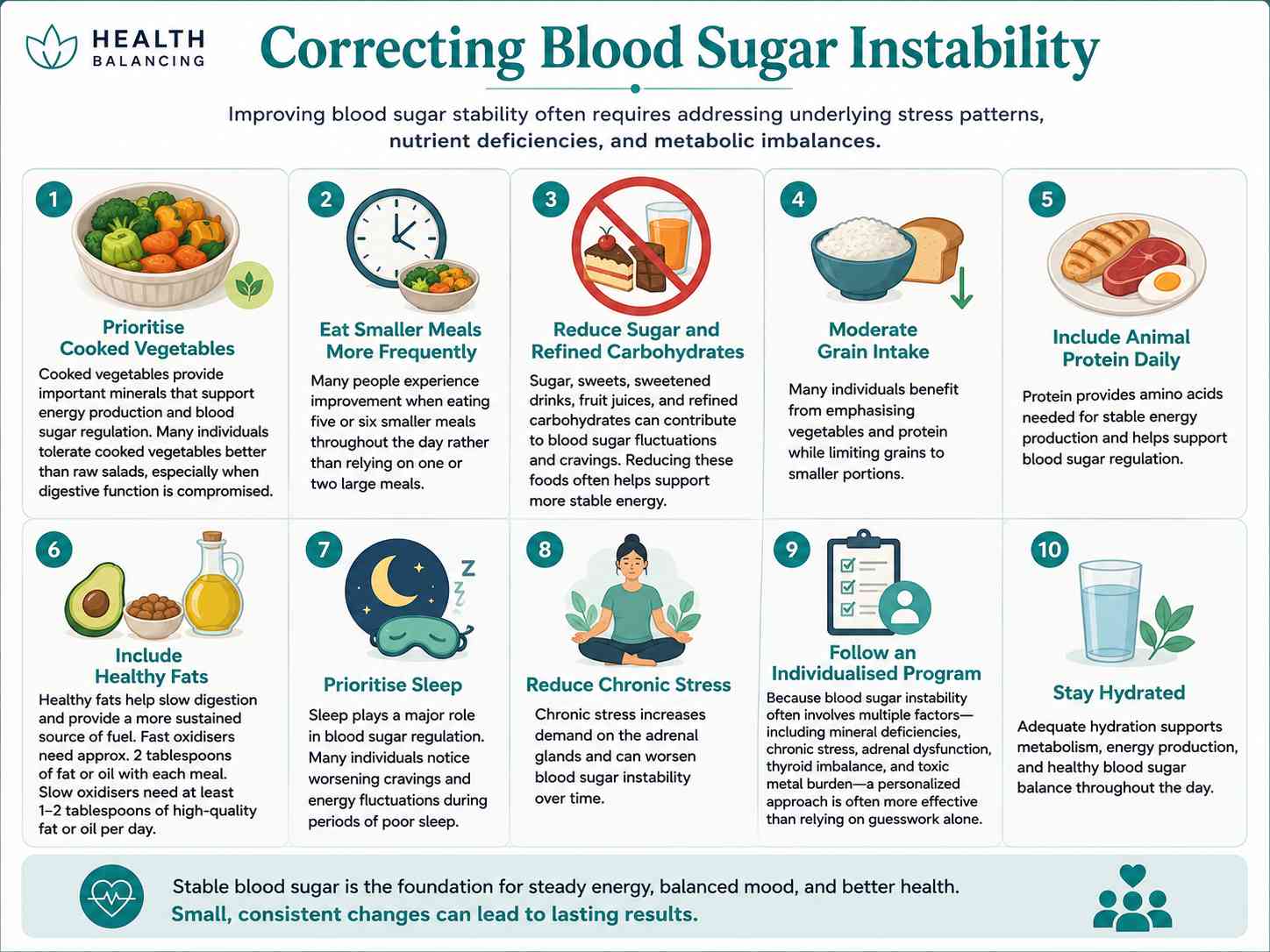
Correcting Blood Sugar Instability

Improving blood sugar stability often requires addressing underlying stress patterns, nutrient deficiencies, and metabolic imbalances.

Prioritise Cooked Vegetables

Cooked vegetables provide important minerals that support energy production and blood sugar regulation. Many individuals tolerate cooked vegetables better than raw salads, especially when digestive function is compromised.

Eat Smaller Meals More Frequently

Many people experience improvement when eating five or six smaller meals throughout the day rather than relying on one or two large meals.

Reduce Sugar and Refined Carbohydrates

Sugar, sweets, sweetened drinks, fruit juices, and refined carbohydrates can contribute to blood sugar fluctuations and cravings. Reducing these foods often helps support more stable energy.

Moderate Grain Intake

Many individuals benefit from emphasising vegetables and protein while limiting grains to smaller portions.

Include Animal Protein Daily

Protein provides amino acids needed for stable energy production and helps support blood sugar regulation.

Include Healthy Fats

Healthy fats help slow digestion and provide a more sustained source of fuel. Fast oxidisers need approximately 2 tablespoons of fat or oil with each meal. Slow oxidisers need at least 1–2 tablespoons of high-quality fat or oil per day.

Prioritise Sleep

Sleep plays a major role in blood sugar regulation. Many individuals notice worsening cravings and energy fluctuations during periods of poor sleep.

Reduce Chronic Stress

Chronic stress increases demand on the adrenal glands and can worsen blood sugar instability over time.

Follow an Individualised Program

Because blood sugar instability often involves multiple factors — including mineral deficiencies, chronic stress, adrenal dysfunction, thyroid imbalance, and toxic metal burden — a  personalized approach  is often more effective than relying on guesswork alone.

Because blood sugar instability often involves multiple factors — including mineral deficiencies, chronic stress, adrenal dysfunction, thyroid imbalance, and toxic metal burden — a personalized approach is often more effective than relying on guesswork alone.

Infographic outlining practical strategies to help correct blood sugar instability, including prioritizing cooked vegetables, eating smaller meals more frequently, reducing sugar and refined carbohydrates, moderating grain intake, eating animal protein daily, including healthy fats, prioritizing sleep, reducing chronic stress, and following an individualized nutrition and HTMA-based program to support stable energy and metabolism.

When to Consider HTMA Testing

You may benefit from HTMA testing if you experience:

  • Persistent fatigue
  • Frequent sugar cravings
  • Anxiety or irritability
  • Brain fog
  • Energy crashes
  • Poor stress tolerance
  • Difficulty maintaining stable energy throughout the day
  • Sleep disturbances

If you’re struggling with fatigue, cravings, anxiety, brain fog, or energy crashes, Hair Tissue Mineral Analysis may help uncover underlying mineral and metabolic imbalances that standard testing can miss.

Frequently Asked Questions

Can low blood sugar cause anxiety?

Yes. Blood sugar fluctuations may trigger the release of stress hormones such as adrenaline and cortisol, which can create symptoms that feel similar to anxiety.

Why do I get shaky when I haven't eaten?

Feeling shaky between meals may indicate that your body is struggling to maintain stable blood sugar levels.

Can blood sugar instability cause fatigue?

Yes. Blood sugar instability can reduce the body’s ability to generate consistent energy, leading to fatigue, brain fog, and energy crashes.

Why do I crave sugar at night?

Blood sugar instability during the day may contribute to evening cravings and nighttime hunger.

Can HTMA diagnose hypoglycemia?

No. HTMA does not diagnose hypoglycemia. However, it can identify mineral patterns commonly associated with blood sugar instability and poor energy regulation.

What does slow oxidation have to do with sugar cravings and low energy?

Slow oxidation is an HTMA pattern associated with slower energy production and reduced adrenal and thyroid activity. Because the body generates energy less efficiently, people with a slow oxidation pattern commonly experience fatigue, brain fog, poor stress tolerance, and frequent cravings for sugar or refined carbohydrates.

Rather than simply reflecting a lack of willpower, these cravings may indicate that the body is looking for a quick source of energy. This is why nutritional balancing programs for slow oxidisers often emphasize regular meals containing adequate animal protein, cooked vegetables, and mineral-rich foods to support more stable energy production instead of relying on sugar for short-term fuel.

Why are fast oxidisers more prone to sudden hunger and energy crashes?

Fast oxidisers burn fuel more rapidly than slow oxidisers. As a result, they may experience sudden hunger, shakiness, irritability, anxiety, or energy crashes when they go too long without eating or consume high-sugar meals.

Because their metabolism uses fuel more quickly, fast oxidisers often benefit from eating regular meals that include sufficient healthy fats alongside protein. Healthy fats help provide a slower, more sustained source of energy, reducing the rapid fluctuations that contribute to reactive hypoglycemia-like symptoms. HTMA can help determine whether a fast oxidation pattern may be contributing to these symptoms.

Which HTMA mineral patterns are associated with blood sugar instability?

commonly associated with unstable energy production and blood sugar regulation. Practitioners often evaluate oxidation rate alongside mineral ratios such as the sodium-to-potassium (Na/K) ratio and calcium-to-magnesium (Ca/Mg) ratio, as well as minerals including chromium, zinc, manganese, and potassium.

These mineral patterns are interpreted together with symptoms, health history, and retest trends rather than in isolation. They may provide valuable clues about underlying stress, adrenal and thyroid function, carbohydrate metabolism, and the body’s ability to maintain stable energy throughout the day.

Why are sodium and potassium important for blood sugar and energy?

Sodium and potassium play essential roles in cellular energy production, nerve function, fluid balance, and the body’s response to stress. In HTMA, the sodium-to-potassium (Na/K) ratio is often referred to as the stress ratio because it reflects how the body is responding to physical and emotional stress.

Low sodium and potassium patterns or a low Na/K ratio are commonly associated with fatigue, reduced stress tolerance, poor energy production, and increased susceptibility to blood sugar fluctuations. While these findings do not diagnose a blood sugar disorder, they may help explain why someone experiences cravings, shakiness, or energy crashes despite having normal blood glucose tests.