
What the Adrenal Ratio Reveals About Stress, Energy, and Metabolism
Sodium–Magnesium (Na/Mg) Ratio in HTMA
The sodium–magnesium ratio (Na/Mg) is one of the most important mineral ratios on a Hair Tissue Mineral Analysis (HTMA) report.
In nutritional balancing science, it is often called the adrenal ratio because it reflects adrenal gland activity, energy output, and how the body adapts to stress at the tissue level.
If you’ve ever felt on edge but exhausted, or as though your body is either pushing too hard or barely responding at all, the Na/Mg ratio often helps explain why.
Article Contents
- What the Na/Mg Ratio Reflects
- Why It’s Called the Adrenal Ratio
- Ideal Na/Mg Ratio and Reference Ranges
- High vs Low Na/Mg: What It Can Feel Like
- Why Blood Tests Often Look Normal
- Na/Mg and the Oxidation Rate
- Factors That Can Temporarily Skew the Na/Mg Ratio
- Interpreting Changes on a Retest
- The Bigger Picture
- Related Reading
The Na/Mg ratio reflects adrenal signaling and cellular energy output.
What the Na/Mg Ratio Reflects
This is because:
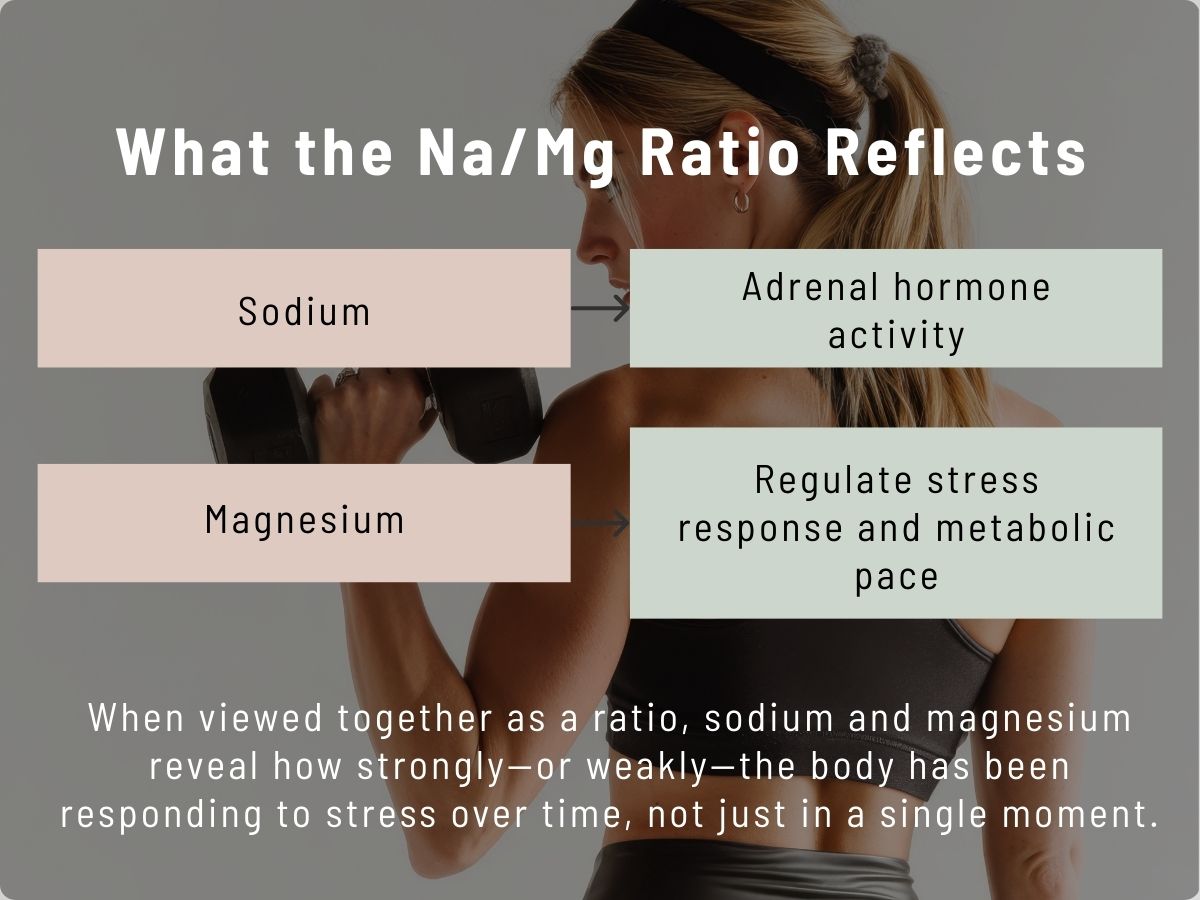
- Sodium is closely linked to adrenal hormone activity
- Magnesium helps regulate stress response and metabolic pace
When viewed together as a ratio, sodium and magnesium offer insight into how strongly—or weakly—the body has been responding to stress over time, rather than how it is functioning in a single moment.
Why It’s Called the Adrenal Ratio
The adrenal hormone aldosterone regulates sodium retention by the kidneys. Through this mechanism, aldosterone influences sodium levels in the blood and, over time, in the tissues.
In general:
- higher aldosterone activity → greater sodium retention
- reduced adrenal signaling → lower tissue sodium availability
Because HTMA reflects tissue mineral patterns, sodium levels in hair often correlate with long-term adrenal influence, not short-term hormone output.
Sodium and magnesium are also metabolically antagonistic to one another. For this reason, the Na/Mg ratio often provides clearer insight than either mineral viewed alone.
Ideal Na/Mg Ratio and Reference Ranges
The ideal sodium–magnesium ratio used in nutritional balancing science is:
4.17 : 1
This reference value was established through decades of clinical observation and remains the benchmark today.
Elevated Na/Mg (increased adrenal effect)
- 4.17 – 8 → mildly increased adrenal activity
- 8 – 16 → moderately excessive adrenal activity
- >16 → extremely overactive adrenal effect
Very high ratios (often above 10–20) suggest excessive adrenal stimulation at the cellular level, even when blood tests appear normal.
Low Na/Mg (reduced adrenal effect)
- 2 – 4.17 → sluggish adrenal activity
- 1 – 2 → moderately sluggish adrenal response
- <1 → adrenal insufficiency pattern
Lower ratios (often below ~2.5) reflect diminished adrenal signaling and reduced energy output in the tissues.
High vs Low Na/Mg: What It Can Feel Like
HTMA does not diagnose disease.
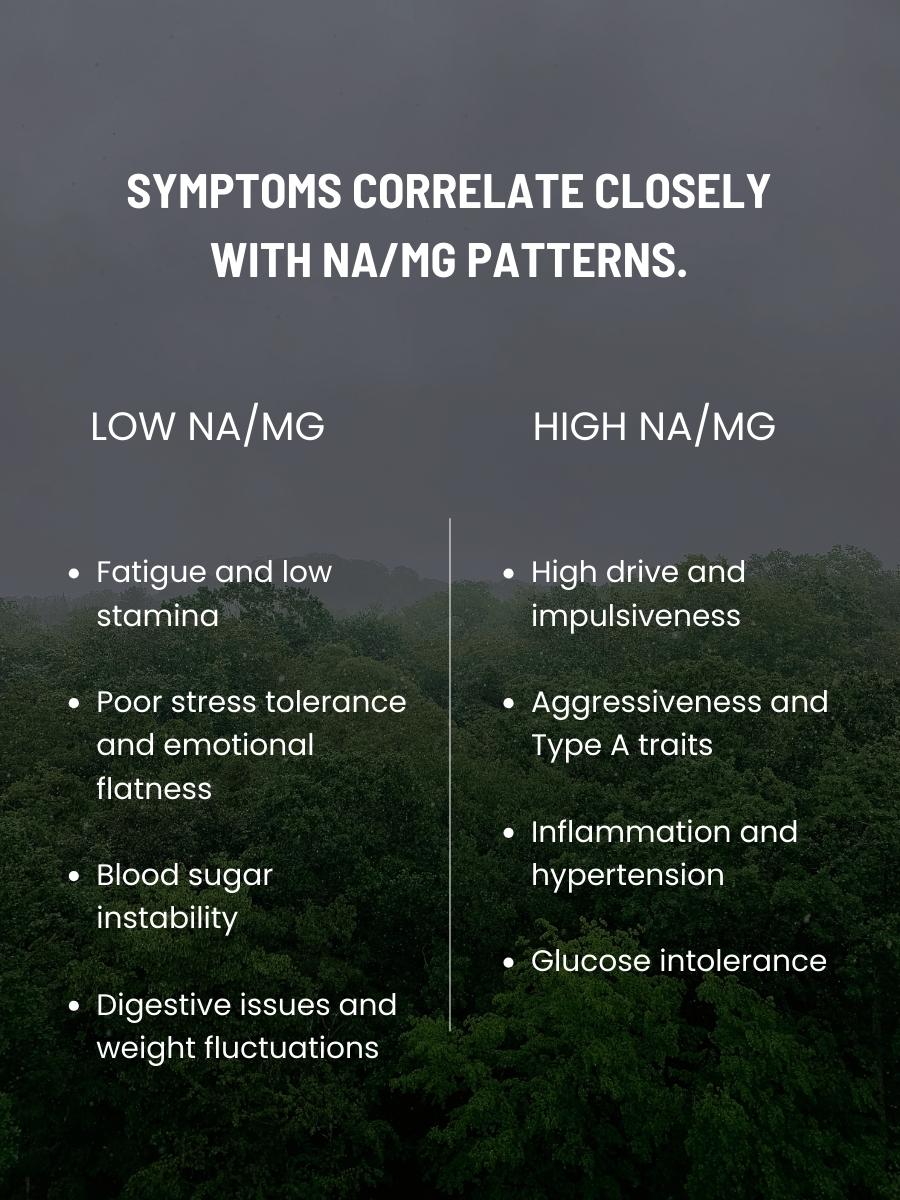
However, symptoms often correlate closely with Na/Mg patterns.
Low Na/Mg patterns may be associated with:
- fatigue or low stamina
- poor stress tolerance
- allergies
- hypoglycemia or blood sugar swings
- weak digestion
- depression or emotional flatness
- weight fluctuations
This pattern is often seen in people who have been coping for a long time rather than fully recovering.
High Na/Mg patterns may be associated with:
- strong drive or push energy
- impulsiveness or aggressiveness
- inflammation
- hypertension
- glucose intolerance
- Type A personality traits
This pattern can feel productive on the surface, but often reflects compensatory overdrive rather than sustainable energy.
Why Blood Tests Often Look Normal
It is common for adrenal hormone blood tests to appear normal even when the Na/Mg ratio is abnormal.
This is because:
- blood tests reflect current circulating hormone levels
- HTMA reflects long-term tissue trends
The Na/Mg ratio is a tissue-level indicator, and symptoms often align more closely with this pattern than with blood test results.
For many people, this is the first time their lived experience feels reflected in test data.
Na/Mg and the Oxidation Rate
The Na/Mg ratio is one of the two primary ratios used to determine oxidation rate, alongside the calcium/potassium ratio.
In simplified terms:
- Na/Mg above 4.17 contributes to a fast oxidation pattern
- Na/Mg below 4.17 contributes to a slow oxidation pattern
Oxidation rate describes how quickly nutrients are converted into usable cellular energy. It is not the same as calorie burn or resting metabolic rate.
Factors That Can Temporarily Skew the Na/Mg Ratio
Not every change in the Na/Mg ratio reflects worsening function.
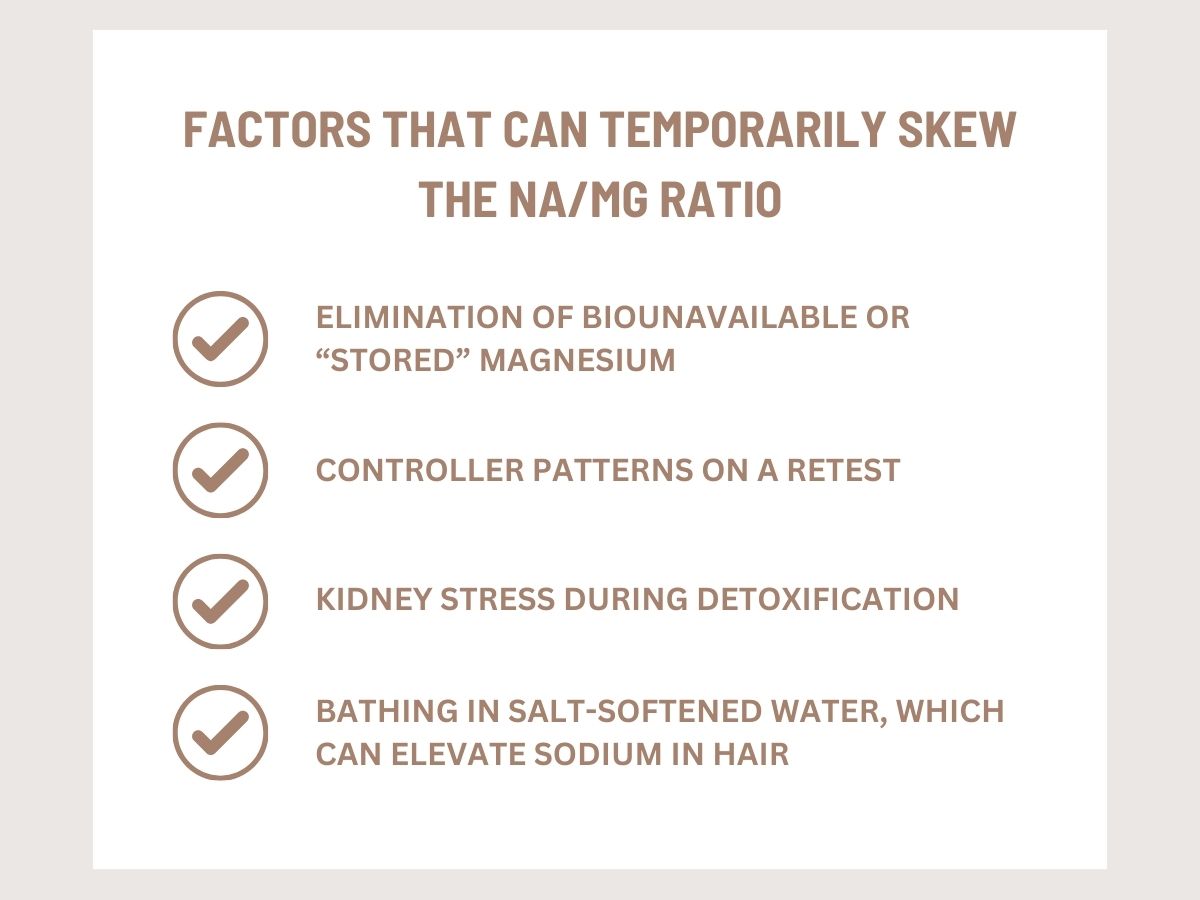
Temporary shifts may occur due to:
- elimination of biounavailable or “stored” magnesium
- controller patterns on a retest
- kidney stress during detoxification
- bathing in salt-softened water, which can elevate sodium in hair
This is why interpretation focuses on patterns and context, not isolated numbers.
Interpreting Changes on a Retest
The sodium–magnesium ratio is best understood across multiple tests, not from a single result.
Changes on a retest often reflect shifts in stress adaptation, mineral availability, or regulatory balance, rather than sudden changes in adrenal health.
- Movement toward the ideal range
→ improved stress tolerance and energy regulation - Temporary increases or decreases
→ mineral redistribution or release from long-held compensation patterns - Little or no change
→ underlying stressors have not yet been fully addressed
A ratio that appears to worsen on a retest does not automatically indicate decline. In many cases, it reflects the body beginning to adjust after prolonged adaptation.
The Bigger Picture
A high Na/Mg ratio does not mean strength.
A low Na/Mg ratio does not mean failure.
Both reflect how the body has been adapting to stress over time.
When the system is supported appropriately — rather than pushed harder — these patterns can shift gradually and sustainably.
Related reading
Read more: Sodium–Potassium (Na/K) Ratio
Read more: Oxidation Rate Explained
Read more: Four Lows Pattern in HTMA