

Conditions & Symptoms Explained Through HTMA | Restore Health From the Inside Out

Calm wellness scene representing how symptoms are signals of underlying mineral and stress balance in Hair Tissue Mineral Analysis

Symptoms Are the Starting Point — Not the Answer

Conditions

Many people arrive here because of symptoms.
Fatigue that doesn’t lift. Anxiety that feels wired or fragile. Blood sugar crashes. Hormonal swings. Sensitivity to supplements or detox.

These experiences are real — and they deserve to be understood.

At the same time, Hair Tissue Mineral Analysis (HTMA) is not a symptom-focused or diagnosis-based approach. It does not treat conditions in isolation or attempt to override what the body is doing.

Instead of asking “What condition do I have?”, HTMA asks a different, more useful question:

What has your body been adapting to — and how well is it resourced to recover?

Why Symptoms Alone Don’t Explain What’s Going On

Symptoms are signals.
They tell us something is under strain — but not why the strain developed or what the body can safely handle next.

Two people can share the same symptom and require completely different support.

For example:

  • fatigue can reflect depletion, overstimulation, blood sugar instability, or slowed metabolism
  • anxiety can arise from mineral imbalance, nervous system overload, or low energy reserves
  • detox reactions can signal readiness — or a lack of capacity

This is why approaches that focus only on symptoms often help briefly, then stall or backfire.

HTMA looks beneath symptoms to assess:

  • tissue-level mineral reserves
  • stress and nervous system load
  • metabolic pace and energy production
  • blood sugar regulation tendencies
  • detox and elimination capacity

From this perspective, timing and sequencing matter.
In many cases, addressing symptoms too aggressively — especially with stimulation or detox — can worsen fatigue, sensitivity, or instability rather than resolve it.

Infographic showing what Hair Tissue Mineral Analysis assesses, including mineral reserves, stress load, metabolism, blood sugar stability, and detox capacity

How to Use This Page

The conditions listed below are symptom-led entry points, not diagnoses.

They reflect common clusters of experiences that often correlate with specific mineral patterns, ratios, and stress states seen on HTMA.

You don’t need to fit neatly into one category.
Many people overlap across several — and that’s expected.

Each condition page helps you understand:

  • how these symptoms often relate to mineral and stress patterns
  • why conventional or “natural” approaches sometimes help — or make things worse
  • how readiness and capacity influence progress
  • where to start gently and safely

Common Symptom-Led Entry Points

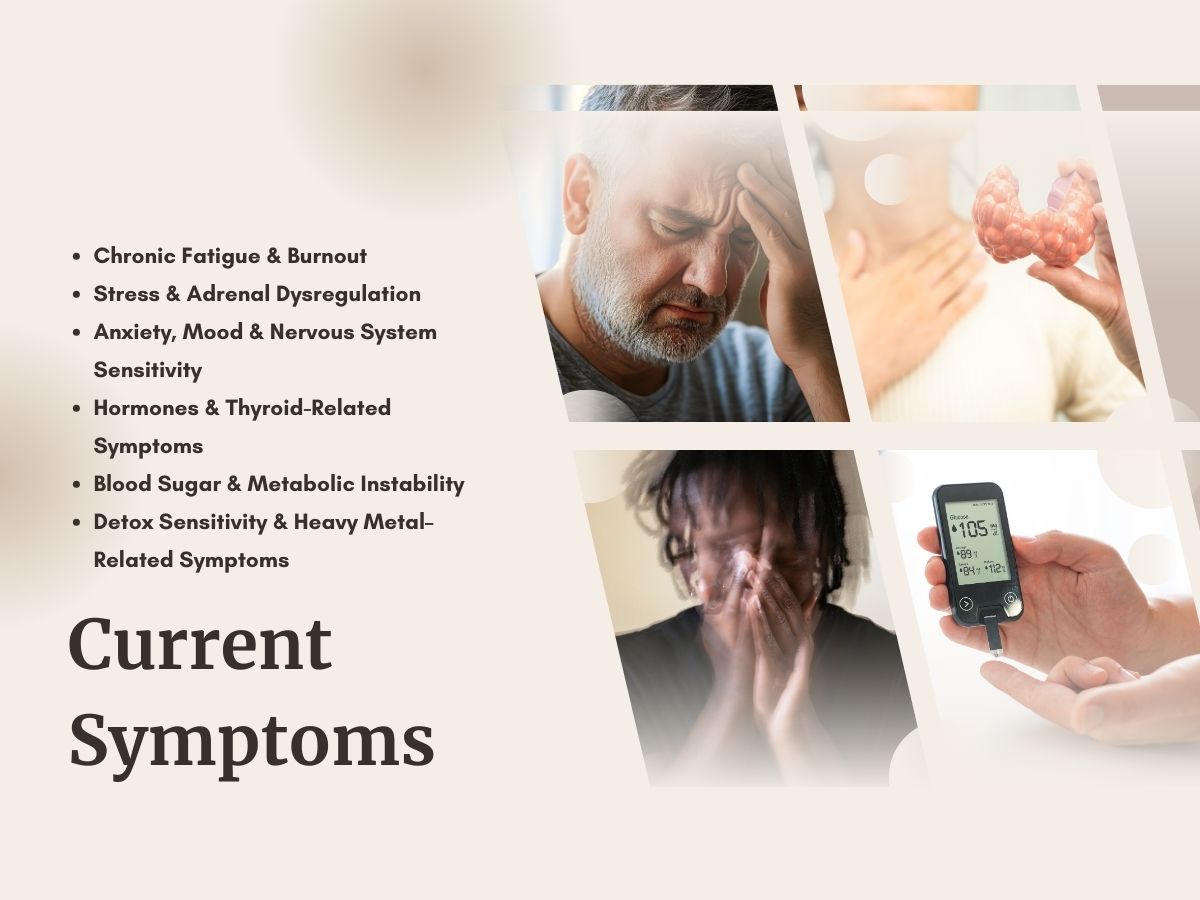
Chronic Fatigue & Burnout 

Persistent exhaustion, slow recovery, brain fog, feeling worse with stimulation or pushing.
Often associated with depleted mineral reserves, slowed metabolism, and long-term stress adaptation.

Read more: Chronic Fatigue & Burnout | When Rest Doesn’t Restore Energy

Infographic showing common symptom-led entry points such as fatigue, anxiety, hormone imbalance, blood sugar instability, and detox sensitivity in HTMA

Stress & Adrenal Dysregulation

Wired-but-tired energy, poor stress tolerance, crashes, sensitivity to caffeine or exercise.
Commonly reflected in sodium-potassium imbalance and altered adrenal signaling.

Read more:
Sympathetic Dominance: When You’re Stuck in Fight-or-Flight and Running on Empty
Understanding Your Calcium to Magnesium Ratio on a Hair Test
Sodium-to-Potassium Ratio on a Hair Analysis Test: What Your Adrenals Are Really Saying


Hormones & Thyroid-Related Symptoms

Cold sensitivity, sluggishness, menstrual irregularities, low motivation, mood changes.
Often connected to calcium-potassium balance, metabolic pace, and prolonged stress effects.

Read more: Calcium to Potassium Ratio on a Hair Analysis Test


Blood Sugar & Metabolic Instability

Energy dips between meals, cravings, shakiness, irritability, disrupted sleep.
Commonly reflected in calcium-magnesium balance and overall energy regulation.

Read more:
HTMA Oxidation Rates Explained
Understanding Your Calcium to Magnesium Ratio on a Hair Test


Detox Sensitivity & Heavy Metal–Related Symptoms

Feeling worse with detox, supplements, sauna, or cleansing approaches.
Often linked to impaired elimination capacity, low reserves, or protective slowing by the body.

Read more: Why Detox Makes Some Exhausted People Feel Worse
A Note on Autoimmune & Inflammatory Conditions

Autoimmune and inflammatory diagnoses are not treated as separate categories in HTMA.

From a mineral and stress-pattern perspective, these symptoms often reflect:

  • prolonged stress and nervous system activation
  • mineral depletion or dysregulation
  • impaired repair and immune tolerance

Rather than targeting the immune system directly, HTMA focuses on restoring the internal conditions that allow regulation, resilience, and repair.

This is why people with autoimmune or inflammatory symptoms are often guided first toward stabilisation — not stimulation or aggressive detox.

Read more: HTMA Mineral Levels, Ratios & Patterns

Who This Approach Is (and Isn’t) For

This approach is best suited for people who:

  • want to understand why their body is responding the way it is
  • are open to pacing, sequencing, and rebuilding capacity
  • have tried symptom-focused approaches that didn’t hold

It may not be the right fit if you’re looking for:

  • quick symptom suppression
  • condition-specific protocols
  • aggressive detox as a first step

What This Means for Healing

HTMA doesn’t force change.
It helps the body regain enough stability to change on its own.

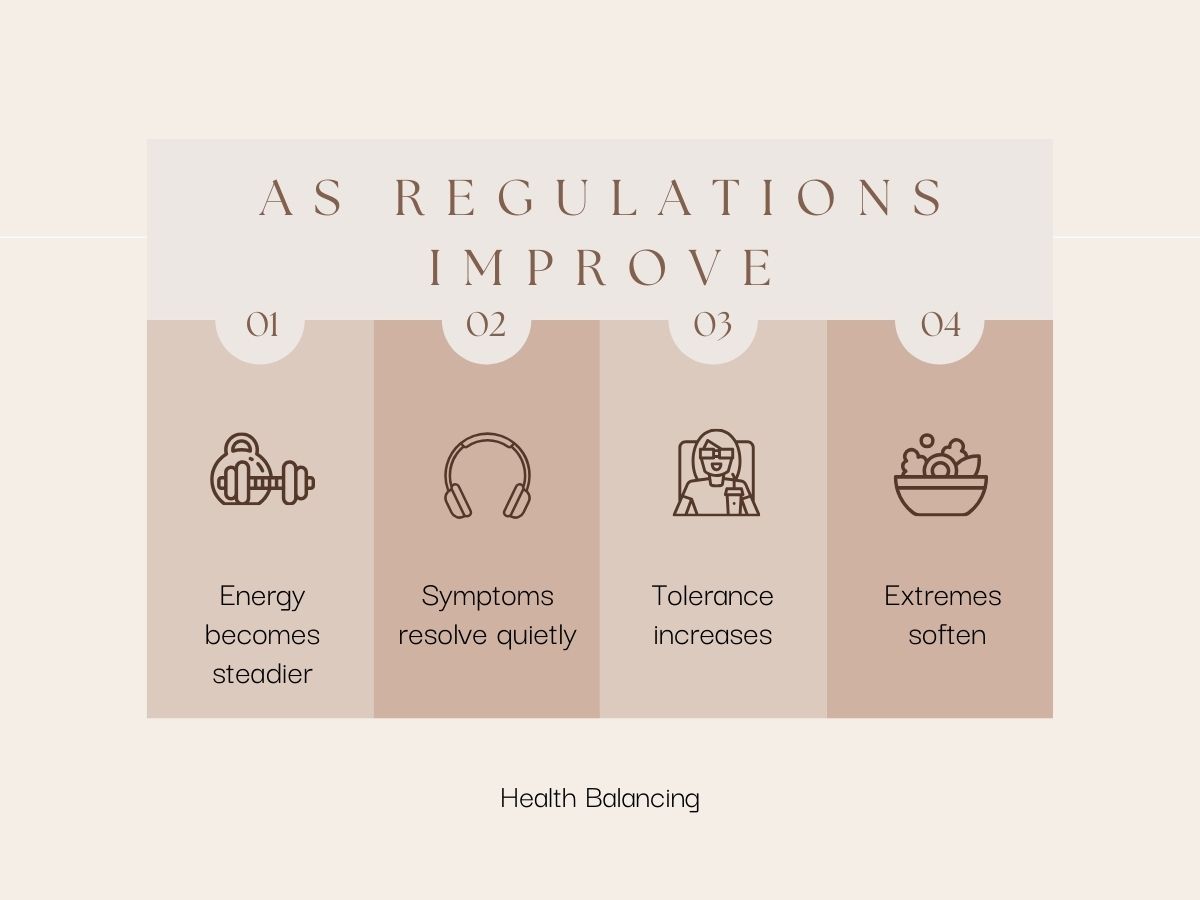
As regulation improves:

  • energy becomes steadier
  • tolerance increases
  • extremes soften
  • symptoms resolve quietly rather than dramatically

Healing often happens internally before it becomes obvious externally.

Graphic showing how improved regulation leads to steadier energy, quieter symptoms, increased tolerance, and softer extremes in HTMA

Not Sure Where to Begin?

If several of these symptom clusters resonate — or if none fit perfectly — that’s normal.

The Start Here page walks through:

  • what HTMA shows
  • how to recognise readiness versus depletion
  • why timing matters — especially with detox

Start Here: Discover How HTMA Can Help You Heal from the Inside Out

There’s no need to rush.
Understanding comes first.

Calm wellness image with the quote that symptoms are the body’s way of communicating what it has been carrying