Sodium in HTMA: Stress Adaptation, Energy & Fluid Balance

Wooden spoon with salt crystals representing sodium in HTMA, highlighting stress adaptation, energy, and fluid balance.

Sodium in HTMA: Stress Adaptation, Energy & Fluid Balance

Sodium is one of the most misunderstood minerals.

Most people associate it with blood pressure or “too much salt.” But in Hair Tissue Mineral Analysis (HTMA), sodium tells a much deeper story — about adrenal function, stress response, cellular energy, and the body’s ability to regulate fluids and electrical charge over time.

If magnesium is the body’s buffer mineral, sodium is its regulator and conductor.

Low sodium doesn’t usually mean you need less salt.
It often means your body is no longer holding sodium well — a classic sign of fatigue, burnout, and reduced stress tolerance.

HTMA allows us to see how sodium behaves in the tissues over months, not moments — offering insight that standard blood tests simply can’t provide.

What Sodium Does in the Body

Sodium is primarily an extracellular mineral — meaning it lives outside the cells. From there, it supports several essential functions.

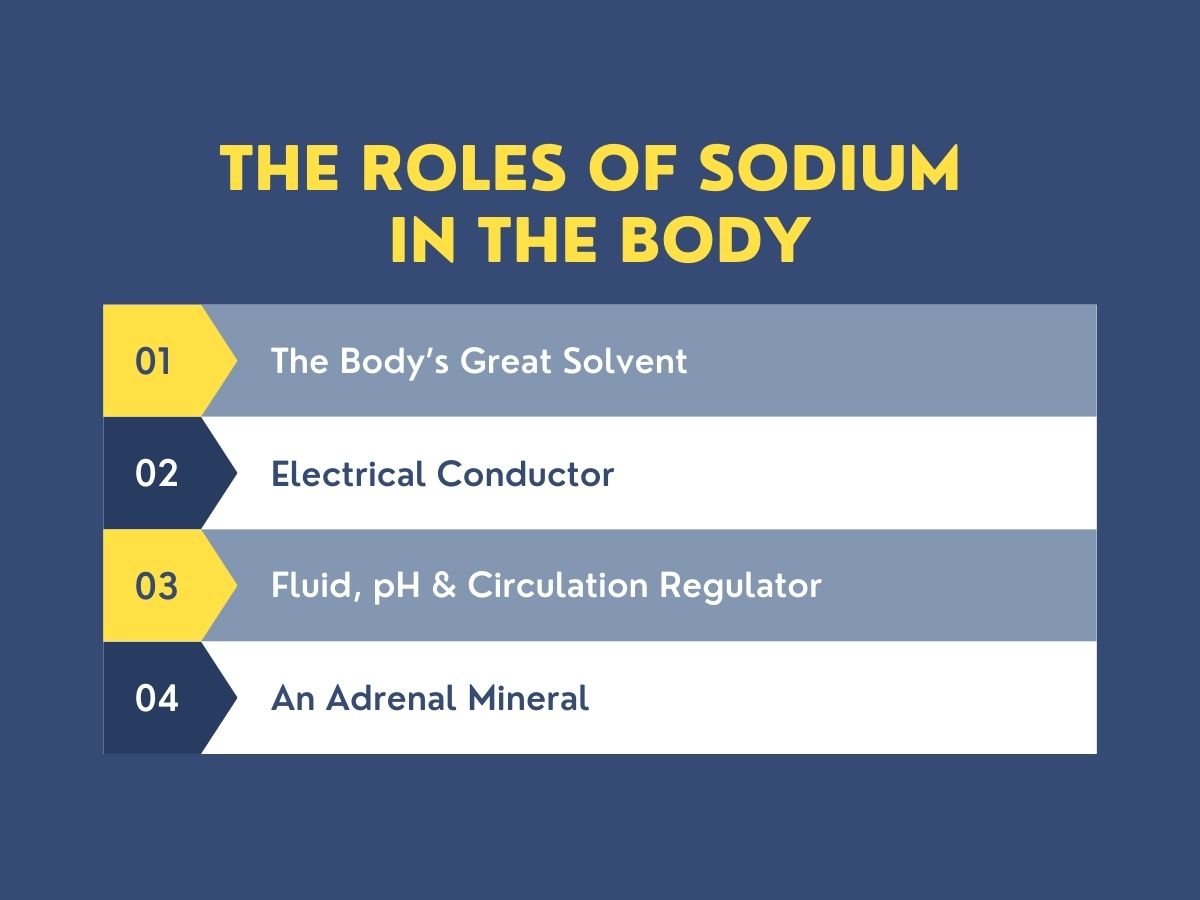
The Body’s Great Solvent

Sodium helps dissolve calcium, magnesium, copper, iron, zinc, and other minerals so they can circulate and be used by the body. When sodium is low, minerals tend to fall out of solution and deposit into tissues instead of remaining available.

Electrical Conductor

Sodium represents one pole of the body’s electrical system, while potassium represents the other. Together, they create the voltage that allows:

  • Nerve signaling
  • Muscle contraction
  • Cellular energy production
  • Hormonal communication

This relationship is measured on HTMA as the sodium/potassium (Na/K) ratio — often called the vitality ratio.

Fluid, pH & Circulation Regulator

Sodium helps regulate:

  • Blood volume
  • Fluid distribution
  • Acid–alkaline balance
  • Carbon dioxide transport
  • Protein solubility

These directly influence circulation, inflammation, and metabolism.

An Adrenal Mineral

Sodium is regulated primarily by the adrenal glands.

When adrenal output is strong, sodium tends to rise.
When adrenal output weakens, sodium drops — regardless of salt intake.

Low sodium on HTMA is one of the clearest indicators of adrenal exhaustion.

Infographic showing the four main roles of sodium in the body: solvent for minerals, electrical conductor, regulator of fluid and pH, and indicator of adrenal health.

Sodium on HTMA: What Levels Mean

In HTMA, the ideal tissue sodium level is approximately 25 mg% (250 ppm).

Blood sodium is tightly regulated for survival and often appears normal even when dysfunction exists. Hair sodium reflects long-term adrenal activity and stress adaptation.

Important: hair must not be washed at the laboratory, as washing removes sodium unpredictably and falsely lowers results.

High vs Low Sodium on HTMA

Sodium Patterns at a Glance

Pattern Common Symptoms HTMA Context
Low Sodium Fatigue, burnout, low motivation, cold sensitivity, reduced stress tolerance Adrenal weakness, slow oxidation, exhaustion stage of stress
High Sodium Restlessness, inflammation, anxiety, wired energy Acute stress, fast oxidation, alarm stage
Fluctuating Sodium Energy crashes, emotional reactivity, poor resilience Unstable adrenal regulation

Sodium, Adrenals & Stress Response

Sodium closely reflects how the body responds to stress.

Low Sodium

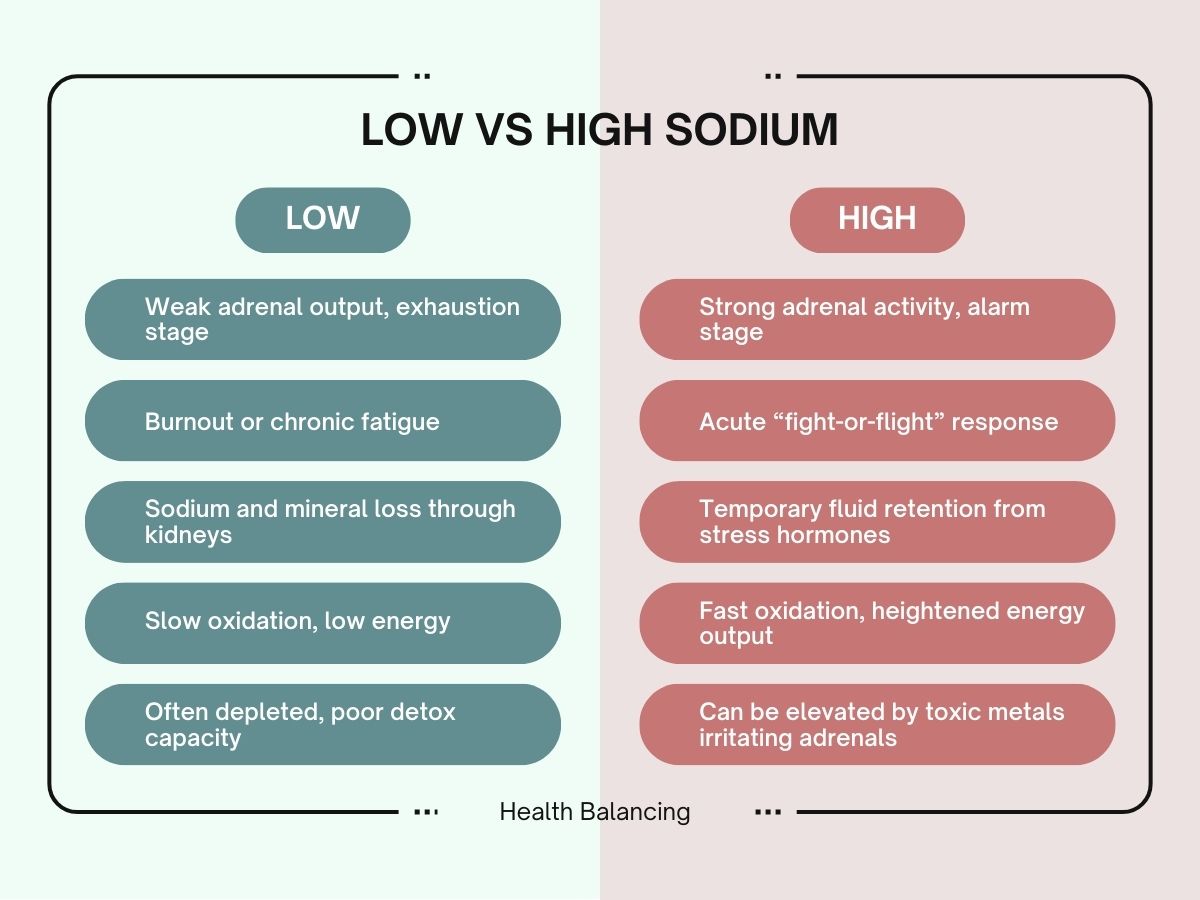
Low sodium usually indicates:

  • Weak adrenal signaling
  • Sodium loss through the kidneys
  • Reduced ability to retain fluids and minerals
  • Burnout-stage stress

Many people feel temporarily better with unrefined sea salt because it replaces sodium being lost. However, lasting improvement comes from restoring adrenal regulation — not just adding salt.

Elevated Sodium

High sodium often reflects:

  • Acute emotional or physical stress
  • Increased aldosterone output
  • Fast oxidation patterns

In some cases, toxic metals (such as cadmium, mercury, lead, aluminum, or copper) can also raise sodium by irritating the kidneys and adrenal glands.

Key Insight

High sodium reflects alarm-stage stress.
Low sodium reflects exhaustion-stage stress.

HTMA shows where someone sits along this stress continuum.

Comparison of low and high sodium effects showing low sodium causes fatigue and kidney loss, while high sodium leads to strong adrenal activity and stress hormone retention.

Sodium, Potassium & Cellular Energy (The Vitality Ratio)

Sodium and potassium work together to generate cellular voltage.

  • Sodium lives outside the cells
  • Potassium lives inside the cells

This electrical gradient powers metabolism.

  • Healthy Na/K → resilience and steady energy
  • Low Na/K → reduced cellular charge and impaired adaptation
  • High Na/K → inflammation or acute stress activation

Many chronic conditions correlate with a low Na/K ratio.

Sodium, Digestion & Fluid Balance

Sodium participates in stomach acid production.

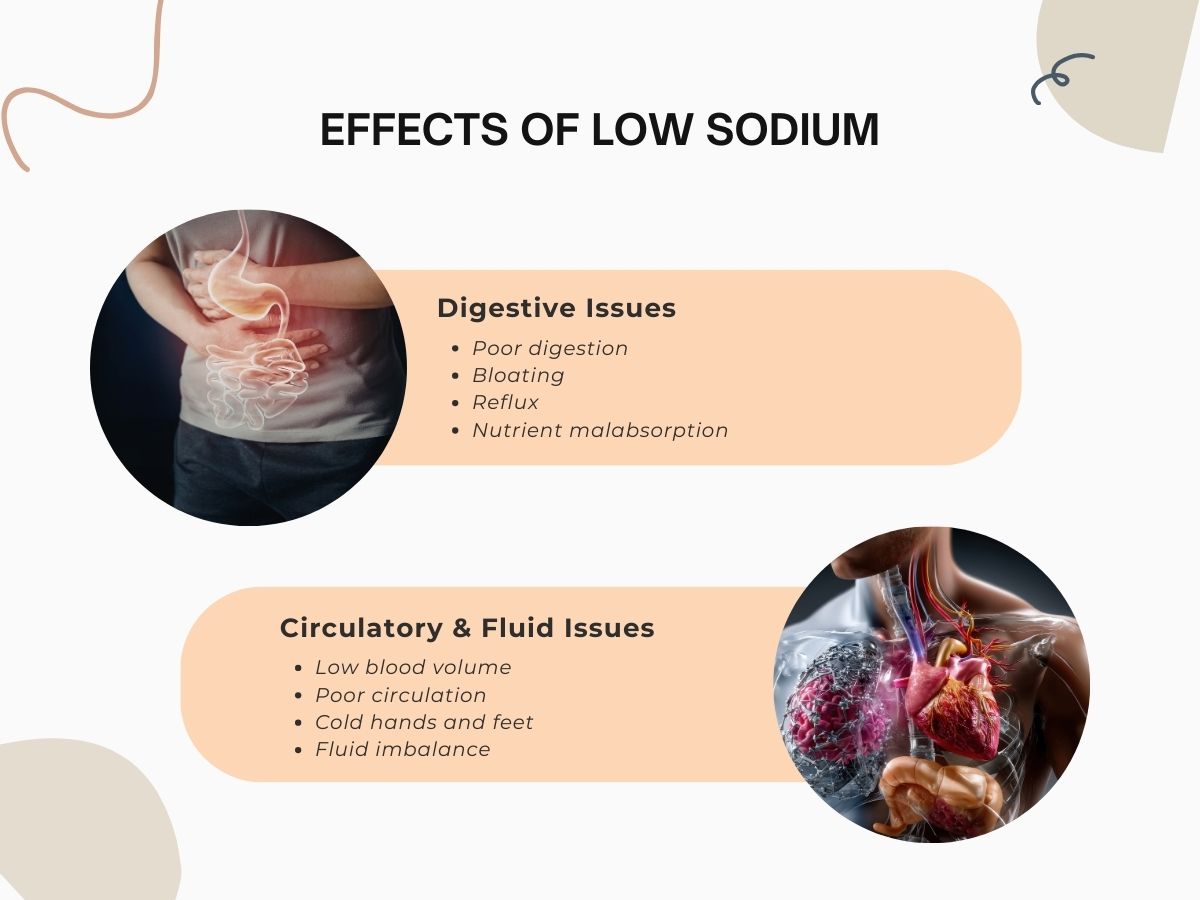
Low tissue sodium is often associated with low hydrochloric acid, contributing to:

  • Poor digestion
  • Bloating
  • Reflux
  • Nutrient malabsorption

Low sodium is also linked with:

  • Low blood volume
  • Poor circulation
  • Cold hands and feet
  • Fluid imbalance

These patterns usually reflect adrenal regulation issues, not simple salt deficiency.

Effects of low sodium including digestive issues, poor circulation, low blood volume, bloating, reflux, and fluid imbalance in HTMA context

Sea Salt vs Table Salt

Not all salt is the same.

Refined table salt is stripped of trace minerals and often contains anti-caking agents. It provides sodium without magnesium or supporting minerals.

Unrefined sea salt contains sodium plus small amounts of other minerals and is generally better tolerated when used moderately with whole foods.

Most advice to “avoid salt” refers to processed foods and refined salt — not unrefined sea salt used thoughtfully.

Simple best practice:

  • Cook without salt
  • Add a small amount of sea salt just before eating
  • Salt proteins and cooked vegetables rather than refined carbohydrates

Salt Sensitivity

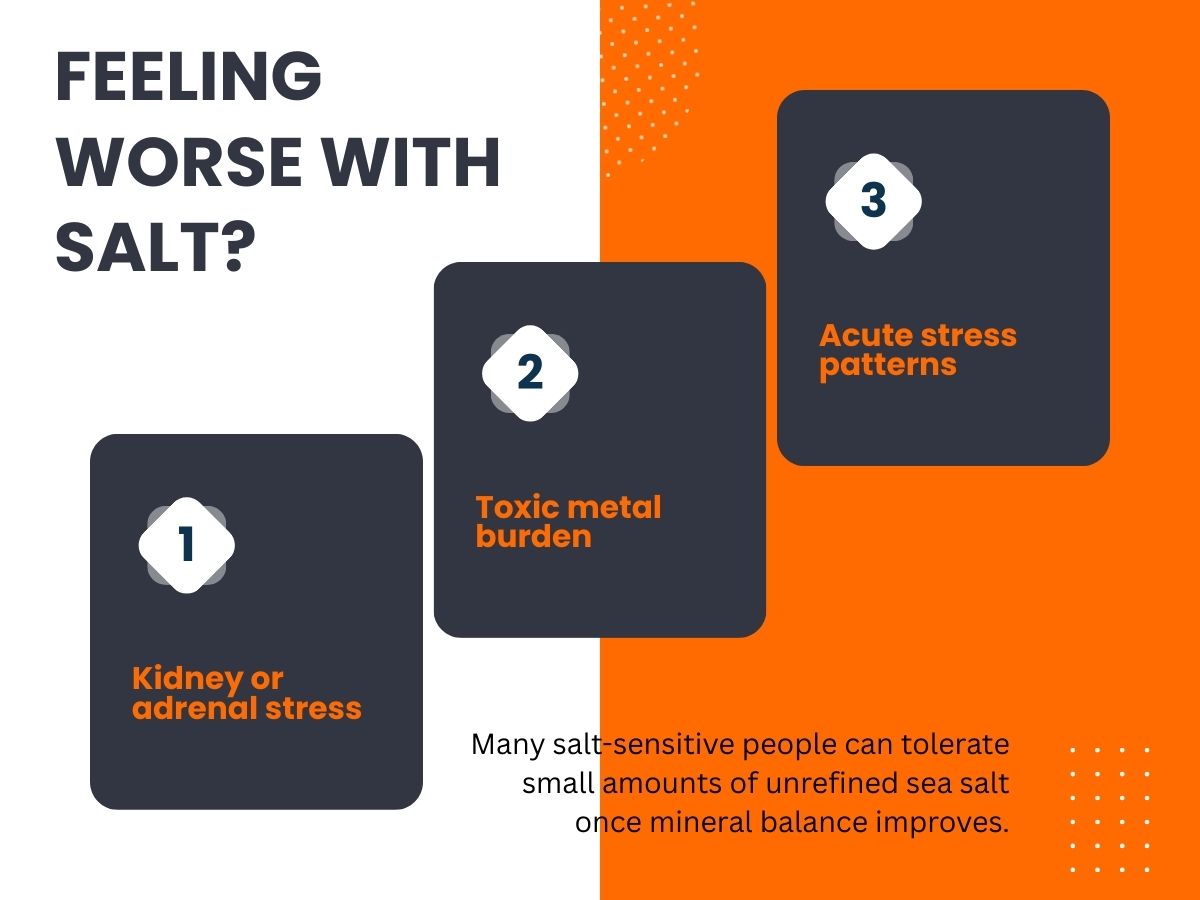
If someone feels worse with salt, this often reflects:

  • Kidney or adrenal stress
  • Toxic metal burden
  • Acute stress patterns

Many salt-sensitive individuals still tolerate small amounts of unrefined sea salt as mineral balance improves.

Long-term resolution focuses on restoring adrenal function and reducing toxic load — not permanent salt restriction.

Infographic explaining why some people feel worse with salt, highlighting kidney or adrenal stress, toxic metal burden, and acute stress patterns in HTMA.

Sodium Synergists & Antagonists

Works with:

  • Potassium (cellular voltage)
  • Bicarbonate (carbon dioxide transport)
  • Phosphorus (pH regulation)

Antagonized by:

  • Calcium and magnesium (oxidation balance)
  • Zinc (tends to lower sodium)
  • Copper (tends to raise sodium relative to potassium)
  • Toxic metals (almost always disrupt sodium regulation)

Frequently Asked Questions

Is low sodium caused by not eating enough salt?

Usually no. Low hair sodium reflects renal sodium loss and adrenal weakness — not dietary deficiency.

Should I add salt to my drinking water?

Generally no. Adding salt to water can irritate digestion, subtly dehydrate the body, and disrupt mineral balance. It’s better to salt food lightly and support adrenal regulation.

Does sodium affect blood pressure?

Sometimes — but blood pressure often involves toxic metals and vascular stress, not sodium alone. As mineral balance improves, blood pressure commonly normalizes.

What about MSG?

Monosodium glutamate is a common food additive that may trigger headaches and inflammatory reactions in some people. It supplies sodium without balancing minerals and is best avoided.
Key Takeaway

Sodium is not simply a “salt issue.”

On HTMA, sodium reflects:

  • Adrenal strength
  • Stress stage
  • Cellular energy
  • Fluid regulation
  • Digestive capacity

Low sodium reflects burnout.
High sodium reflects acute stress.

Understanding sodium through HTMA provides a powerful window into how your body adapts — or struggles to adapt — to life’s demands.

Balanced sodium supports resilience, energy, and recovery.

Quote graphic stating that sodium is a window into adrenal strength, stress, energy, digestion, and the body’s ability to adapt and recover in HTMA.