
What It Reveals About Stress, Energy, Inflammation & Recovery
Sodium-to-Potassium Ratio (Na/K) on HTMA
Fatigue that doesn’t improve with rest.
Craving salty foods.
Feeling easily overwhelmed — then oddly flat.
Wired at night, exhausted in the morning.
Catching every cold that goes around.
These patterns are common.
And they’re not random.
In Hair Tissue Mineral Analysis (HTMA), one of the most important indicators of vitality and stress resilience is the sodium-to-potassium ratio (Na/K), often called the vitality ratio.
This ratio reflects how well the body is adapting to stress at a cellular level — including adrenal hormone balance, immune resilience, inflammation patterns, and the ability to recover instead of staying stuck in survival mode.
Article Contents
- Quick Primer: Sodium vs Potassium
- What the Na/K Ratio Reflects
- The Hormonal Mechanism Behind Na/K
- Ideal Na/K Range on HTMA
- How to Read Your Na/K Ratio
- High Na/K: Causes & Symptoms
- Low Na/K: Causes & Symptoms
- Na/K, Emotions & Nervous System Regulation
- Why Na/K Fluctuates During Healing
- Why Blood Tests Miss This Pattern
- Action Steps: Supporting Your Na/K Ratio
- Retesting & What to Expect
- Ready to Stop Guessing?
Quick Primer: Sodium vs Potassium
| Mineral | Where It Acts Most | What It Does |
| Sodium (Na) | Outside cells | Stress response, nerve firing, fluid balance, activation |
| Potassium (K) | Inside cells | Cellular energy, hydration, nerve calming, efficiency |
Every cell maintains an electrical charge by pumping sodium out and potassium in. This charge — known as membrane potential — is essential for energy production, nerve signalling, digestion, and tissue repair.
A helpful way to think about it:
- Sodium = drive and output
- Potassium = steadiness and quality of output
You need both working together — not just to feel energised, but to sustain energy without burning out.
What the Na/K Ratio Reflects
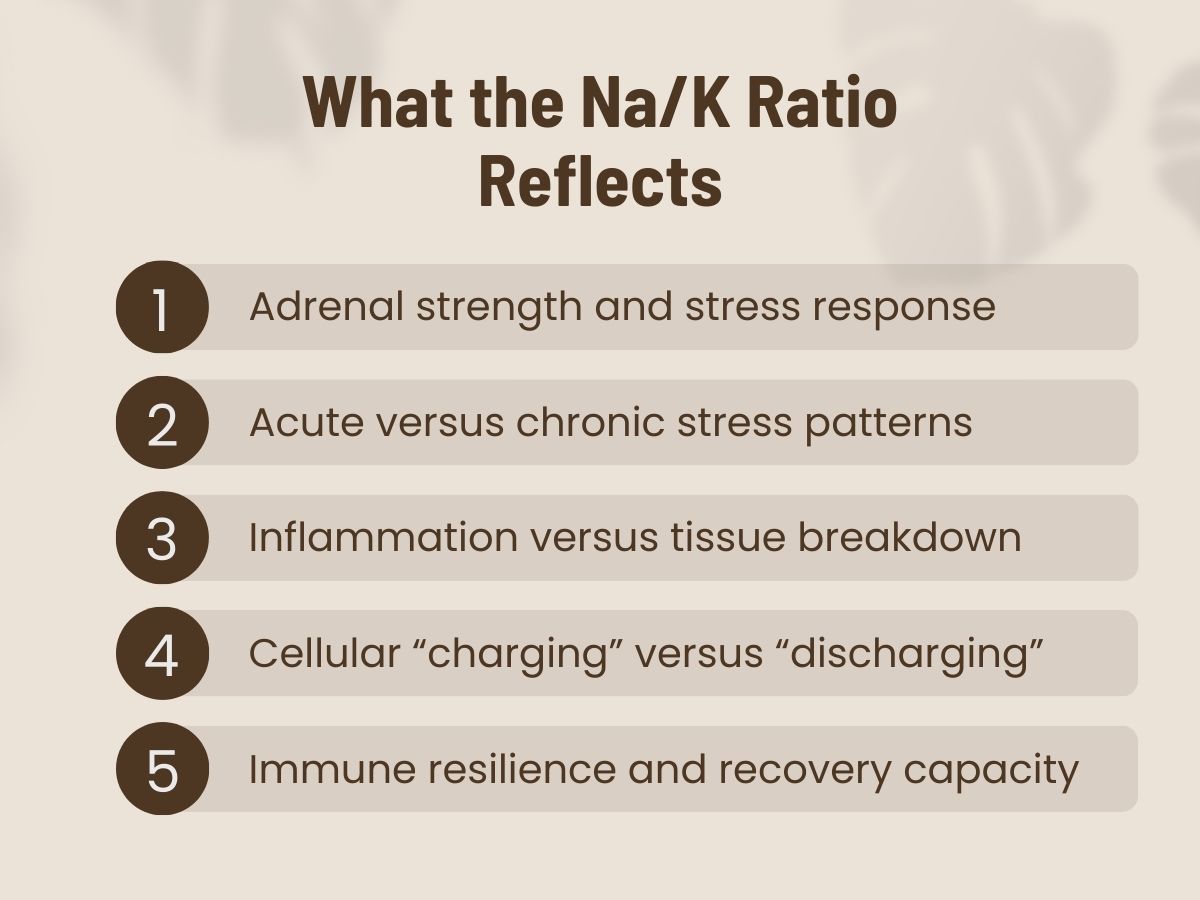
The sodium-to-potassium ratio is a big-picture marker. It reflects:
- adrenal strength and stress chemistry
- acute vs chronic stress
- inflammation vs tissue breakdown
- cellular “charging” vs “discharging”
- immune resilience and recovery capacity
In simple terms:
- High Na/K = activated, charging state
- Low Na/K = depleted, discharging state
This is why Na/K so often explains the frustrating experience of:
“My blood work is normal, but I don’t feel okay.”
Dr. Paul C. Eck considered the sodium-to-potassium ratio the most important ratio on an HTMA, because it reflects whether the body can respond to life without breaking down.
The Hormonal Mechanism Behind the Na/K Ratio
The Na/K ratio is not just about minerals. It reflects which adrenal hormones are dominating the stress response.
Two adrenal hormones are especially important here:
- Aldosterone – a mineral-regulating hormone that promotes sodium retention
- Cortisol and cortisone – stress hormones involved in blood sugar regulation, inflammation control, and tissue breakdown
When Na/K is high
A higher Na/K ratio often reflects greater aldosterone activity relative to cortisol.
Aldosterone:
- increases sodium retention
- promotes fluid retention
- is more pro-inflammatory
This pattern is commonly seen in acute stress, urgency, anger, or constant “go mode.”
The body is mobilising energy to respond — but often at a cost.
When Na/K is low
A lower Na/K ratio more often reflects reduced aldosterone output with relatively greater cortisol influence.
In this state:
- sodium drops
- potassium rises relative to sodium
- the body shifts into conservation and breakdown mode
Cortisol can be anti-inflammatory in the short term, but chronically elevated cortisol is catabolic — it breaks tissue down faster than it can be rebuilt.
This is why low Na/K patterns are associated with exhaustion, poor recovery, immune weakness, and slower healing.
In short:
- High Na/K reflects an alarm response
- Low Na/K reflects an exhaustion response
Ideal Na/K Range on HTMA
Most HTMA interpretation systems use ~2.5 as the ideal Na/K ratio.
A practical functional range is approximately:
2.5 to 5.0
This range reflects balanced stress adaptation — the ability to respond to pressure, recover efficiently, and regulate inflammation without staying locked in fight-or-flight or collapse.
How to Read Your Na/K Ratio
| Na/K Ratio | What It Commonly Suggests |
| > 6.0 | Acute stress activation, inflammation, forced energy |
| 4.0 – 6.0 | Moderate stress response |
| 2.5 – 4.0 | Balanced resilience and recovery |
| 1.0 – 2.5 | Chronic stress load, adrenal depletion |
| < 1.0 | Deep exhaustion, survival-mode physiology |
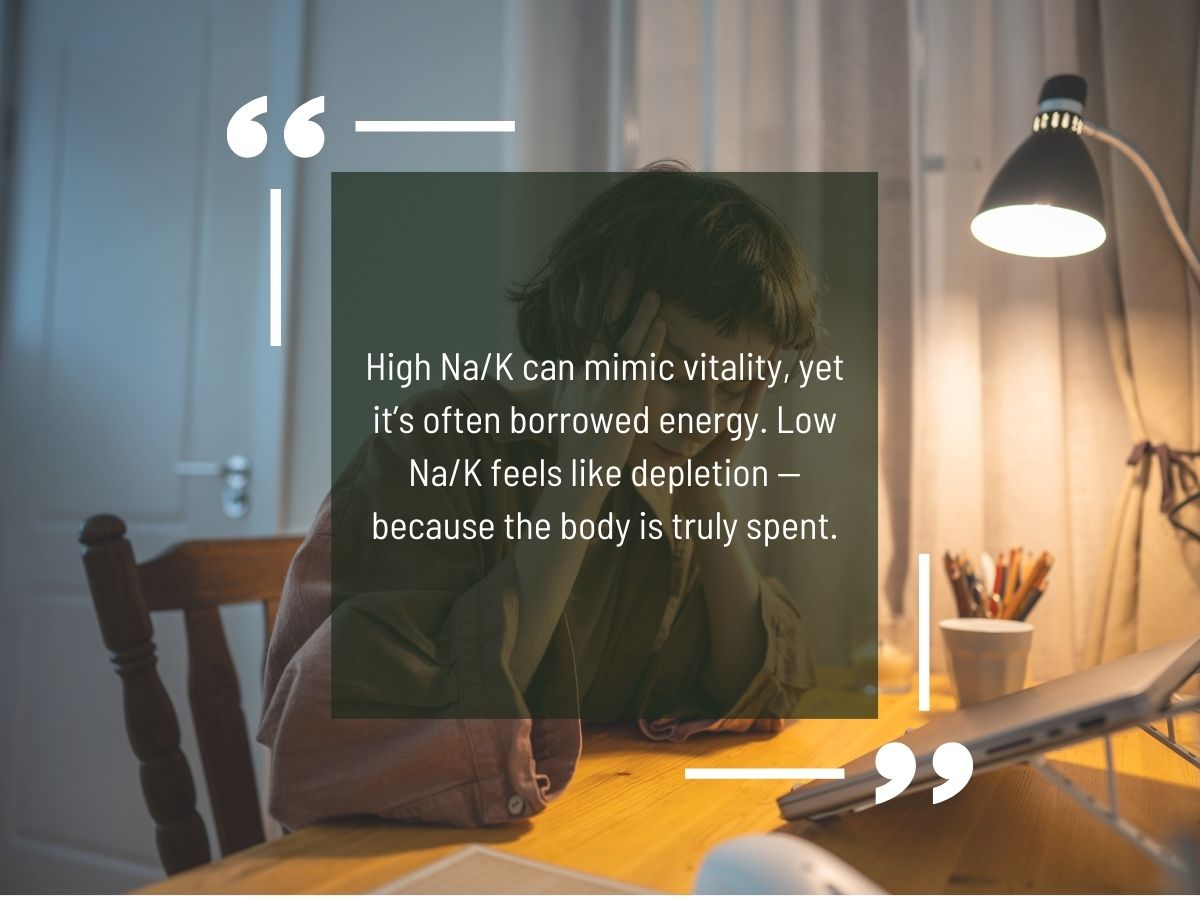
A higher ratio can look like energy — but it is often forced energy.
A lower ratio feels like depletion — because it usually is.
High Na/K Ratio on HTMA
Causes & How It Often Feels
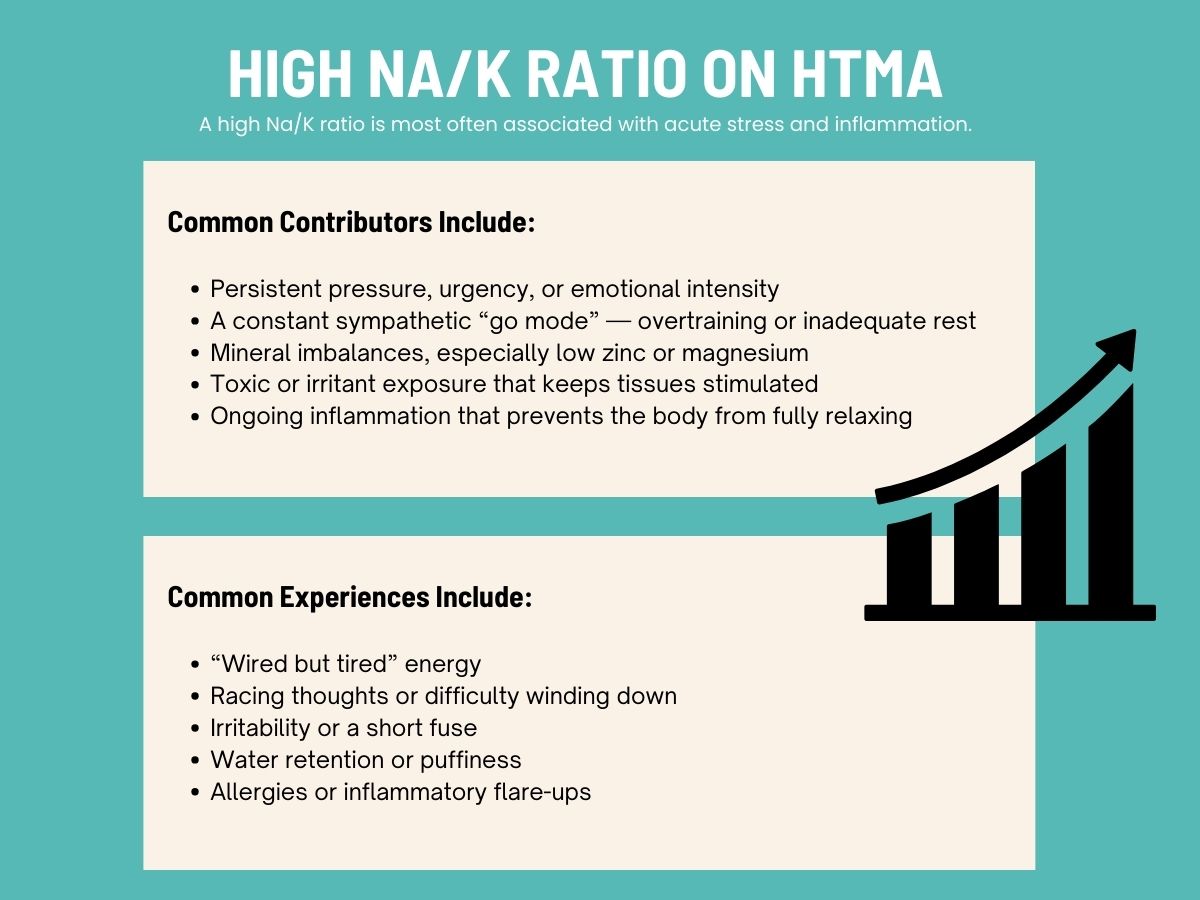
A high Na/K ratio is most often associated with acute stress and inflammation.
Common contributors include:
- ongoing pressure, urgency, or emotional intensity
- constant sympathetic “go mode” (overtraining, under-resting)
- mineral imbalance, commonly low zinc or magnesium
- toxic or irritant burden that stimulates tissues
- inflammatory patterns that keep the body switched on
Common experiences include:
- wired-but-tired energy
- racing thoughts, difficulty switching off
- irritability or short fuse
- water retention or puffiness
- allergies or inflammatory flares
Myth: High Na/K always means too much salt
Not necessarily. Many people with high Na/K consume very little salt. Stress chemistry, inflammation, mineral balance, and toxic burden are far more common drivers.
Read more: Understanding a High Sodium-to-Potassium Ratio in HTMA
Low Na/K Ratio on HTMA
Causes & How It Often Feels
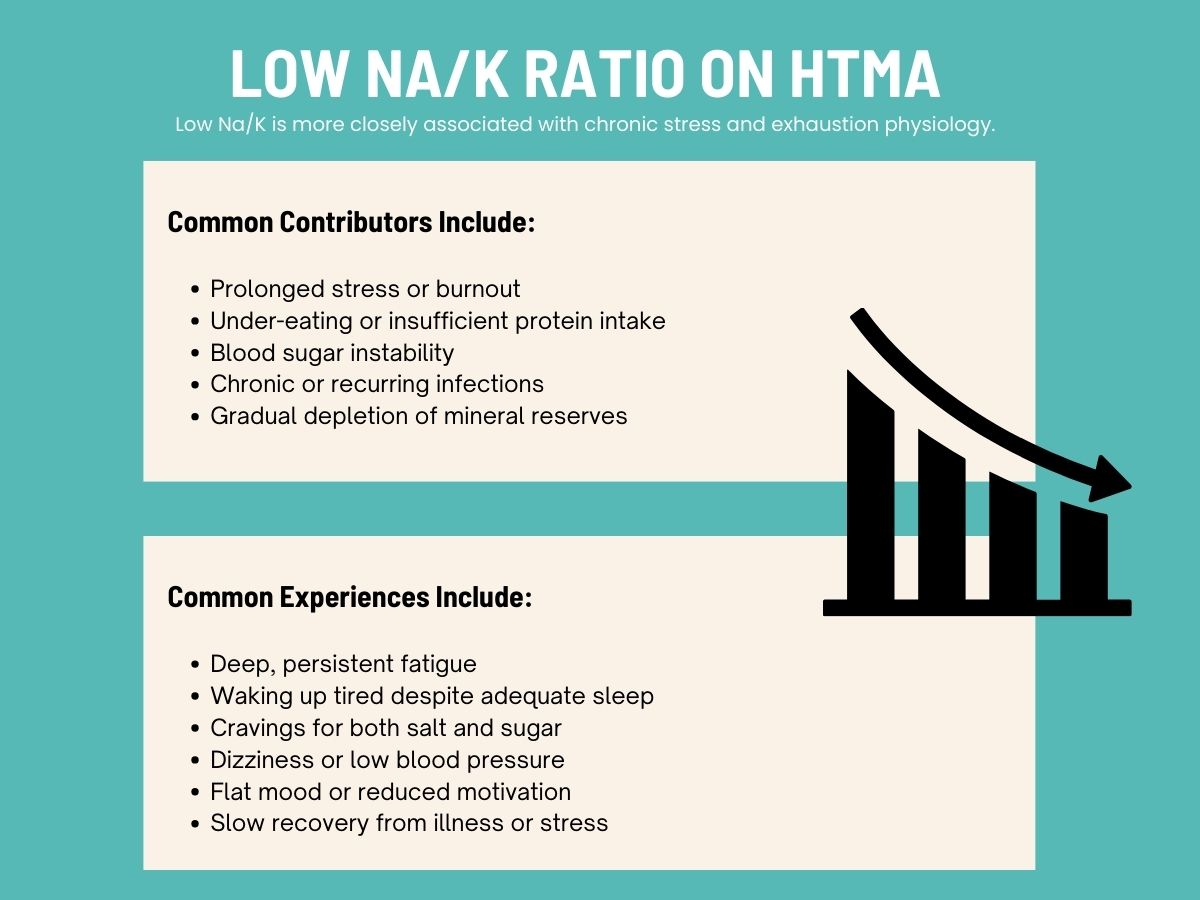
Low Na/K is more closely associated with chronic stress and exhaustion physiology.
Common contributors include:
- long-term stress and burnout
- under-eating or low protein intake
- blood sugar instability
- chronic or recurring infections
- depleted mineral reserves over time
Common experiences include:
- bone-deep fatigue
- waking tired despite sleep
- salt and sugar cravings together
- dizziness or low blood pressure
- flat mood or low motivation
- slow recovery from illness or stress
In HTMA pattern work, low Na/K is also associated with:
- reduced immune resilience
- reduced tissue repair
- a more catabolic (breakdown-dominant) state
Read more: What a Low Sodium-to-Potassium Ratio Means for Your Health
Na/K, Emotions & Nervous System Regulation
Na/K is not only about physical stamina.
It often reflects how safe the nervous system feels to express emotion.
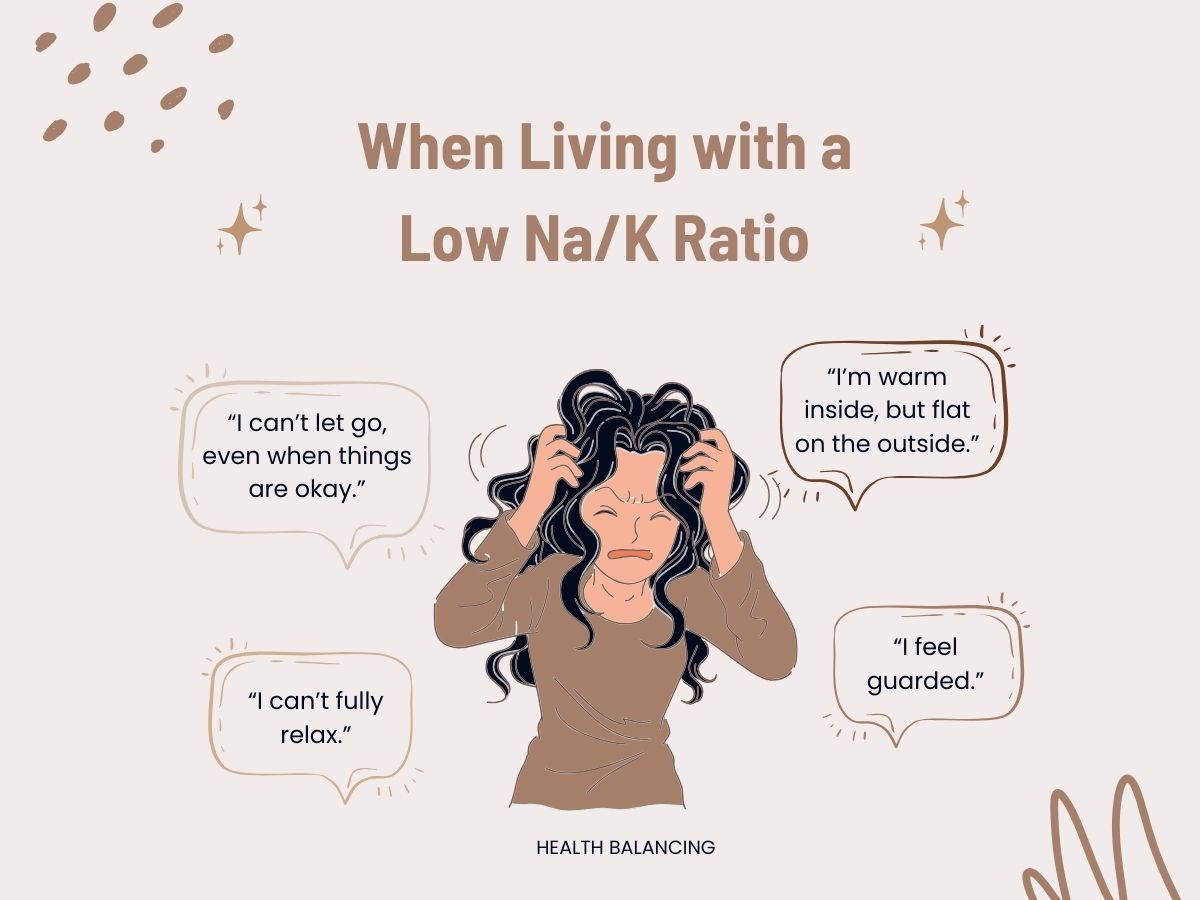
People with lower Na/K frequently say:
- “I can’t fully relax.”
- “I feel guarded.”
- “I’m warm inside, but flat on the outside.”
- “I can’t let go, even when things are okay.”
Classic HTMA observation shows:
- Lower Na/K (often below ~2) correlates with inhibition and defensiveness
- Very high Na/K (often above ~6) correlates with emotional reactivity
This isn’t psychological weakness.
It’s stress chemistry shaping emotional expression.
As Na/K normalises, many people notice calmer moods, greater emotional range, deeper sleep, and a stronger sense of feeling like themselves again.
Why Na/K Fluctuates During Healing
On a properly guided nutritional-balancing program, the Na/K ratio often moves before it stabilises.
This can occur as:
- long-standing stress compensation unwinds
- inflammation cools
- immune or detox phases occur
- potassium rises temporarily during elimination phases
- deeper stress or trauma patterns surface
Because of this, supplement needs change between tests.
- When Na/K is low, Limcomin is often used to support adrenal recovery, immune resilience, and rebuilding capacity
- As Na/K rises toward balance, Limcomin may need to be reduced or replaced
- When Na/K becomes high, zinc is often more appropriate to calm adrenal overactivity and inflammation
If support no longer matches the ratio, people may feel fatigue, irritability, or body aches. This isn’t failure — it’s feedback.
Why Blood Tests Miss This Pattern
Blood sodium and potassium are tightly regulated for survival. They show a moment-in-time snapshot.
HTMA reflects a three-month tissue trend — how your cells have been functioning over time.
That’s why Na/K often explains symptoms that blood work cannot.
Action Steps: Supporting Your Na/K Ratio
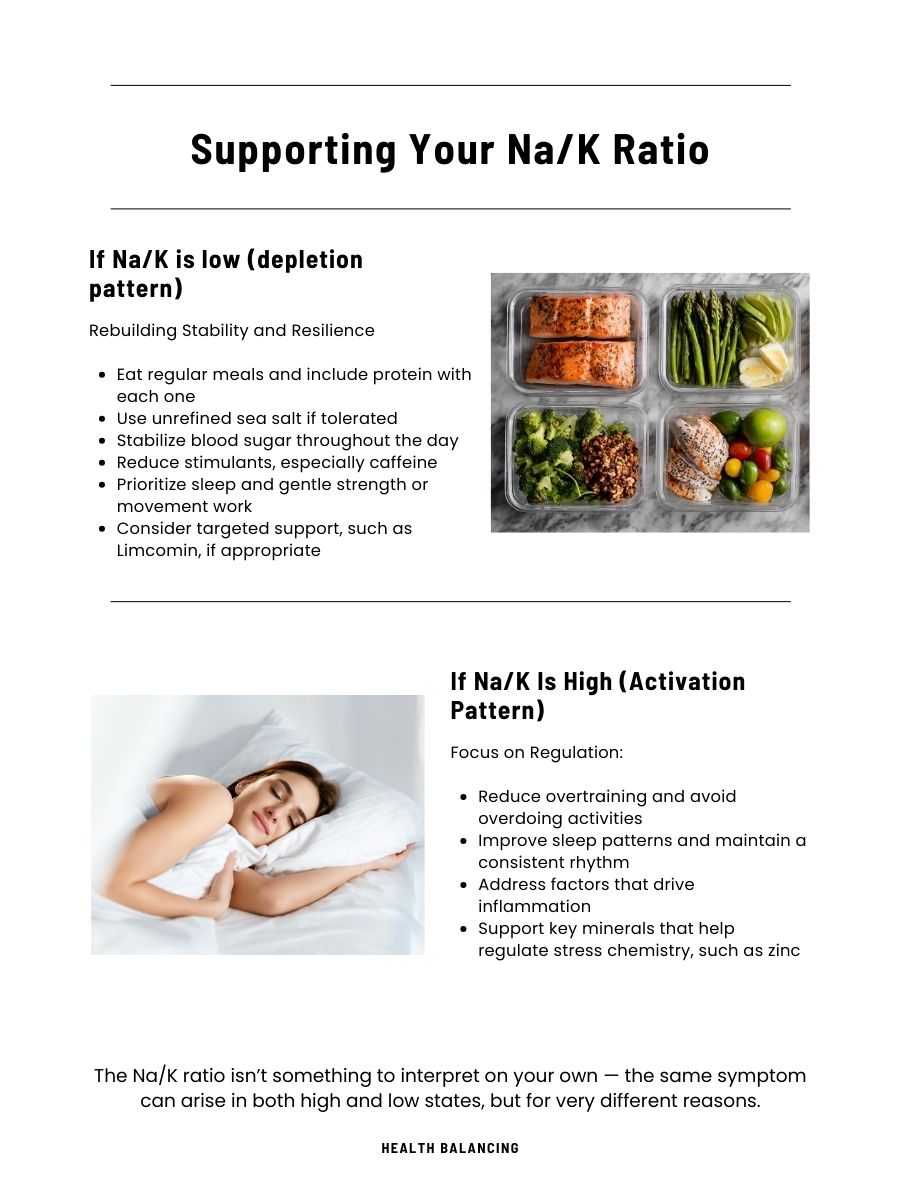
If Na/K is low (depletion pattern)
Focus on rebuilding stability:
- eat regular meals
- include protein with every meal
- use unrefined sea salt if tolerated
- stabilise blood sugar
- reduce stimulants, especially caffeine
- prioritise sleep and gentle strength work
- targeted support such as Limcomin may be appropriate
If Na/K is high (activation pattern)
Focus on regulation:
- reduce overtraining and overdoing
- improve sleep rhythm
- address inflammation drivers
- support minerals that regulate stress chemistry, such as zinc
Na/K is not a DIY ratio.
The same symptom can appear in both high and low states — for very different reasons.
When to Retest
During active correction, retesting every 3–4 months is often ideal.
During stabilisation, every 6 months may be sufficient.
Each retest provides an updated map so support can evolve with your physiology.
Ready to Stop Guessing?
If your body has been whispering for years — fatigue, anxiety, cravings, slow recovery — the sodium-to-potassium ratio often reveals the pattern underneath the symptoms.
Read more: Book your Hair Tissue Mineral Analysis