Low Sodium & Low Potassium Pattern (HTMA) | Adrenal Support & Recovery

"Man experiencing fatigue while working on laptop, representing low sodium and low potassium patterns linked to adrenal insufficiency, low stomach acid, and reduced stress capacity."

Adrenal Insufficiency, Low Stomach Acid & Reduced Stress Capacity

Low Sodium & Low Potassium Pattern (HTMA)

If you’ve been feeling tired, foggy, emotionally flat, or like your body just doesn’t “bounce back” the way it used to — even with rest — you’re not alone.

For many people, chronic fatigue isn’t a motivation problem.

It’s a capacity problem.

On Hair Tissue Mineral Analysis (HTMA), one common pattern behind this experience is low sodium and low potassium.

This pattern reflects reduced adrenal signaling, low stress tolerance, and often low stomach acid production (low HCL). It doesn’t mean something is broken — it means the body has been under demand longer than it’s been supported.

Low Sodium & Low Potassium — HTMA Summary

Low sodium (Na < 11 mg%) and low potassium (K < 6 mg%) on HTMA indicate adrenal insufficiency and limited stress adaptation at the tissue level.

This pattern is commonly associated with:

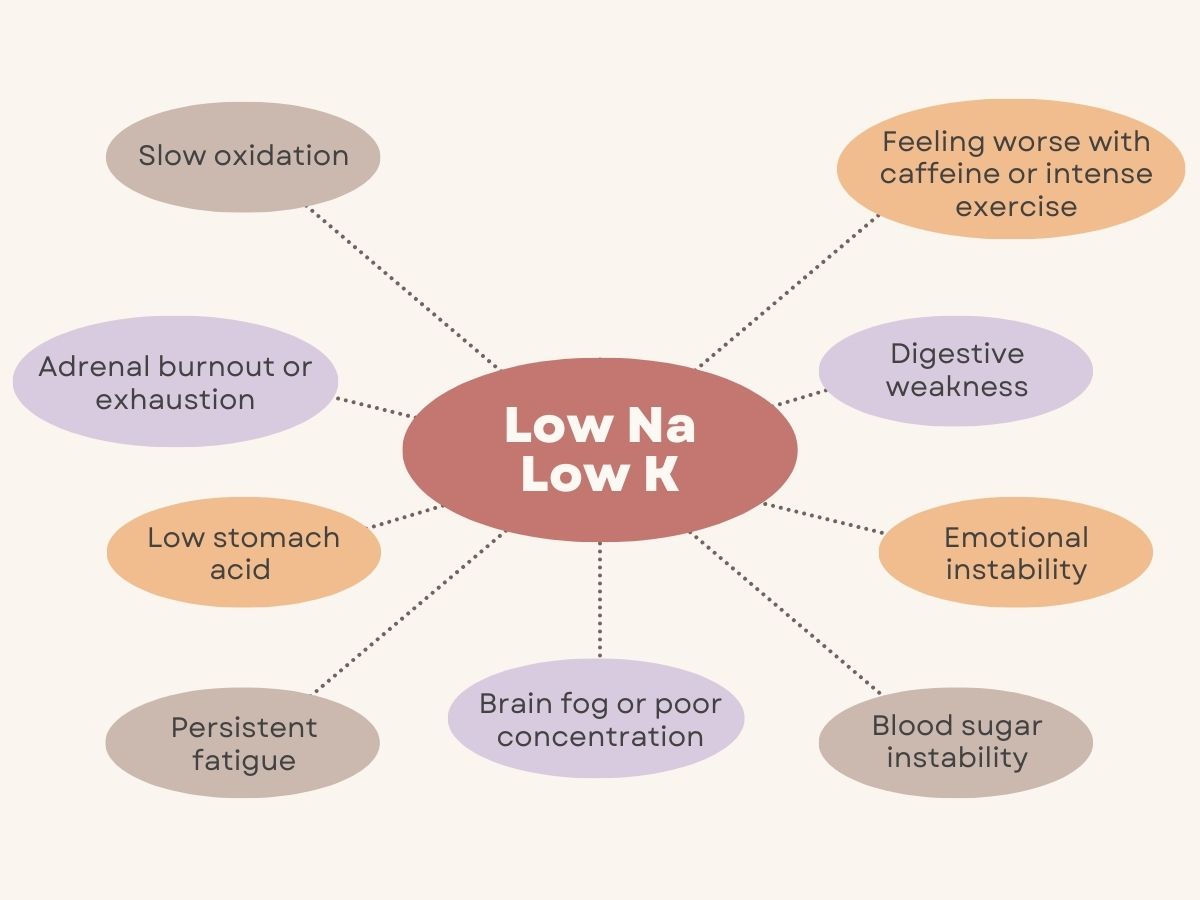
  • Slow oxidation
  • Adrenal burnout or exhaustion
  • Low stomach acid (low HCL)
  • Persistent fatigue
  • Brain fog or poor concentration
  • Blood sugar instability
  • Reduced resilience to emotional or physical stress
  • Feeling worse with caffeine or intense exercise
  • Digestive weakness

Low sodium and potassium frequently appear as part of:

  • Slow oxidation
  • Three Lows pattern (early depletion)
  • Four Lows pattern (advanced exhaustion)
  • Sympathetic dominance (chronic fight-or-flight with eventual burnout)

Rather than reflecting weakness or lack of motivation, this pattern shows that the body has less physiological margin to buffer stress.

It often develops after prolonged emotional demand, inconsistent eating, mineral depletion, or long periods of pushing through.

Recovery focuses on:

  • Regular, nourishing meals
  • Cooked vegetables and quality protein
  • Natural sea salt with meals
  • Reducing stimulants and overexertion
  • Restoring adrenal and digestive capacity
  • Targeted supplementation
  • Supporting oxidation rate in slow oxidizers
  • Personalized mineral balancing guided by HTMA

With proper support, this pattern is highly reversible — but it requires rebuilding, not restriction.

"Diagram showing symptoms of low sodium and low potassium including adrenal burnout, fatigue, digestive weakness, brain fog, emotional instability, and low stomach acid."

What Low Sodium & Low Potassium Mean in HTMA

Sodium and potassium are primary electrolytes that regulate:

  • Cellular energy production
  • Nervous system signaling
  • Fluid balance
  • Blood sugar regulation
  • Digestive function
  • Stress hormone activity

When both are low, the body struggles to maintain electrical charge across cell membranes. Energy output drops. Recovery slows. Stress feels heavier.

This is why people with this pattern often experience:

  • Feeling drained rather than wired
  • Difficulty tolerating pressure
  • Needing more rest but not feeling restored
  • Digestive sluggishness or bloating
  • Salt cravings
  • Increased sensitivity to caffeine or exercise

Low sodium commonly correlates with low hydrochloric acid, reducing protein digestion and mineral absorption — further deepening fatigue.

Why This Pattern Develops

Low sodium and low potassium usually result from chronic demand exceeding nutritional and recovery capacity.

Common contributors include:

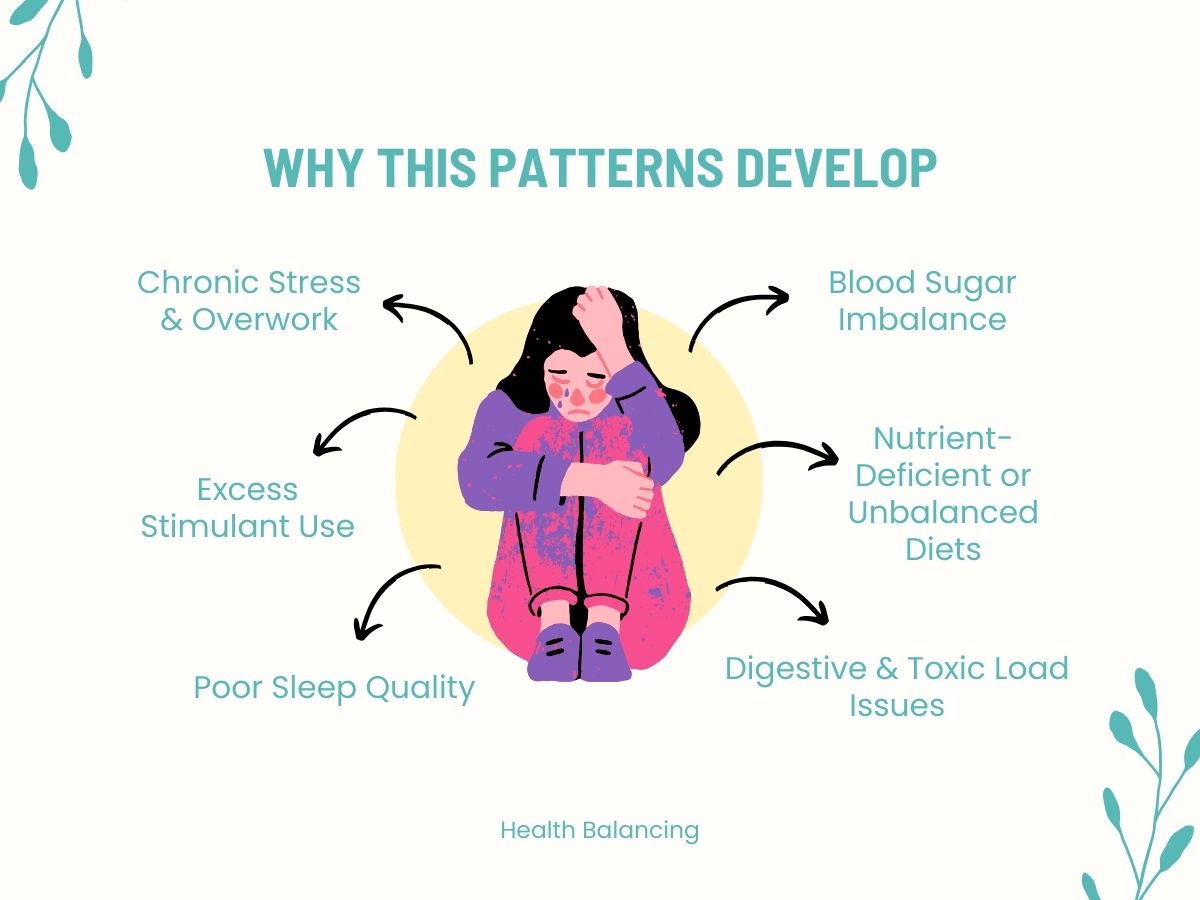
  • Long-term emotional stress
  • Overwork with inadequate rest
  • Blood sugar swings or skipping meals
  • Excess stimulants (caffeine, sugar, intense exercise)
  • Insufficient sleep, late nights, or poor-quality sleep
  • Refined-food–heavy diets
  • Eating too little overall
  • Raw-food or salad-dominant diets
  • Diets low in cooked vegetables
  • Vegetarian or very low-meat intake
  • Poor digestion, malabsorption, or gut permeability (“leaky gut”)
  • Chronic allergies or immune activation
  • Hidden copper or toxic metal burden
  • Repeated illness or inflammation

Over time, adrenal output declines. Sodium is lost through the kidneys. Potassium retention drops. Cellular voltage falls.

The body shifts into conservation mode.

"Illustration of a tired woman surrounded by causes of low sodium and potassium patterns"

Dietary Patterns Commonly Seen With Low Sodium & Low Potassium

This pattern often appears alongside eating styles that unintentionally deplete adrenal reserves:

  • Intermittent fasting or prolonged fasting
  • Skipping meals
  • Eating too little
  • Raw food or salad-heavy diets
  • Frequent juicing without solid meals
  • Low-protein or vegetarian diets
  • Low intake of meat and mineral-rich foods
  • High sugar intake

While these approaches may feel “clean,” they often fail to provide enough usable sodium, potassium, protein, and calories to sustain adrenal signaling.

Healing requires nourishment, not restriction.

Inspirational quote on healing emphasizing the importance of nourishment, minerals, protein, and real meals for adrenal recovery, with a blurred background of snacks and a cozy setting.

What Helps This Pattern Recover

Low sodium and low potassium recover through restoring metabolic capacity.

This involves rebuilding adrenal signaling, stabilizing blood sugar, and supplying consistent minerals and calories.

🍲 Eat Regular Meals

Three balanced meals daily with protein, cooked vegetables, fats, and adequate calories.

🧂 Use Natural Sea Salt

Supports sodium levels, digestion, and circulation. Many experience rapid symptom relief.

🥕 Choose Cooked Vegetables

They provide bioavailable potassium and are easier to digest in depleted states.

☕ Reduce Stimulants & Overexertion

Avoid pushing through fatigue.

🛌 Protect Rest

Sleep and emotional downtime are non-negotiable.

🧬 Targeted Supplementation & Oxidation Support

Recovery often requires individualized supplementation based on HTMA, especially when slow oxidation is present.

In slow oxidizers, the goal is not just replacement — it is to gently raise oxidation rate, improve adrenal signaling, restore sodium/potassium balance, and rebuild cellular energy.

This may include adrenal support, mineral repletion, digestive support, and detoxification capacity — always personalized to the individual chart.

Frequently Asked Questions

Is this Addison’s disease?

No. This reflects functional adrenal depletion, not autoimmune Addison’s.

Can this cause fatigue and anxiety?

Yes. Sodium and potassium regulate energy and nervous system stability.

Why don’t blood tests show this?

Blood values are protected. HTMA shows long-term tissue patterns.

How long does recovery take?

Initial improvement often occurs within weeks. Full rebuilding usually takes months.

Should I just eat more salt?

Salt helps, but recovery also requires protein, cooked vegetables, rest, and mineral balancing.

Can fasting or juicing worsen this?

Yes — they often deepen depletion in already stressed systems.

How does HTMA help?

HTMA reveals oxidation rate, stress ratios, mineral depletion, and detox readiness — allowing targeted, personalized recovery.

Want Personalized Guidance?

Low sodium and low potassium respond very well to properly guided nutritional balancing.

HTMA allows us to support adrenal function, digestion, mineral status, and oxidation rate — helping you rebuild energy from the inside out.

You don’t have to guess your way back to health.