
How the Body Regulates Energy, Stress, Blood Sugar & Metabolic Pace
Mineral Ratios on HTMA
Mineral ratios are one of the most valuable aspects of a Hair Tissue Mineral Analysis (HTMA) report.
While individual mineral levels show what is present, ratios reveal how the body is using its resources. They reflect regulation, prioritisation, and long-term adaptation — not simple deficiency or excess.
In classical HTMA interpretation, certain ratios consistently reflect overall vitality and functional capacity, often more clearly than individual minerals alone.
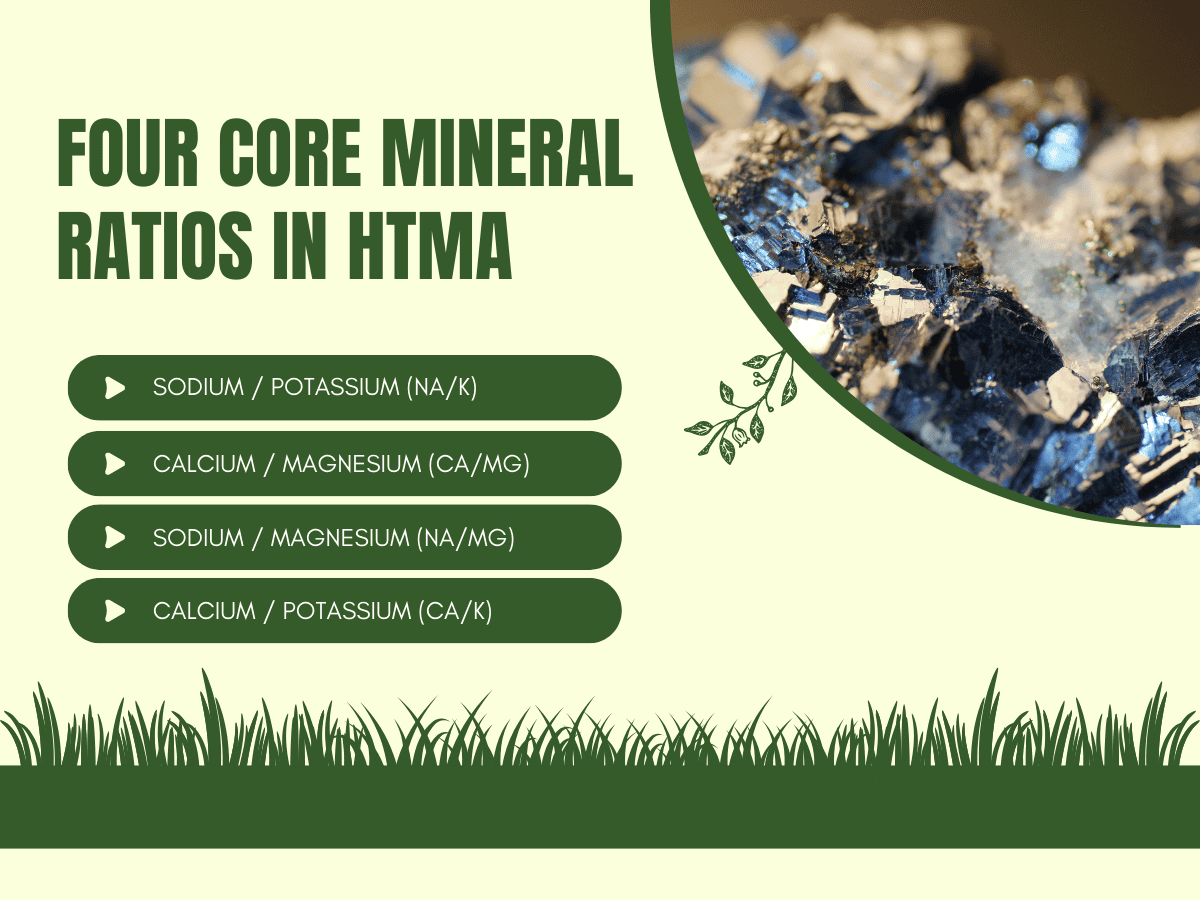
The Four Core Mineral Ratios in HTMA
HTMA commonly evaluates four key mineral ratios:
- Sodium / Potassium (Na/K) – energy and vitality (vitality ratio)
- Calcium / Magnesium (Ca/Mg) – blood sugar balance and relaxation (blood sugar / lifestyle ratio)
- Sodium / Magnesium (Na/Mg) – stress output and adrenal drive (adrenal ratio)
- Calcium / Potassium (Ca/K) – metabolic pace and efficiency (thyroid ratio)
Each ratio reflects a different dimension of how the body balances stress, recovery, and energy use.
The Two Master Ratios
In the clinical work of Dr. Paul Eck, two ratios were consistently prioritised because of how strongly they reflected overall vitality and usable energy:
- Sodium / Potassium (Na/K)
- Calcium / Magnesium (Ca/Mg)
“The quickest and most reliable way to evaluate a person’s relative level of health and vitality is to look at these two ratios.”
— paraphrased from Dr. Paul Eck
These ratios do not diagnose disease.
They offer insight into how much energy the body has available and how well it can regulate it.and backfire for another
They reflect regulation, not just supply.
How the Body Balances Stress, Energy & Recovery
Mineral Ratios
Mineral ratios compare one mineral to another, revealing functional relationships that individual levels cannot show.
Ratios often explain:
- Why energy feels inconsistent
- Why stress tolerance fluctuates
- Why detox or supplements feel supportive for some — and overwhelming for others
Rather than indicating deficiencies, ratios reflect how the body is regulating itself under current conditions.
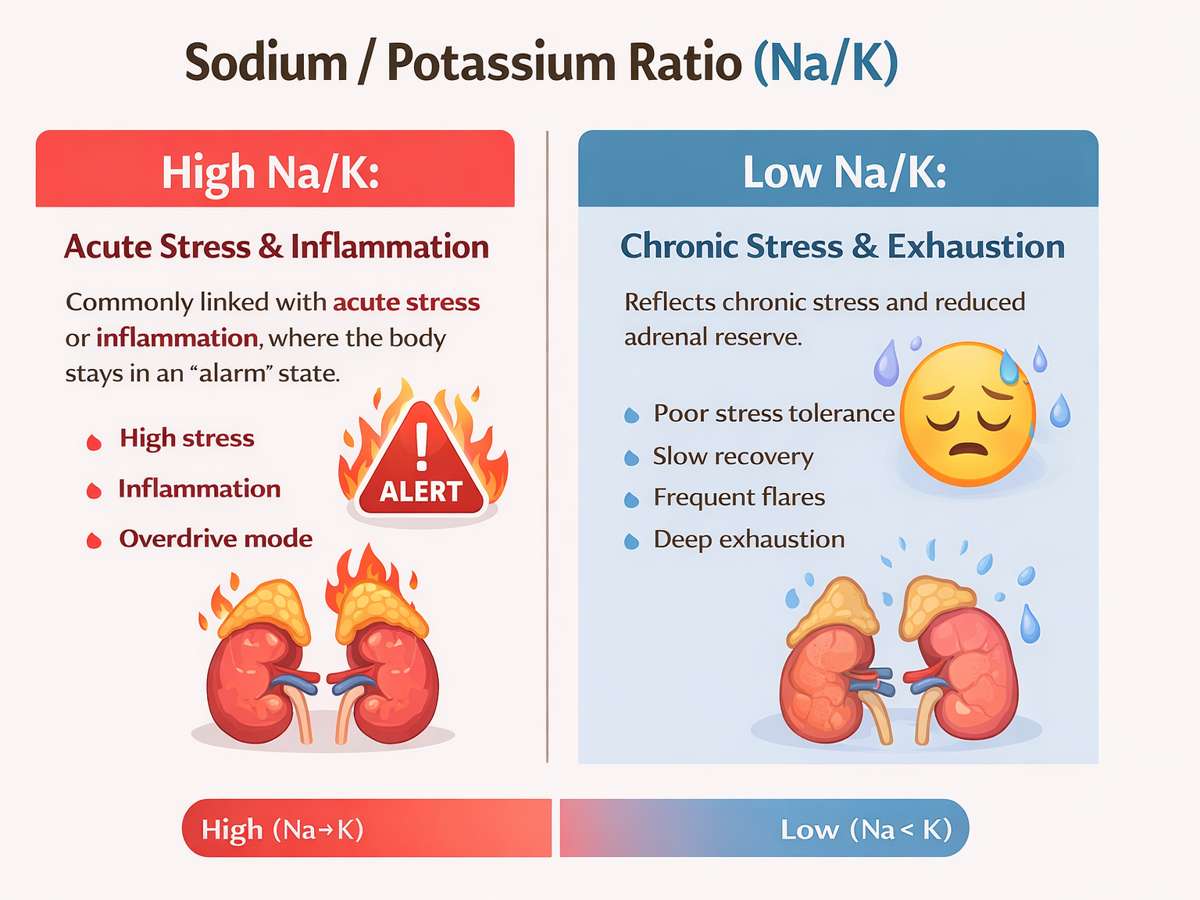
Sodium / Potassium (Na/K):
Vitality, Stress Response & Resilience
The sodium–potassium (Na/K) ratio reflects overall vitality, cellular energy, and stress resilience. Sodium and potassium work together to support adrenal signalling, nerve impulses, and inflammation control, which is why Na/K is often called the vitality ratio.
When this ratio is off, adaptation becomes harder. A high Na/K is commonly linked with acute stress or inflammation, where the body stays in an “alarm” state. A low Na/K reflects chronic stress and reduced adrenal reserve, often experienced as poor stress tolerance, slow recovery, frequent flares, and deep exhaustion. Rather than a diagnosis, this ratio offers a snapshot of how much energy the body has available to cope right now.
Learn more: Sodium / Potassium (Na/K) ratio
Sodium / Magnesium (Na/Mg): Adrenal Function & Energy Output
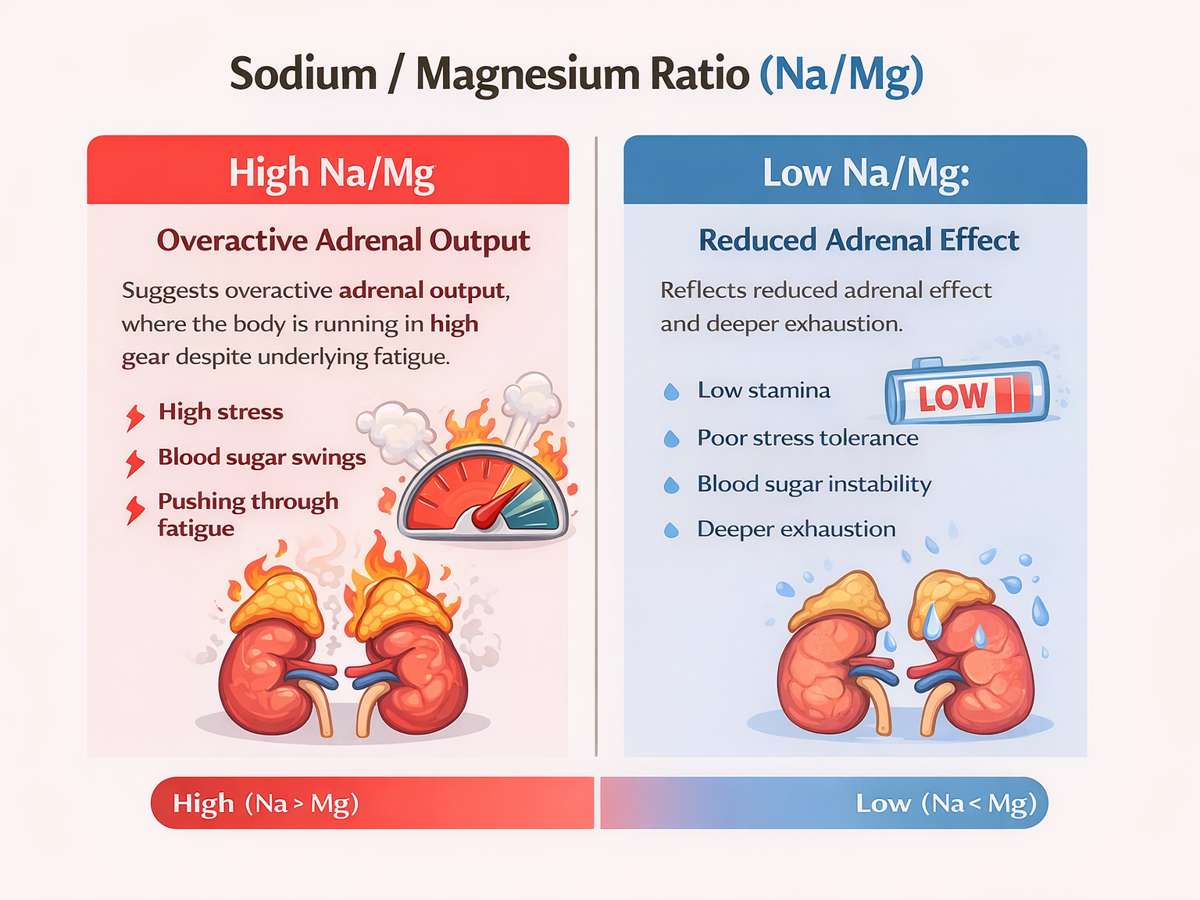
The sodium–magnesium (Na/Mg) ratio—often called the adrenal ratio—reflects adrenal activity and energy output at the tissue level. Sodium is linked to adrenal hormones that drive metabolism and stress response, while magnesium supports calming, recovery, and stability.
A high Na/Mg suggests overactive adrenal output, where the body is running in high gear despite underlying fatigue. A low Na/Mg reflects reduced adrenal effect, often experienced as low stamina, poor stress tolerance, blood sugar instability, and deeper exhaustion. This ratio helps explain how hard the body has been pushing—or how depleted it has become—over time.
Learn more: Sodium / Magnesium (Na/Mg) ratio
Calcium / Magnesium (Ca/Mg): Blood Sugar Balance & Relaxation
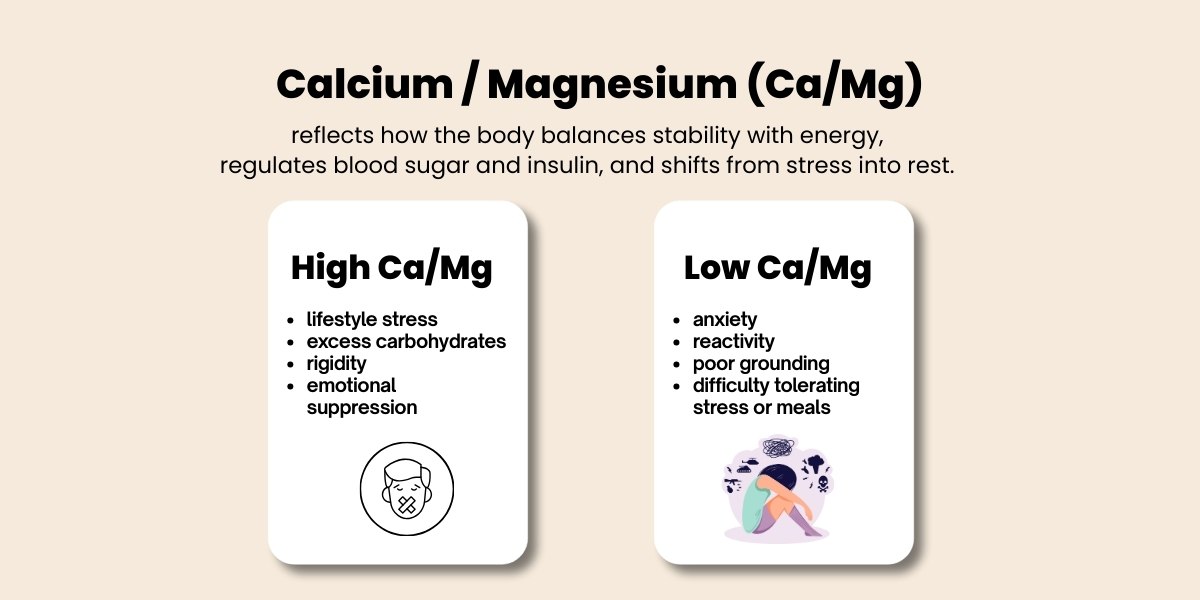
The calcium-to-magnesium (Ca/Mg) ratio reflects how the body balances stability with energy, regulates blood sugar and insulin, and shifts from stress into rest. Calcium supports structure and insulin release, while magnesium calms the nervous system, supports enzyme activity, and prevents excessive tissue tension.
When this ratio is too high or too low, regulation becomes strained. A high Ca/Mg is often linked with lifestyle stress, excess carbohydrates, rigidity, or emotional suppression, while a low Ca/Mg may reflect anxiety, reactivity, poor grounding, and difficulty tolerating stress or meals. Rather than a simple imbalance, this ratio often mirrors how much the body has been bracing against life, both physically and emotionally.
Learn more: Calcium / Magnesium (Ca/Mg) ratio
Calcium / Potassium (Ca/K): Thyroid Function & Metabolic Pace
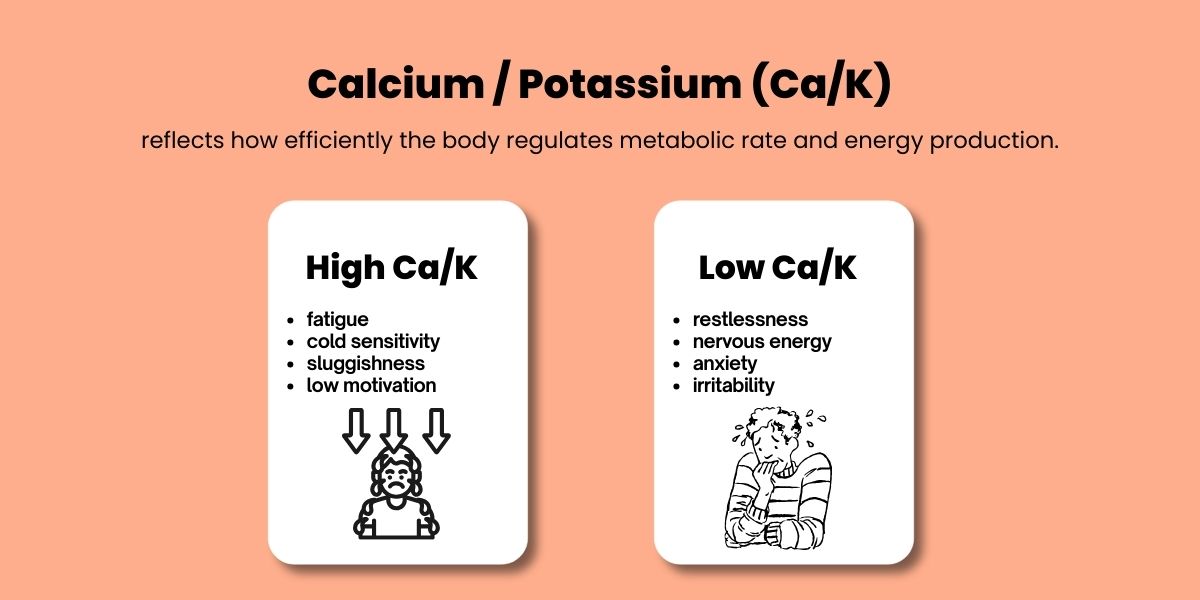
The calcium–potassium (Ca/K) ratio—often called the thyroid ratio—reflects how efficiently the body regulates metabolic rate and energy production. Calcium slows and stabilises metabolism, while potassium supports cellular energy and drive.
A high Ca/K is commonly linked with a slower metabolic pace, experienced as fatigue, cold sensitivity, sluggishness, or low motivation. A low Ca/K reflects faster metabolic activity, which can feel like restlessness or nervous energy. Because HTMA is a tissue-level test, this ratio may differ from blood thyroid results and helps explain changes in energy efficiency over time.
Learn more: Calcium / Potassium (Ca/K) ratio
Emotional Regulation & Mineral Ratios
Minerals influence nervous system signalling as well as physical processes.
In classical HTMA theory:
- sodium is associated with outward drive and activation
- potassium is associated with defensiveness and stress sensitivity
Large imbalances in Na/K may be reflected emotionally as:
- inhibition or withdrawal (very low Na/K)
- irritability or emotional aggressiveness (very high Na/K)
Similarly, Ca/Mg imbalance may affect:
- emotional stability
- ability to relax
- tolerance to stress and stimulation
These associations are observational, not psychological diagnoses — and they often soften as mineral balance improves.
Ratios Change as the Body Stabilises
Mineral ratios are not permanent states, and they are not meant to be forced into range.
As the body rebuilds and stabilises:
- extremes tend to soften
- regulation improves
- energy becomes more predictable
These shifts usually occur as mineral reserves are restored, stress load decreases, and nervous system regulation improves.
Retests often show changes in ratios before symptoms fully resolve, because internal regulation precedes outward change. For this reason, HTMA interpretation focuses on trends over time, not single results.
How Ratios Fit Into the Bigger Picture
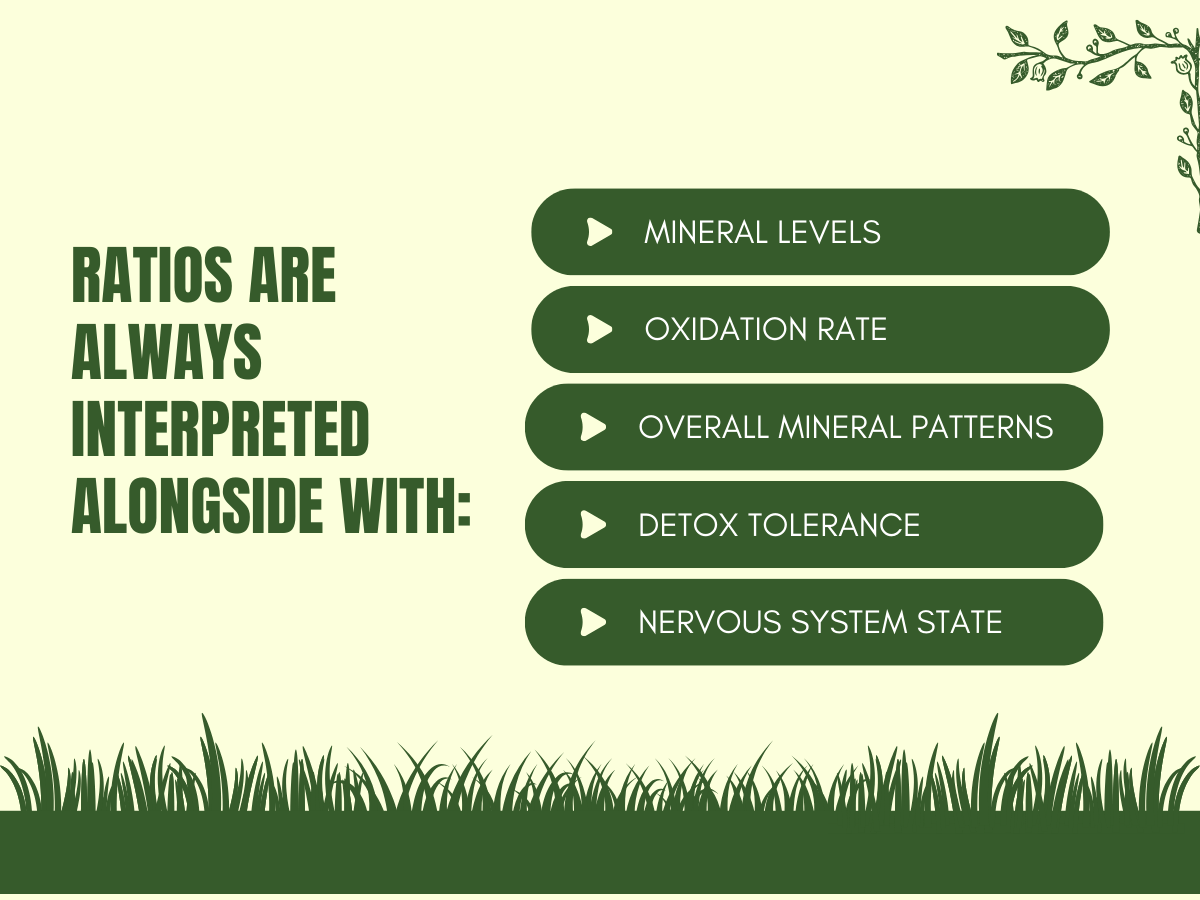
Ratios are always interpreted alongside:
- mineral levels
- oxidation rate
- overall mineral patterns
- detox tolerance
- nervous system state
Together, they help answer:
What can this body safely handle at this stage?
Ratios guide sequencing, not urgency.
Where to Go Next
- Explore Mineral Patterns and long-term adaptation
- Learn how Ratios & Patterns work together
- Understand Detox Readiness and why timing matters
- See whether HTMA testing is appropriate for you
Understanding comes first.
Correction follows naturally.
Source note
Concepts regarding the prioritisation of Na/K and Ca/Mg are drawn from the clinical observations of Dr. Paul Eck (Energy, Emotions, and Mineral Balance), framed here for educational, non-diagnostic purposes.