
Mineral Patterns: The Bigger Picture Behind Symptoms
Mineral patterns help explain why symptoms behave the way they do over time.
While mineral ratios show how the body is responding to stress, energy demands, and recovery, mineral patterns reveal how much reserve the body has overall — and what it can realistically handle right now.
Patterns are not diagnoses.
They describe adaptive states that develop after prolonged stress, illness, depletion, or long-term compensation.
Understanding mineral patterns often brings relief, because they explain why:
- Rest alone doesn’t restore energy
- Detox protocols make symptoms worse
- Progress feels slow or nonlinear
- “Doing everything right” still doesn’t work
Patterns provide context — not labels.
Mineral Patterns Are Adaptive States, Not Failures
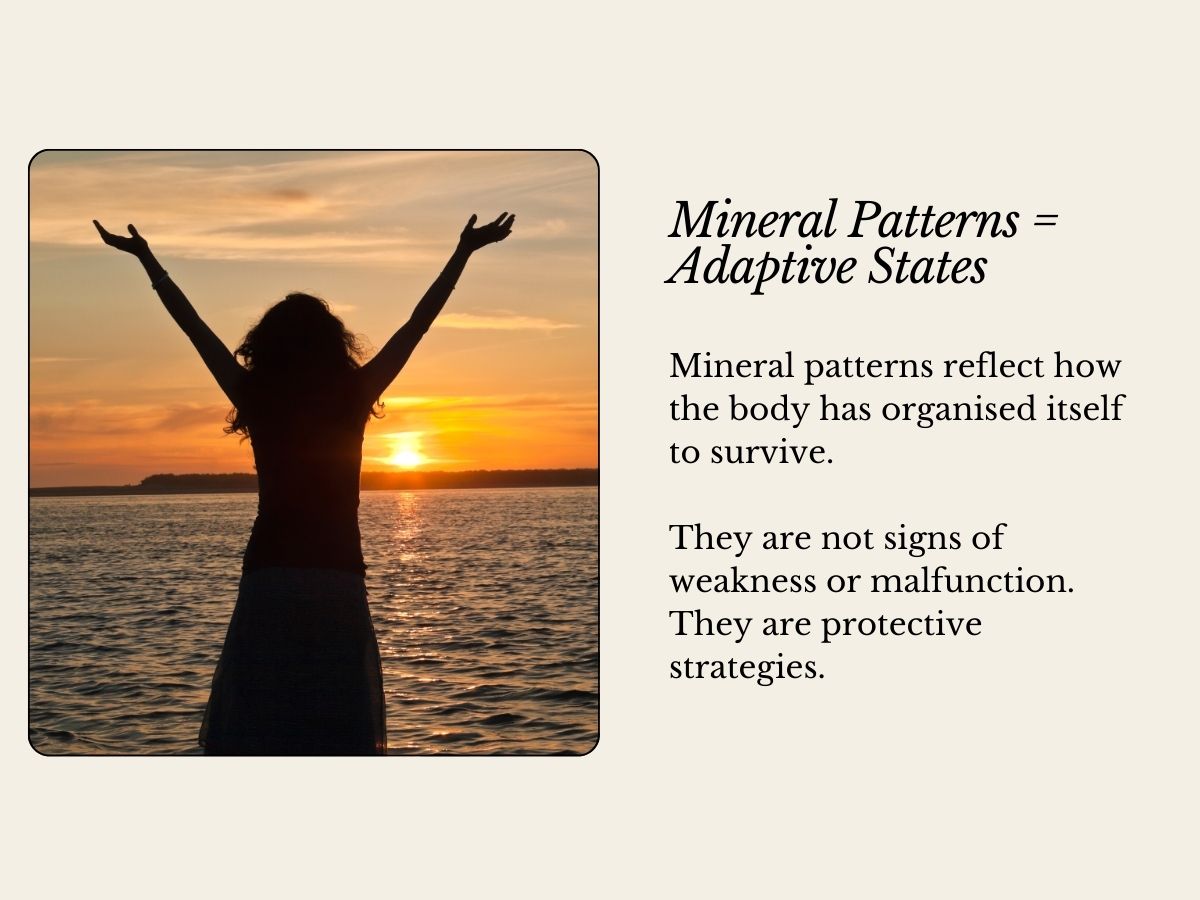
Mineral patterns reflect how the body has organised itself to survive.
They are not signs of weakness or malfunction.
They are protective strategies, shaped by stress load, nutrition, illness, emotional strain, and recovery capacity.
When stress persists without adequate rebuilding, the body doesn’t simply break down.
It adapts.
That adaptation shows up on an HTMA as a pattern.
The patterns outlined on this page represent some of the most commonly observed mineral patterns, particularly in people dealing with fatigue, burnout, and chronic stress. They are not exhaustive. Additional patterns and pattern variations may be discussed as clinical observation and understanding continue to evolve.
Why Mineral Patterns Matter for Healing
Looking only at symptoms can be misleading.
Two people may share similar complaints — fatigue, anxiety, brain fog — yet require very different approaches depending on their underlying mineral pattern.
Mineral patterns help explain:
- Why timing matters more than intensity
- Why stimulation helps some people and harms others
- Why detox can be supportive at one stage and destabilising at another
When patterns are recognised, support becomes appropriate rather than aggressive.
When the Nervous System Stays in Stress Mode
Sympathetic Dominance Pattern
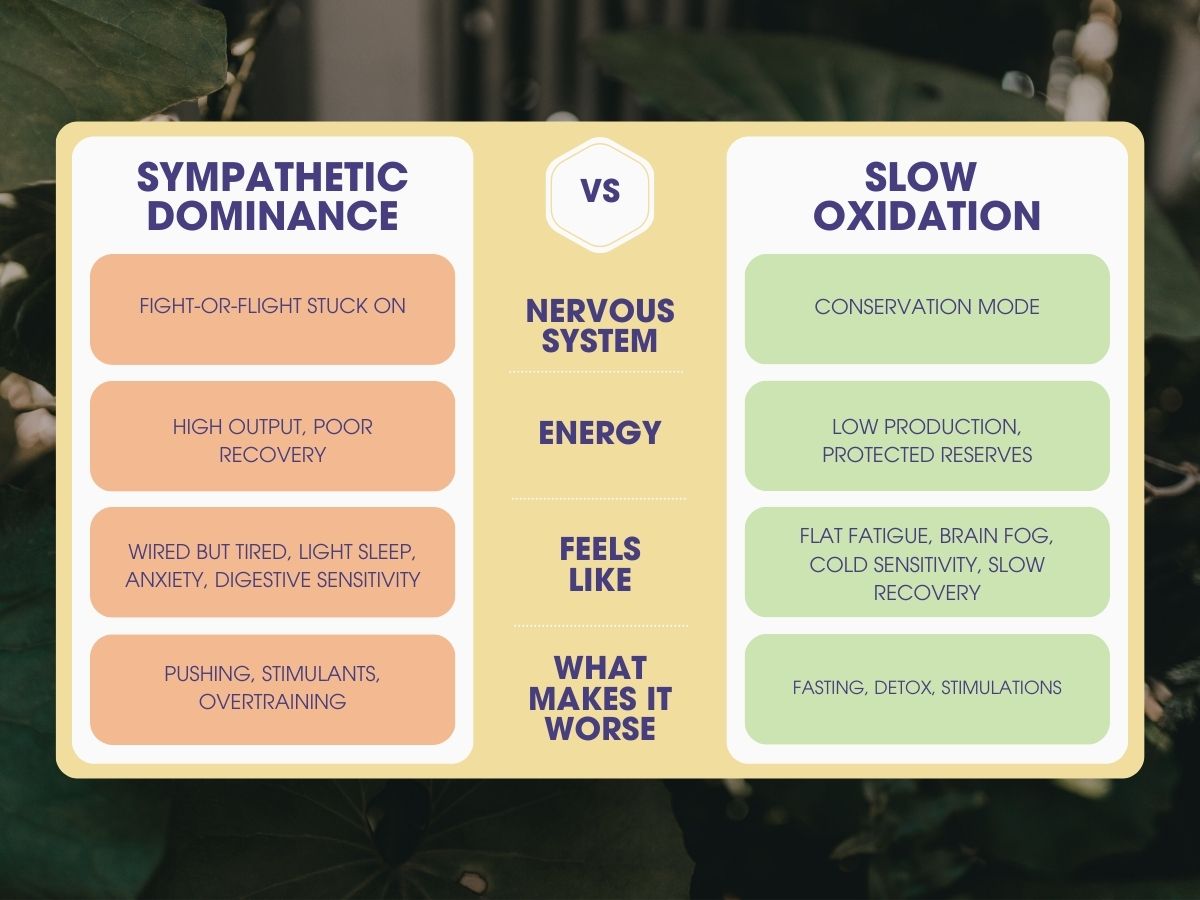
Sympathetic dominance reflects a nervous system that remains in fight-or-flight, even at rest.
The body stays alert, reactive, and on guard — diverting energy toward vigilance rather than repair.
This pattern is often associated with:
- Wired-but-tired energy
- Light or restless sleep
- Digestive sensitivity
- Heightened anxiety or irritability
Rather than indicating fragility, sympathetic dominance usually reflects long-term pressure without adequate recovery.
The system has adapted to keep going, but struggles to fully switch off.
In this state, pushing harder often deepens exhaustion.
Reduced Energy Production and Conservation
Slow Oxidation Pattern
Slow oxidation reflects a lower metabolic pace, where the body has intentionally slowed processes to preserve energy.
This is not metabolic failure.
It is a conservation strategy.
People in this state often experience:
- Persistent fatigue
- Brain fog or low motivation
- Cold intolerance
- Slower recovery from stress or illness
When slow oxidation is present, aggressive detox, fasting, or stimulation commonly worsens symptoms.
The body is prioritising survival over output.
When Rest Doesn’t Restore Energy
Burnout Pattern
Burnout is not a lack of willpower or discipline.
On an HTMA, burnout often appears as a pattern of depleted stress response, where the adrenal and metabolic systems no longer rebound efficiently.
This pattern may show up as:
- Exhaustion that doesn’t resolve with rest
- Feeling overwhelmed by small demands
- Emotional flatness or irritability
- Strong reactions to caffeine or supplements
Burnout reflects cumulative load, not sudden collapse.
Recovery usually requires stabilisation, pacing, and rebuilding capacity — not pushing through.
Depleted Stress Capacity and Resilience
Low Sodium & Potassium Pattern
Low sodium and potassium levels are commonly associated with reduced adrenal signalling and limited stress tolerance.
This pattern may present as:
- Burnout or emotional flatness
- Blood sugar instability
- Feeling worse with caffeine or intense exercise
- Difficulty tolerating change or pressure
Low sodium and potassium do not indicate weakness or lack of motivation.
They reflect reduced adaptive capacity — the body has less margin to buffer stress.
Deep Exhaustion and Limited Mineral Reserves
Four Lows Pattern
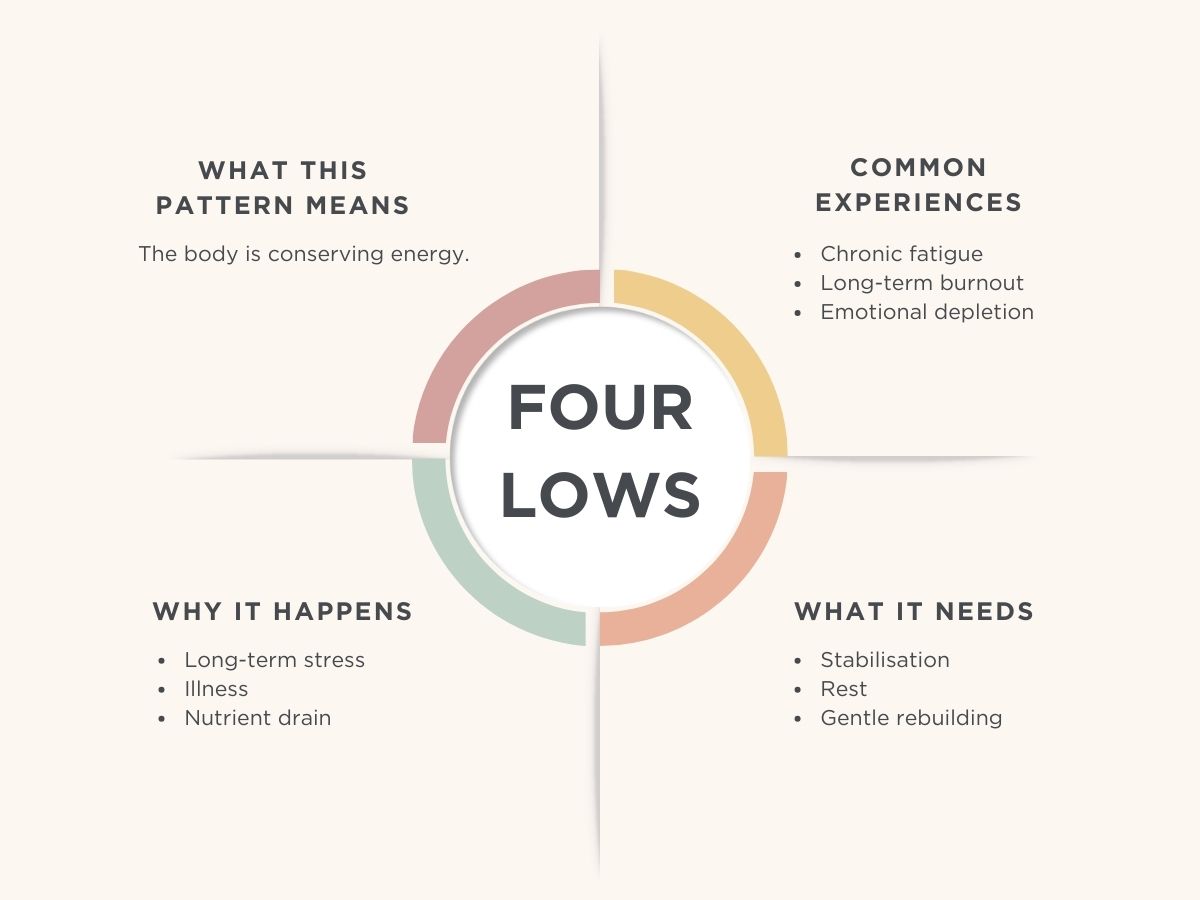
The Four Lows pattern occurs when calcium, magnesium, sodium, and potassium are all below ideal ranges.
It is commonly seen in:
- Chronic fatigue
- Long-term burnout
- Prolonged emotional or physical depletion
Although it can look concerning on paper, this pattern often reflects a system that has been quietly surviving for a long time.
Progress here usually requires:
- Stabilisation
- Rest
- Gentle rebuilding
—not intensity.
When Energy Limits Detoxification
Impaired Detox Patterns
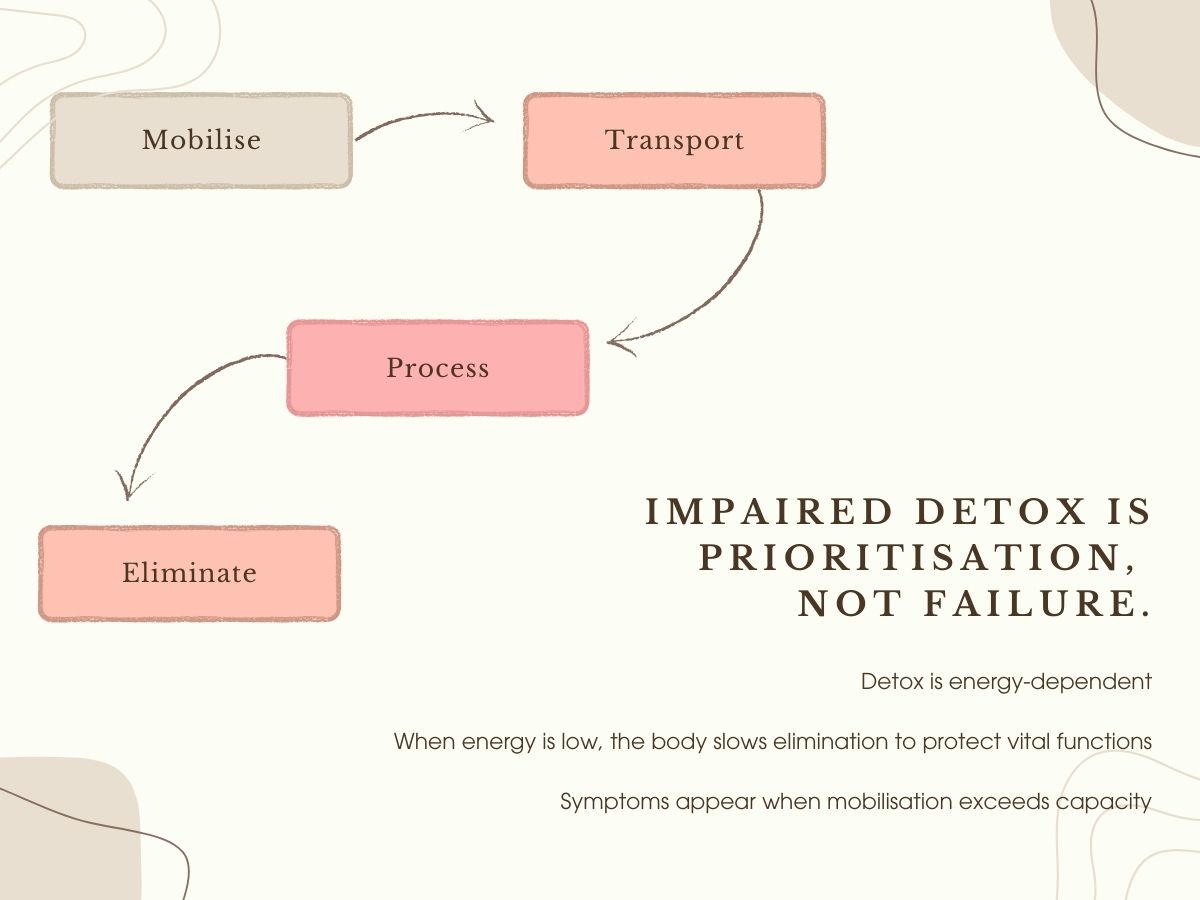
Detoxification is an energy-dependent process.
When mineral reserves are low or the nervous system is overwhelmed, the body may intentionally slow toxin elimination to conserve energy for essential functions.
This can appear as:
- Low toxic element excretion
- Strong reactions to detox protocols
- Feeling worse during cleanses
In these cases, impaired detox is not failure — it’s prioritisation.
How Mineral Patterns Guide Recovery
Mineral patterns help answer the question:
“What does my body need right now?”
They shift the focus from fixing symptoms to supporting capacity.
When patterns are respected:
- Interventions become gentler and more effective
- Progress feels steadier and safer
- Healing becomes sustainable rather than reactive
Patterns don’t predict the future — but they do explain the present.
And understanding the present is often the first step toward real recovery.