Calcium in HTMA: What It Reveals About Stress, Energy & Mineral Balance

Calcium in HTMA educational cover image showing calcium-rich foods and explaining what calcium levels reveal about stress, energy production, and mineral balance.

Calcium in HTMA: What It Reveals About Stress, Energy & Mineral Balance

Calcium is usually talked about as a bone mineral.
But in HTMA, calcium behaves much more like a stress and regulation mineral.

When calcium is out of balance, people often describe it as:

  • feeling wired but exhausted
  • brain fog that won’t lift
  • tight muscles, stiffness, or cramps
  • burnout that doesn’t show up on standard labs

HTMA doesn’t diagnose disease. What it does show is how your body has been handling stress over time—and whether calcium is being lost, locked up, or not usable. That distinction matters more than most people realize.

Key takeaways (quick clarity)

  • Low hair calcium often reflects a stress-driven, “alarm mode” physiology (fast oxidation).
  • High hair calcium often reflects a slowed, protective physiology (slow oxidation).
  • Biounavailable calcium can feel contradictory—fatigue and tension at the same time.
  • A calcium shell is a protective pattern, not a failure or something to “push through.”
  • Retests matter more than single numbers—HTMA is about direction, not snapshots.

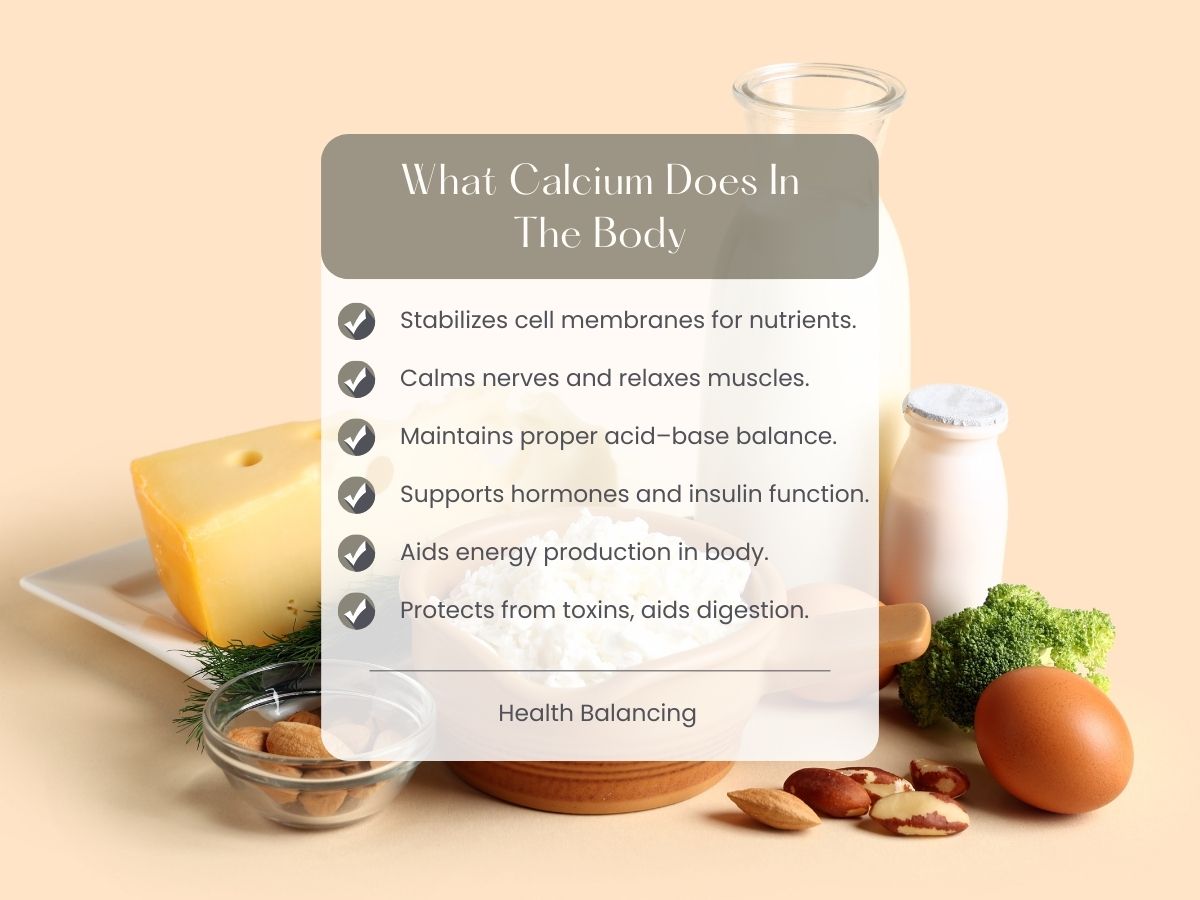
What calcium does in the body

Most calcium lives in your bones and teeth—but the small amount outside the skeleton does a lot of heavy lifting.

Calcium helps:

  • stabilize cell membranes (how nutrients and hormones enter cells)
  • calm nerves and relax muscles
  • maintain acid–base balance
  • support insulin and hormone signaling
  • assist energy production
  • block uptake of toxic metals like lead and cadmium
  • support blood clotting and fat digestion

In everyday language: calcium helps your system feel steady instead of reactive.

Infographic showing key functions of calcium in the body, including stabilizing cell membranes, calming nerves and muscles, supporting acid–base balance, hormone and insulin function, energy production, and protection from toxins, with dairy, eggs, nuts, and vegetables in the background.

How HTMA looks at calcium differently

Here’s the part most people don’t get told:

Calcium can be high and still not work properly

On an HTMA, high calcium often reflects biounavailable calcium—calcium that’s present, but not actually usable by the body.

That’s why someone can feel:

  • stiff and crampy
  • exhausted and tense
  • slow but internally agitated

This isn’t contradictory. It’s a common stress pattern.

High vs Low vs Biounavailable Calcium (at a glance)

Pattern Typical HTMA context How it often feels What it suggests
Low calcium Often fast oxidation Wired but tired, tension, cramps, poor sleep Stress-driven calcium loss, high output state
High calcium Often slow oxidation Fatigue, heaviness, brain fog, stiffness Calcium not staying soluble, slowed physiology
Biounavailable calcium High Ca with low Na/K Mixed symptoms: anxiety + fatigue, stiffness + cramps Calcium present but not usable; deposition patterns

Calcium always needs to be read relative to sodium and potassium, not in isolation.

Calcium and oxidation rate

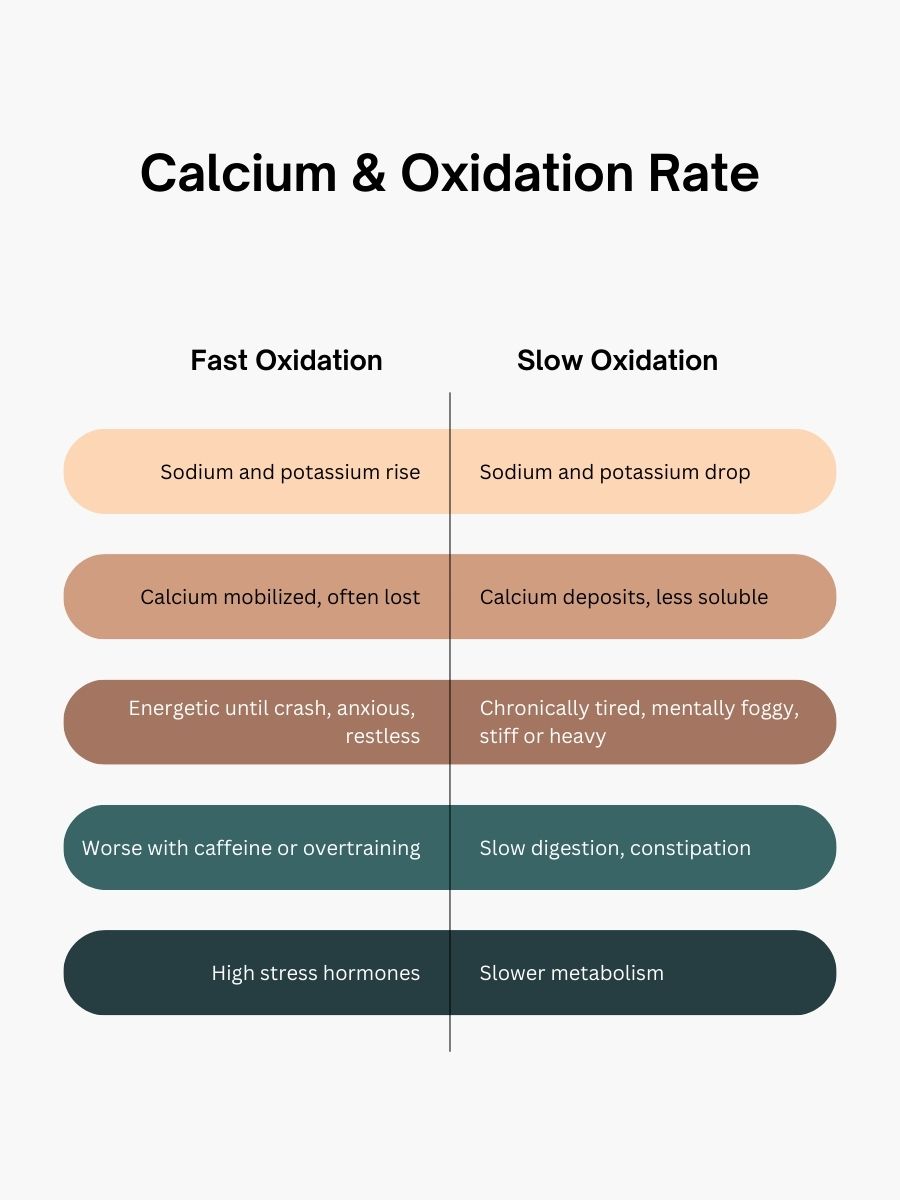
Oxidation rate describes how fast or slow your body converts fuel into energy.

Fast oxidation (often lower calcium)

In fast oxidation, the body runs on higher stress hormones. Sodium and potassium rise, calcium gets mobilized—and often lost.

People here often feel:

  • energetic… until they crash
  • anxious or irritable
  • restless at night
  • worse with caffeine or overtraining

Slow oxidation (often higher calcium)

In slow oxidation, sodium and potassium drop in tissues. Calcium struggles to stay soluble and is more likely to deposit.

People here often feel:

  • chronically tired despite rest
  • mentally foggy
  • stiff or heavy in the body
  • slow digestion or constipation

Neither pattern is “bad.” They just need different support.

Infographic comparing fast and slow oxidation patterns in HTMA, showing how calcium, sodium, and potassium relate to metabolic speed, stress hormones, energy levels, anxiety, fatigue, digestion, and overall oxidation rate.

Calcium and the stress response

Calcium shifts depending on how the nervous system is coping.

  • Fight-or-flight: calcium is lost in urine → more alert, more reactive
  • Exhaustion: calcium precipitates into tissues → more numb, more slowed

A simple analogy:
Hard water leaves scale on pipes when minerals aren’t kept in solution.
Low sodium and potassium can create a similar situation in the body.

The calcium shell pattern

The calcium shell is one of the most important HTMA patterns identified by Dr. Paul Eck.

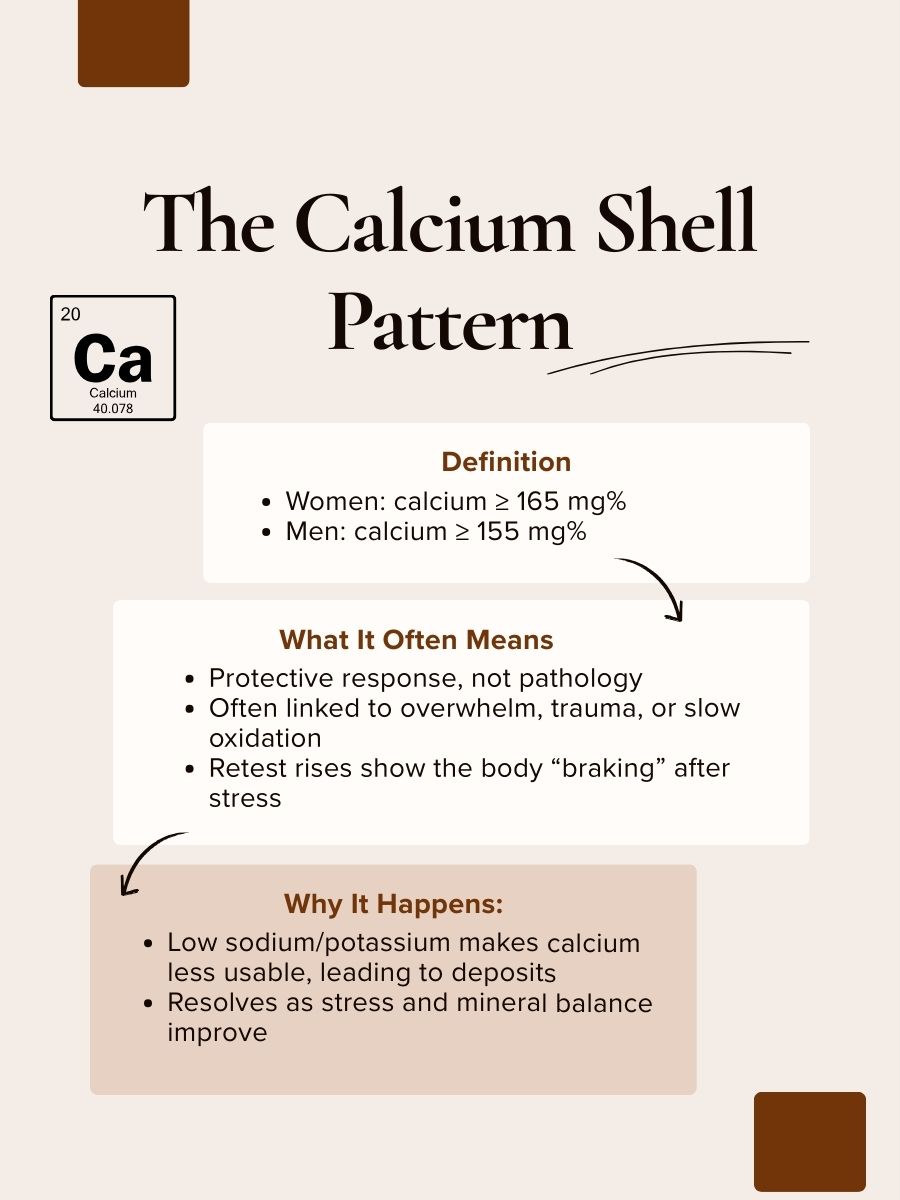
What defines a calcium shell

  • Women: calcium ≥ 165 mg%
  • Men: calcium ≥ 155 mg%

What makes this pattern unique is that it’s defined by one mineral level alone—other minerals don’t override it.

What it often means

A calcium shell is a protective response, not a pathology.

On an initial test, it often reflects:

  • emotional or sensory overload
  • trauma history or chronic overwhelm
  • very slow oxidation patterns

On a retest, a sudden rise into shell range can indicate the body is putting up protective brakes after stress or loss.

Helpful metaphors (not diagnoses):

“Behind a wall.”
“Living in a bomb shelter.”
“Hiding to recover.”

Why it happens

Sodium and potassium keep calcium and magnesium in solution.
When adrenal stress lowers sodium and potassium in tissues, calcium becomes less usable and more likely to deposit.

So a shell isn’t fixed by “forcing calcium down.”
It resolves as stress physiology and mineral balance recover.

Infographic explaining the Calcium Shell Pattern in HTMA, showing high hair calcium thresholds for women and men, its link to protective stress response, slow oxidation, emotional overwhelm, and how low sodium and potassium lead to calcium deposition.

Why blood calcium often looks normal

Blood calcium is tightly regulated. The body will pull calcium from bone to keep serum levels stable.

That means:

  • blood calcium can look “fine”
  • while tissues are depleted or overloaded

HTMA gives a longer-term, tissue-level view that standard labs miss.

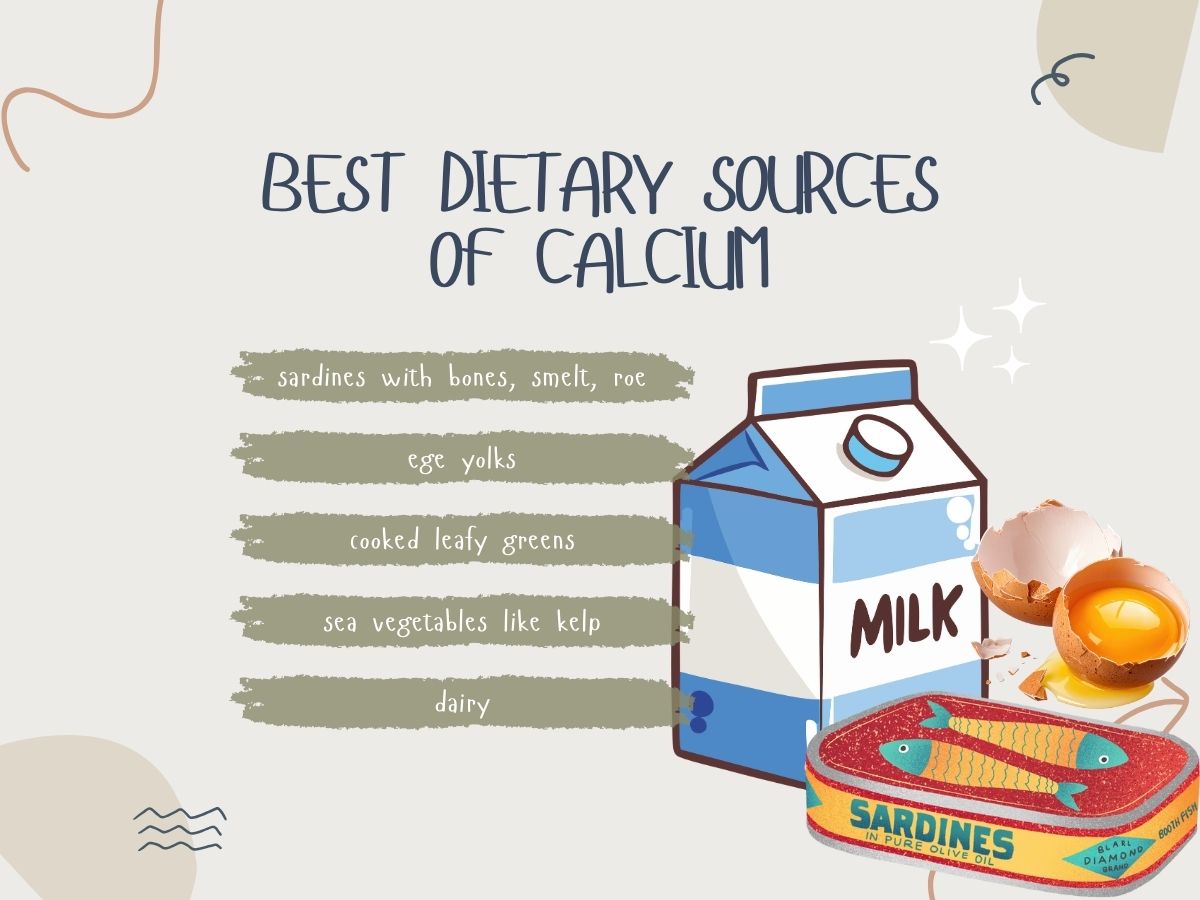
Best dietary sources of calcium

Food-based calcium is usually the most supportive starting point.

Good sources include:

  • sardines with bones, smelt, roe
  • egg yolks
  • cooked leafy greens (kale, collards, mustard greens)
  • sea vegetables like kelp
  • dairy, if well tolerated

Strict vegan patterns often struggle here—not just with calcium, but with the nutrients that help calcium work.

Infographic showing the best dietary sources of calcium, including dairy milk, sardines with bones, egg yolks, cooked leafy greens, and sea vegetables like kelp.

Calcium synergists and antagonists

Nutrients that help calcium work

  • vitamins A and D
  • magnesium
  • adequate protein and stomach acid
  • copper (bioavailability matters)
  • iodine
  • boron
  • infrared light exposure

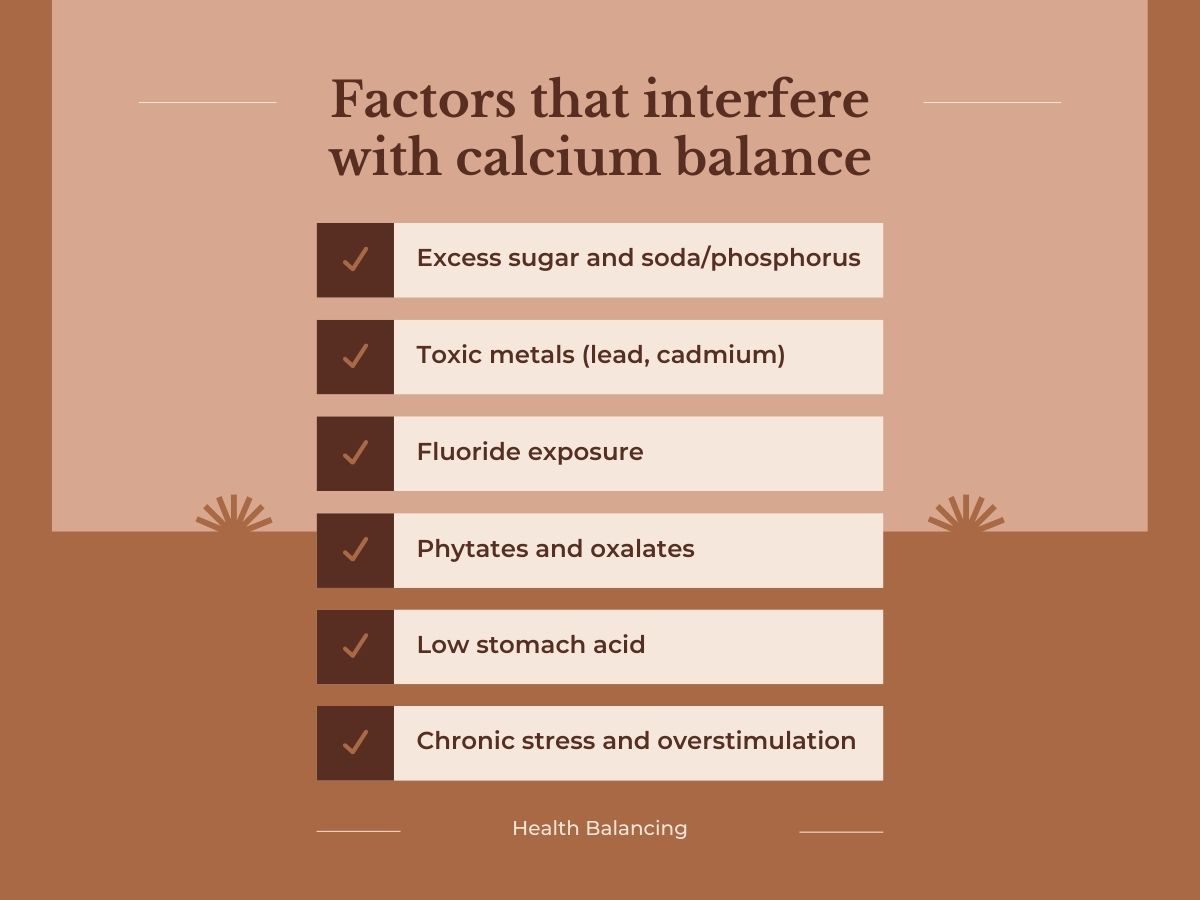
Factors that interfere with calcium balance

  • sugar
  • lead and cadmium
  • fluoride
  • excess phosphorus (especially soda)
  • phytates and oxalates in excess
  • low stomach acid
  • chronic overstimulation and stress

Infographic outlining factors that interfere with calcium balance, including excess sugar and soda, toxic metals, fluoride exposure, phytates and oxalates, low stomach acid, and chronic stress.

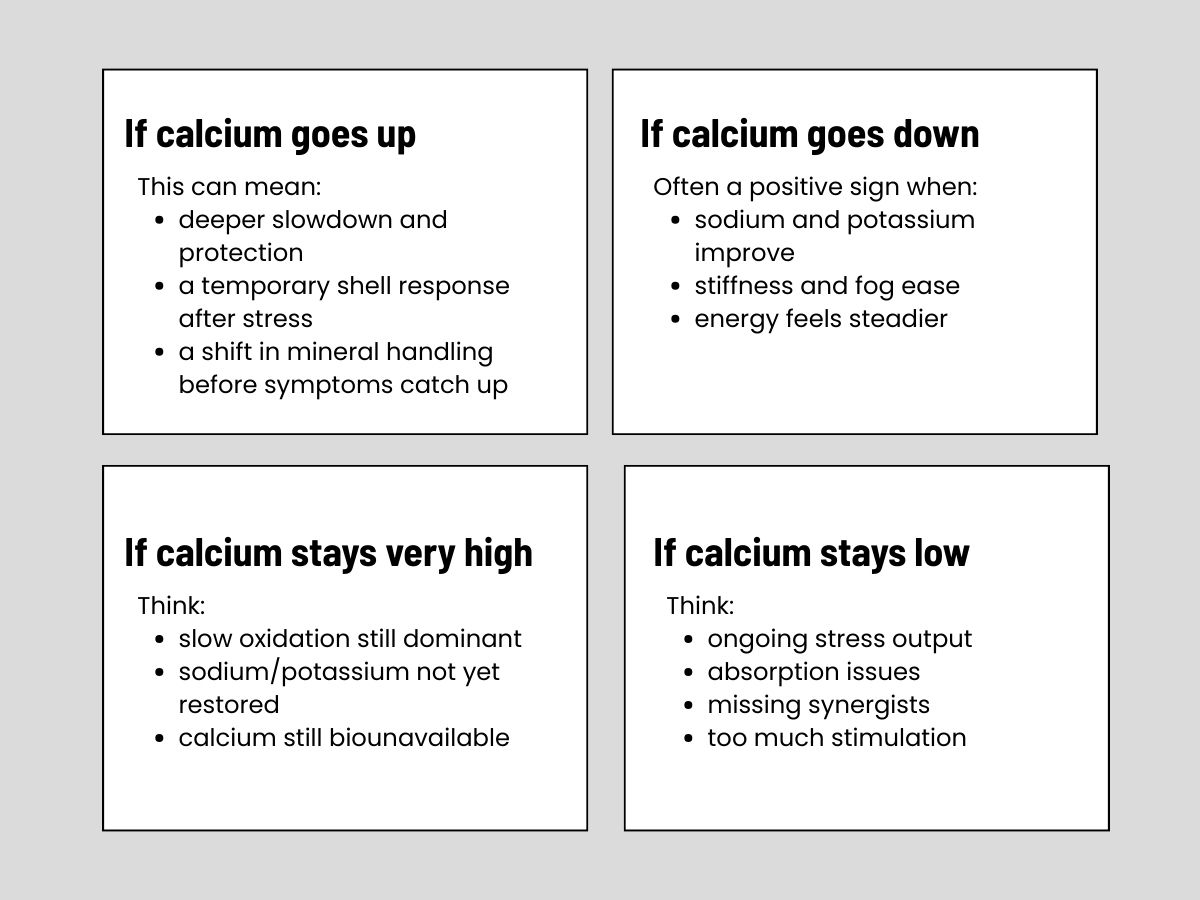
What calcium means on a retest

This is where people often panic—so let’s slow it down.

HTMA retests show direction, not success or failure.

One number never tells the full story. Patterns do.

Infographic explaining how changes in calcium levels are interpreted, including what it means if calcium goes up, goes down, stays very high, or stays low.

FAQs

What does high calcium mean on HTMA?

High calcium often reflects slow oxidation and biounavailable calcium, especially when sodium and potassium are low.

What does low calcium mean on HTMA?

Low calcium is commonly seen in fast oxidation and can reflect stress-driven calcium loss.

What is a calcium shell?

A calcium shell is a protective HTMA pattern marked by very high calcium, often linked to overwhelm, slow metabolism, and reduced stress tolerance.

Why is my blood calcium normal?

Blood calcium is tightly controlled and doesn’t reflect tissue balance. HTMA looks at longer-term patterns.

Should I supplement calcium?

Sometimes—but only with context. Calcium decisions depend on oxidation rate, ratios, sodium/potassium, and symptoms.

What to do next

To understand calcium on your HTMA:

  1. Identify oxidation rate
  2. Review Ca/Mg and Ca/K ratios
  3. Check sodium and potassium
  4. Support bioavailability, not just intake

Read more: How to Read Your HTMA Results
Read more: Oxidation Rate Explained
Read more: Calcium/Magnesium Ratio
Read more: Calcium/Potassium Ratio
Read more: Sodium/Potassium Ratio