
What the Thyroid Ratio Reveals About Metabolism, Energy, and Cellular Response
Calcium–Potassium (Ca/K) Ratio in HTMA
The calcium–potassium ratio (Ca/K) is one of the most important mineral ratios on a Hair Tissue Mineral Analysis (HTMA) report.
In nutritional balancing science, this ratio is known as the thyroid ratio, because calcium and potassium both play key roles in regulating thyroid effect at the cellular level.
If energy feels slow and heavy — or fast but unsustainable — the Ca/K ratio often helps explain why, even when blood thyroid tests appear normal.
Article Contents
- What the Ca/K Ratio Reflects
- Why It’s Called the Thyroid Ratio
- Ideal Ca/K Ratio and Reference Ranges
- High vs Low Ca/K: What It Can Feel Like
- Why Blood Thyroid Tests May Differ
- Ca/K and the Oxidation Rate
- Factors That Can Temporarily Skew the Ca/K Ratio
- Interpreting Changes on a Retest
- The Bigger Picture
- Related Reading
The Ca/K ratio reflects thyroid effect at the cellular level and overall metabolic pace.
What the Ca/K Ratio Reflects
This is because:
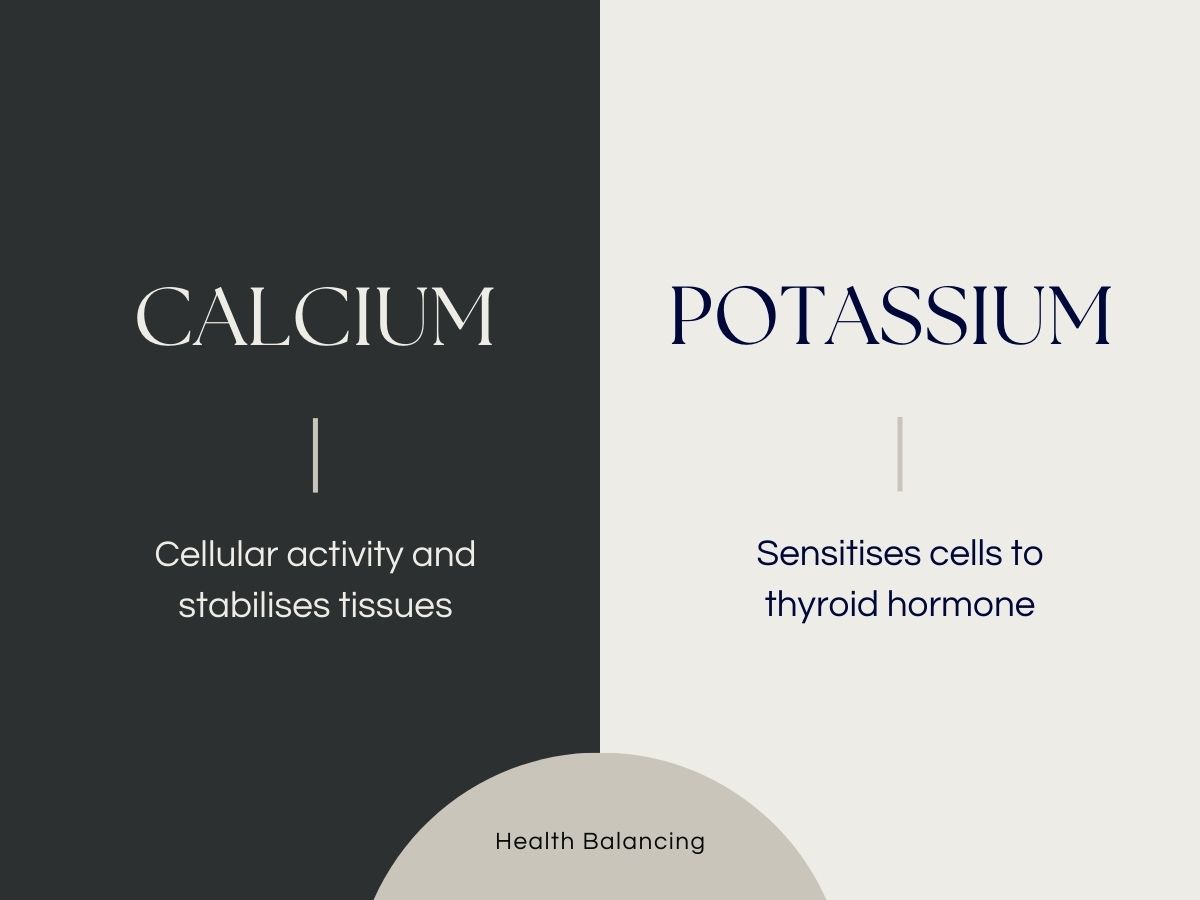
- Calcium slows cellular activity and stabilises tissues
- Potassium sensitises cells to thyroid hormone
When viewed together as a ratio, calcium and potassium indicate whether metabolic activity is functionally slow, fast, or balanced at the tissue level.
When the thyroid (and adrenal) ratios are not balanced, energy production becomes less efficient — much like an engine running too slowly or too fast. In both cases, usable power declines.
Why It’s Called the Thyroid Ratio
Dr. Paul C. Eck, founder of Analytical Research Laboratories, referred to the calcium–potassium ratio as the thyroid ratio based on decades of clinical observation.
This is well supported physiologically:
- Thyroid glandular activity lowers calcium in the tissues
- Potassium sensitises cells to thyroid hormone
For this reason, the Ca/K ratio reflects thyroid hormone effect, not simply hormone availability.
Dr. Eck established the ideal Ca/K ratio at 4 : 1, a benchmark still used today.
Ideal Ca/K Ratio and Reference Ranges
The ideal calcium–potassium ratio is:
4 : 1
Elevated Ca/K (reduced thyroid effect / slow metabolism)
- 4 – 8 → mildly sluggish thyroid activity
- 8 – 16 → moderately sluggish thyroid activity
- 16 – 32 → sluggish thyroid activity
- >32 → severe low thyroid effect
Higher ratios indicate reduced thyroid effect at the cellular level, even if blood hormone levels appear normal.
Low Ca/K (excessive thyroid effect / fast metabolism)
- 2 – 4 → mildly increased thyroid effect
- 1 – 2 → moderately increased thyroid effect
- <1 → excessive thyroid effect
Lower ratios indicate excessive cellular responsiveness to thyroid hormone, which can be stressful rather than beneficial.
High vs Low Ca/K: What It Can Feel Like
HTMA does not diagnose thyroid disease.
However, symptoms often correlate strongly with Ca/K patterns.
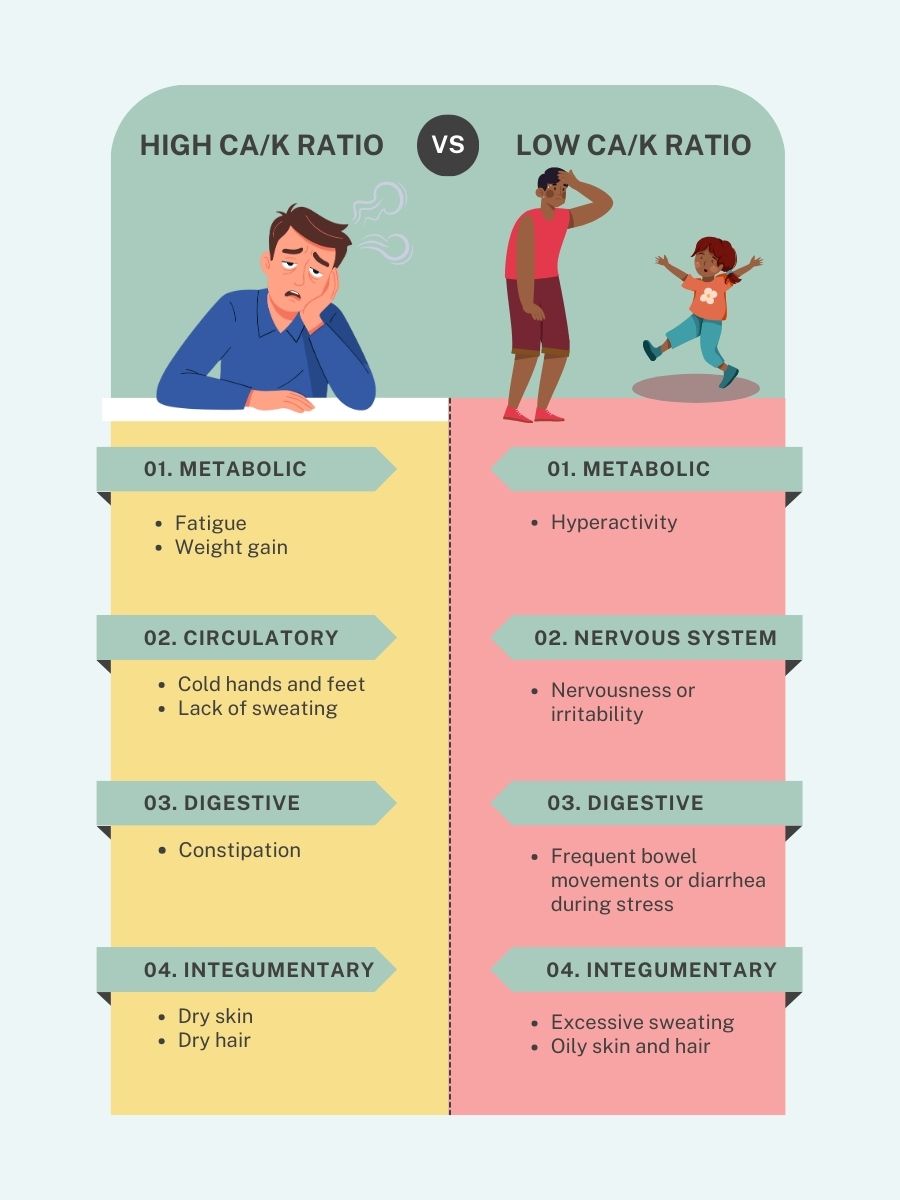
High Ca/K (reduced thyroid effect) may be associated with:
- fatigue
- weight gain
- cold hands and feet
- lack of sweating
- constipation
- dry skin and dry hair
This pattern is commonly seen in slow oxidation states and long-term stress adaptation.
Low Ca/K (excessive thyroid effect) may be associated with:
- hyperactivity
- nervousness or irritability
- excessive sweating
- frequent bowel movements or diarrhea during stress
- oily skin and hair
This pattern often reflects fast oxidation, where metabolic activity is high but poorly regulated.
Why Blood Thyroid Tests May Look Normal
The Ca/K ratio does not measure blood thyroid hormones such as TSH, free T3, free T4, reverse T3, or antibodies.
This is because HTMA is a tissue-level test, not a serum test.
It measures the endpoint effect of thyroid hormones at the level of the cells.
For example:
- Blood thyroid hormones may be normal or elevated, but cellular response is low due to poor hormone entry into cells
- This can occur when cell membranes have reduced permeability, often related to calcium accumulation, fatty acid imbalances, or other nutritional factors
The opposite can also occur:
- Blood thyroid hormones may be low
- Yet cellular response is excessive due to increased membrane permeability, a pattern commonly seen in fast oxidizers
In these cases, adding thyroid hormone can worsen imbalance rather than correct it.
Ca/K and the Oxidation Rate
The Ca/K ratio is one of the two primary ratios used to determine oxidation rate, alongside the sodium–magnesium ratio.
In simplified terms:
- Ca/K above 4 contributes to a slow oxidation pattern
- Ca/K below 4 contributes to a fast oxidation pattern
Oxidation rate reflects how efficiently nutrients are converted into cellular energy.
It is not the same as basal metabolic rate or calorie expenditure.
Factors That Can Temporarily Skew the Ca/K Ratio
Not every change in the Ca/K ratio reflects a true shift in thyroid effect.
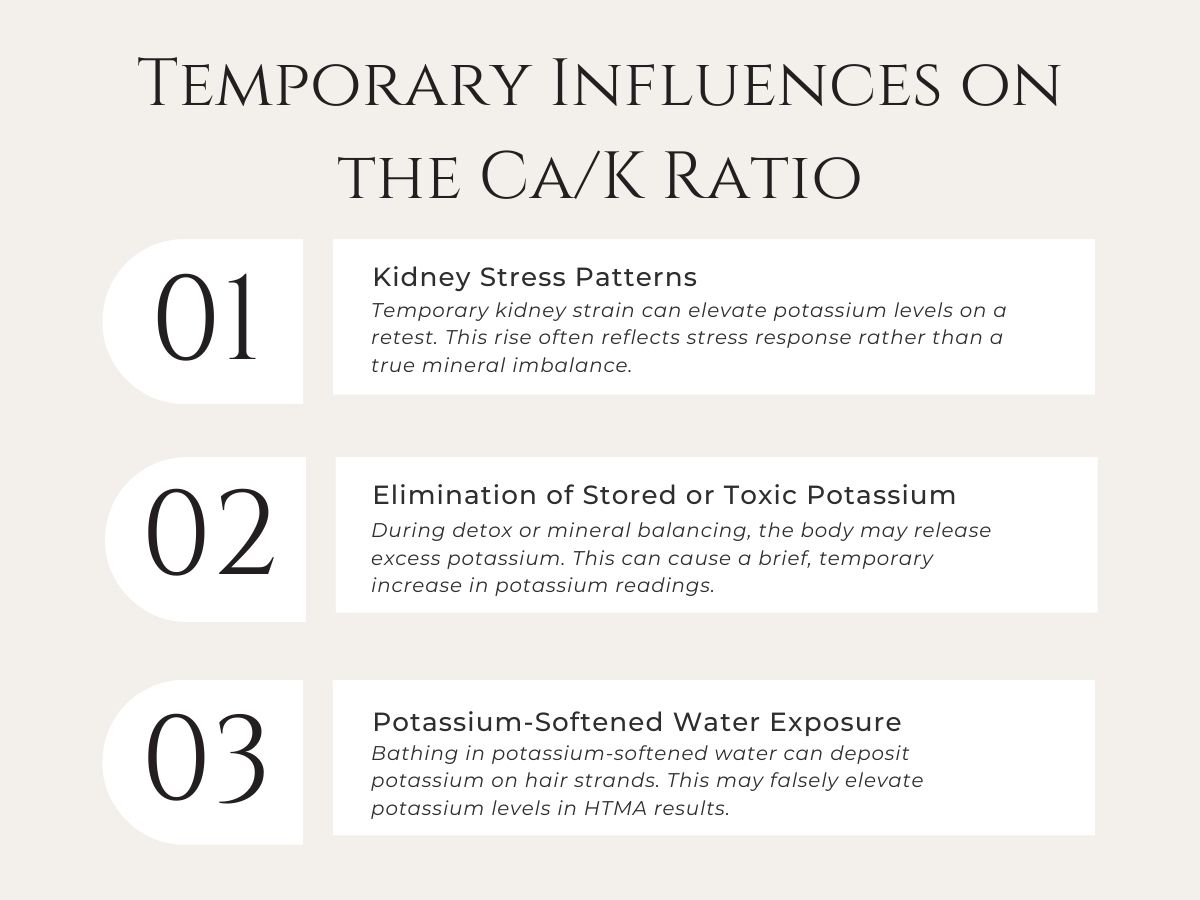
Temporary distortions may occur due to:
- Kidney stress patterns, which can raise potassium on a retest
- Elimination of toxic potassium, causing a temporary potassium increase
- Bathing in potassium-softened water, which can falsely elevate hair potassium
For accurate readings:
- hair must not be washed at the laboratory
- sampling guidelines must be followed carefully
Interpreting Changes on a Retest
The calcium–potassium ratio is best interpreted over time, not from a single test.
Changes on a retest often reflect:
- mineral redistribution
- detoxification effects
- shifts in cellular responsiveness
As the Ca/K ratio gradually moves toward the ideal 4 : 1, overall body chemistry and energy regulation typically improve.
A ratio that appears to worsen temporarily does not automatically indicate decline. In many cases, it reflects the body adjusting after long-standing compensation.
The Bigger Picture
A high Ca/K ratio does not mean the body is “shut down.”
A low Ca/K ratio does not mean the body is “overactive.”
Both reflect how the cells are responding to thyroid signals under stress.
When the system is supported appropriately — rather than forced — these patterns can shift steadily and sustainably.
Related reading
Read more: Sodium–Magnesium (Na/Mg) Ratio
Read more: Sodium–Potassium (Na/K) Ratio
Read more: Oxidation Rate Explained