
Mixed Oxidation (HTMA): When the Body Is Caught Between Gears
Ever feel like your energy doesn’t follow a clear pattern? Some days you feel driven and alert. Other days, flat, foggy, or exhausted — sometimes within the same week.
Hair Tissue Mineral Analysis (HTMA) helps explain this through mixed oxidation — a transitional metabolic state where the body’s energy systems are not operating at the same pace.
In Nutritional Balancing, there are four primary oxidation-related patterns:
- Fast Oxidation: the metabolic engine runs hot and fast
- Slow Oxidation: the body applies the brakes to conserve energy
- Mixed Oxidation: one system accelerates while another slows
- Four Lows Pattern: deep depletion, burnout, or rebuilding
This page focuses specifically on mixed oxidation — what it means, why it appears, how it shows up on an HTMA, and how it is typically supported.
All information here is educational only and is not intended for diagnosis, treatment, or medical advice.
Article Contents
- Energy: Your Body’s Electricity
- What Is Oxidation Rate, Really?
- What Mixed Oxidation Means
- Why Mixed Oxidation Develops
- How Mixed Oxidation Appears on an HTMA
- Fast-Mixed vs Slow-Mixed Patterns
- Common Physical, Emotional, and Energy Patterns
- How Diet Needs to Adapt in Mixed Oxidation
- Lifestyle Support for Mixed Oxidation
- Supplement Considerations
- Retests, Shifts, and Resolution
- The Takeaway: Restoring Metabolic Rhythm
Energy: Your Body’s Electricity
Energy isn’t just about motivation or sleep quality. At a biological level, it is chemical.
As Dr. Paul Eck explained,
“It is the balance of the minerals within the body that controls the rate at which energy is produced and used.”
Minerals act like conductors in an electrical system. They regulate how efficiently fuel is burned, how the nervous system responds to stress, and how well the body recovers.
Your oxidation rate describes the pace at which this system runs.
When that pace is uneven — speeding up in one area while slowing in another — mixed oxidation appears.
What Is Oxidation Rate, Really?
Oxidation rate reflects how efficiently the body converts food into usable energy at the cellular level.
It is primarily influenced by:
- adrenal gland activity
- thyroid cellular effect
- the balance between calcium, magnesium, sodium, and potassium
In Nutritional Balancing, oxidation type is described as fast or slow.
Mixed oxidation occurs when the adrenal and thyroid systems are not aligned.
This mismatch creates instability rather than a fixed metabolic state.
What Mixed Oxidation Means
Mixed oxidation is not a permanent metabolic type.
It is a transition state.
In simple terms:
- one part of the system is pushing energy output
- another part is conserving or slowing
This creates conflicting signals inside the body.
Energy may feel:
- inconsistent
- dependent on stress or stimulation
- unpredictable from day to day
Mixed oxidation often appears when the body is adapting, rather than failing.
Why Mixed Oxidation Develops
Mixed oxidation commonly develops during periods of change, such as:
- recovery from prolonged stress or burnout
- dietary or supplement changes that support one system faster than the other
- stimulant use layered over depletion
- mineral shifts during detoxification
- irregular sleep, meals, or routines
Rather than indicating imbalance alone, mixed oxidation often reflects movement between states.

How Mixed Oxidation Appears on an HTMA
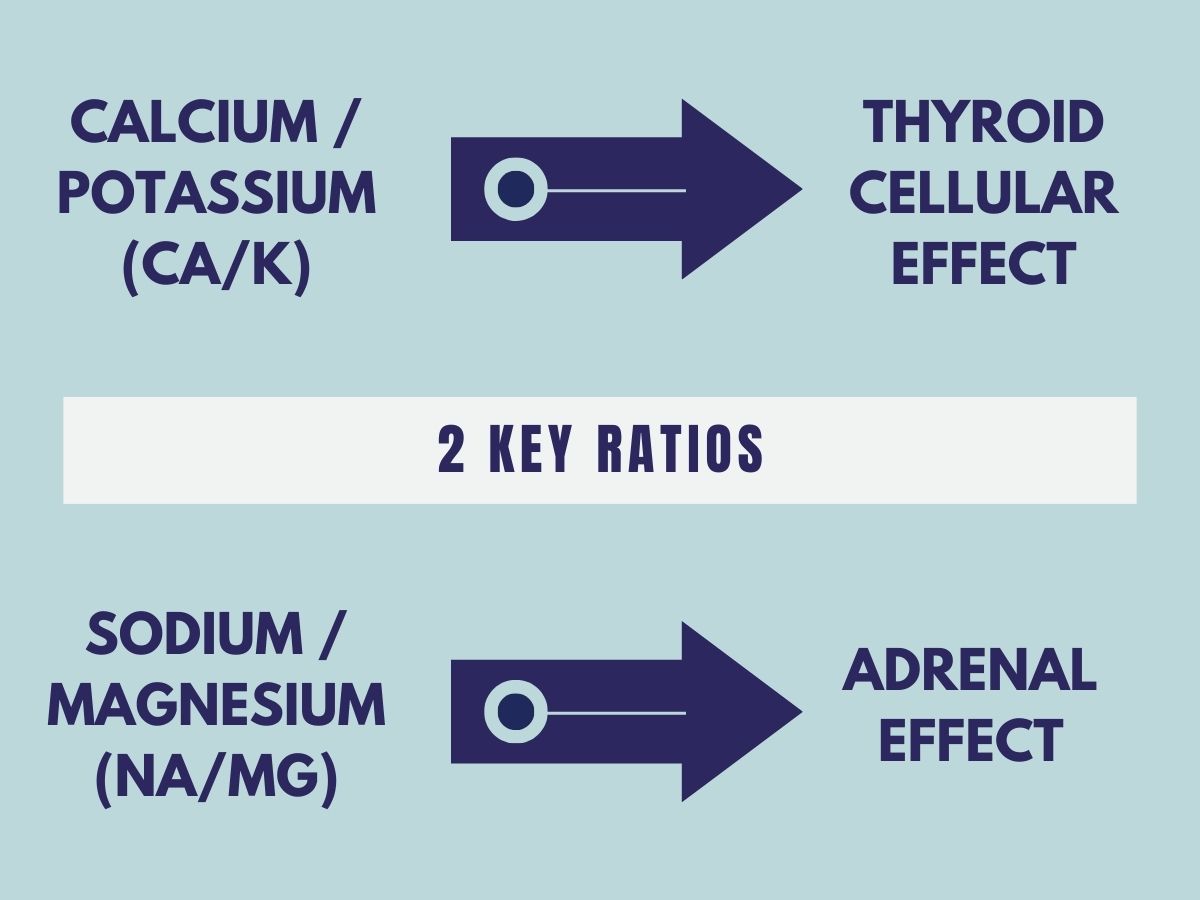
Mixed oxidation is identified when one primary ratio indicates fast oxidation and the other indicates slow oxidation.
The two key ratios are:
- Calcium / Potassium (Ca/K) → thyroid cellular effect
- Sodium / Magnesium (Na/Mg) → adrenal activity
Mixed oxidation is present when:
- one ratio is above its ideal range
- the other is below
This shows that the glands are operating at different speeds.
Fast-Mixed vs Slow-Mixed Patterns
Direction matters in mixed oxidation.
Fast-Mixed Oxidation
- Na/Mg above ideal (adrenal push)
- Ca/K above ideal (thyroid slowing)
Common experiences:
- anxiety layered over fatigue
- difficulty relaxing
- energy that feels forced rather than stable
- stress reactivity
Here, the adrenals are pushing while the thyroid cannot sustain the pace.
Slow-Mixed Oxidation
- Na/Mg below ideal (adrenal depletion)
- Ca/K below ideal (excess thyroid cellular effect)
Common experiences:
- fatigue with nervous tension
- emotional variability
- short bursts of drive followed by crashes
- feeling “on edge” with low capacity
Here, thyroid effect appears faster than adrenal support can handle.

Common Physical, Emotional, and Energy Patterns
Mixed oxidation often feels confusing because symptoms fluctuate.
People may notice:
- alternating good and bad days
- energy tied closely to stress levels
- inconsistent appetite or digestion
- sensitivity to both stimulation and restriction
- mood swings or irritability
Because patterns are inconsistent, mixed oxidation is often misunderstood unless viewed over time.
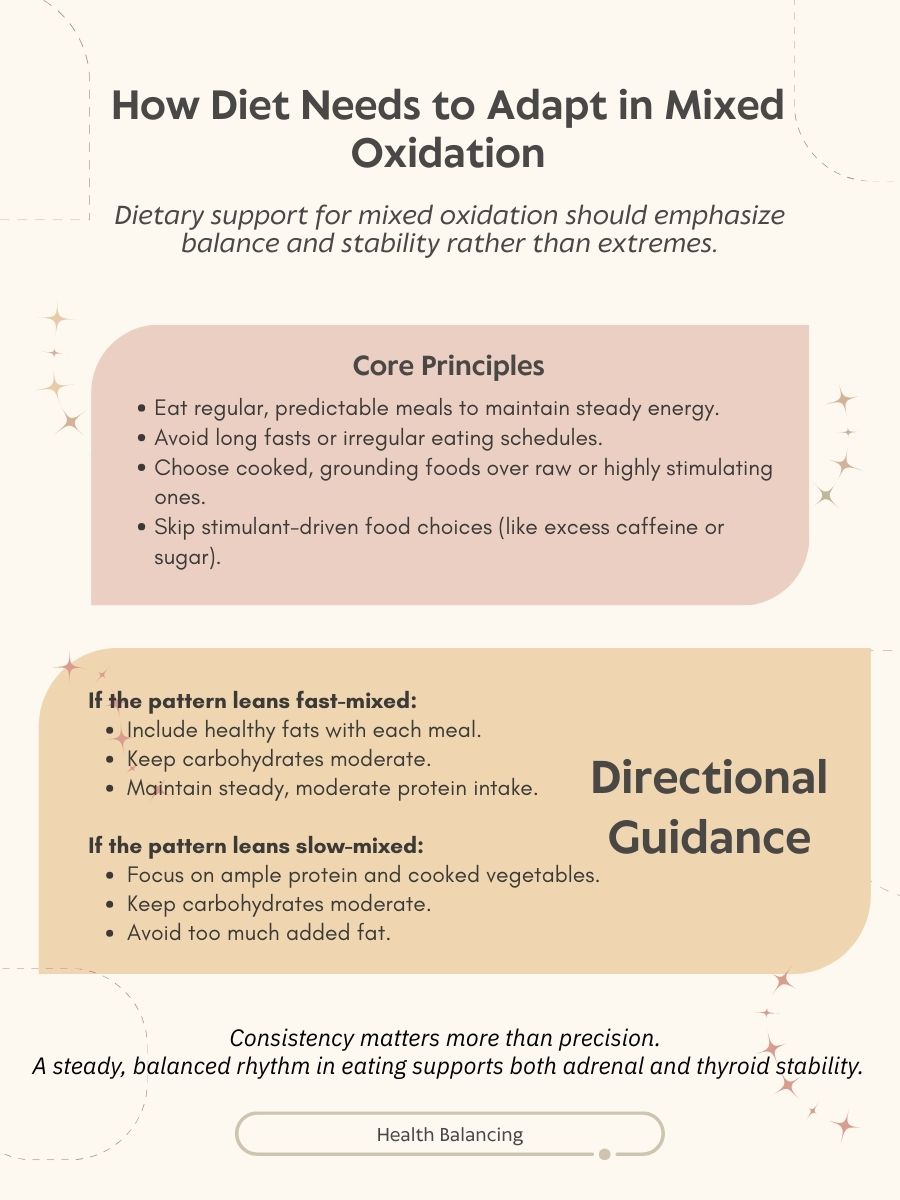
How Diet Needs to Adapt in Mixed Oxidation
Dietary support for mixed oxidation focuses on stability, not extremes.
The most common mistake is switching between fast-oxidizer and slow-oxidizer diets too aggressively.
Core principles
- eat regular, predictable meals
- avoid long fasts or erratic eating
- prioritize cooked, grounding foods
- avoid stimulant-driven food choices
Directional guidance
If the pattern leans fast-mixed:
- include healthy fats at meals
- moderate carbohydrates
- steady protein
If the pattern leans slow-mixed:
- prioritize protein and cooked vegetables
- moderate carbohydrates
- avoid excessive added fats
Consistency matters more than precision.
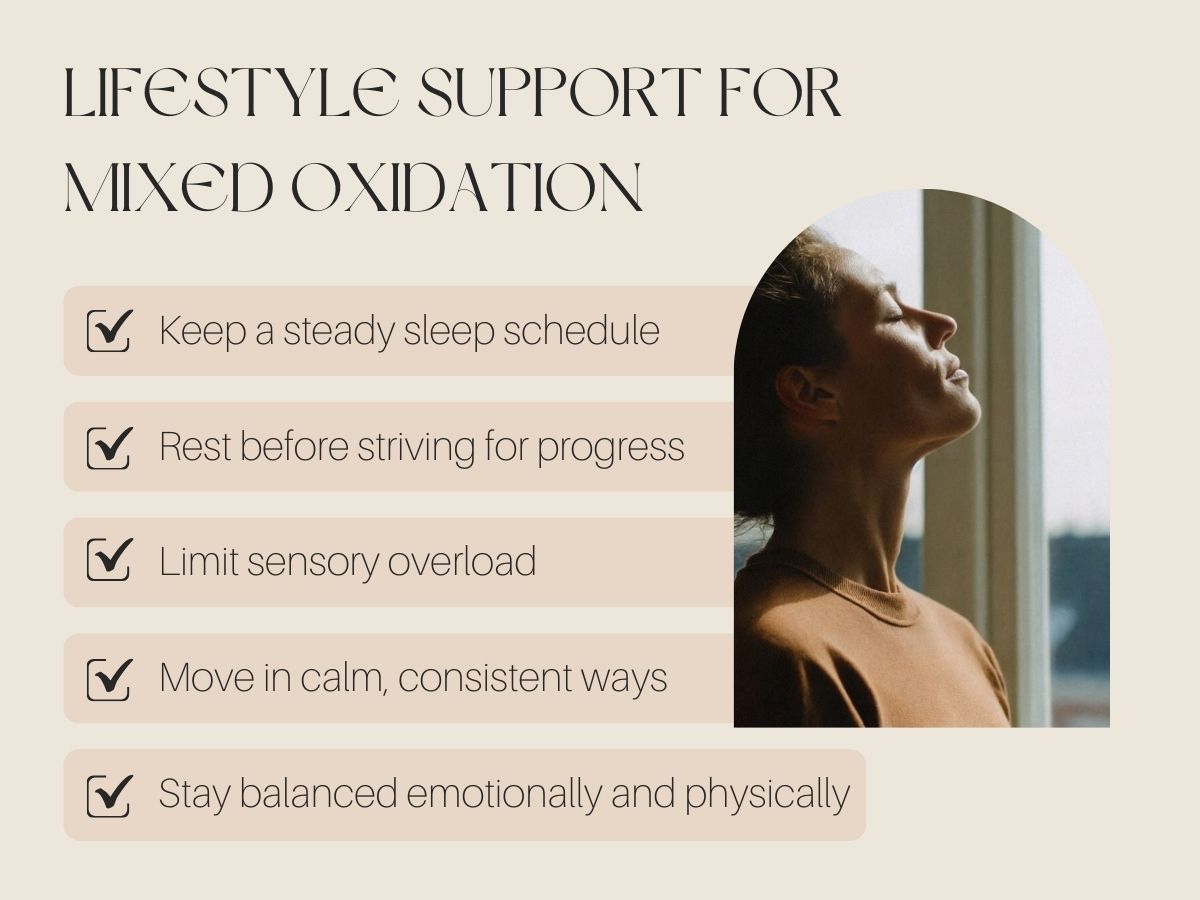
Lifestyle Support for Mixed Oxidation
- maintain regular sleep and wake times
- avoid emotional and physical extremes
- choose gentle, rhythmic movement
- reduce overstimulation
- allow recovery before pushing growth
Mixed oxidation stabilizes when the body experiences predictability and rhythm.
Supplement Considerations
Supplement support for mixed oxidation should be:
- gentle
- direction-specific
- regularly reassessed
Over-stimulating or overly suppressive protocols often prolong instability.
Many mixed patterns resolve naturally once diet, lifestyle, and stress inputs stabilize.
Retests, Shifts, and Resolution
Mixed oxidation is temporary by nature.
- Most patterns resolve within a few months with consistent support
- Retesting helps confirm the direction of movement
- Mineral shifts during detox or recovery can temporarily exaggerate mixed patterns
- Hair preparation and water softeners can affect sodium and potassium readings
Mixed oxidation is best interpreted across time, not from a single snapshot.
The Takeaway: Restoring Metabolic Rhythm
Mixed oxidation doesn’t mean something is broken.
It means the body is between phases.
The goal is not to force speed or rest, but to:
- restore rhythm
- stabilize inputs
- support the slower system
- avoid overstimulating the faster one
As the adrenal and thyroid systems come back into sync, energy steadies, symptoms soften, and the body naturally settles into either fast or slow oxidation — often with far greater resilience than before.