Written by Koay Yih Zi
Copper is one of the most misunderstood elements on a Hair Tissue Mineral Analysis (HTMA).
Many people arrive here after years of symptoms that don’t quite resolve — even when blood tests look “normal” and supplements seem to help only temporarily.
This article explains how HTMA looks at copper through patterns and readiness, not just a single number — and how copper imbalance is addressed safely and gradually, without aggressive detox.
What this article is not about
This is not about blaming copper, diagnosing disease, or pushing harsh detox protocols.
Copper imbalance is common.
It develops slowly.
And it’s corrected by restoring regulation, not by forcing removal.
HTMA supports the body’s ability to bind, use, and eliminate copper naturally, in the right order and at the right pace.
A familiar story (you might recognise yourself here)
Most people don’t go looking for copper.
They start with symptoms that feel confusing or disproportionate:
- anxiety that flares easily
- migraines that come and go with stress or hormones
- PMS that worsens over time
- fatigue that doesn’t respond to iron
- recurring yeast, infections, or skin issues
Blood work often comes back normal. Iron is prescribed — but energy doesn’t improve.
Magnesium helps a bit. Zinc helps for a while. Then symptoms return.
Over time, a pattern forms:
“I’m sensitive to everything.”
“Stress hits me harder than it should.”
“Something feels overloaded, but nothing shows up on tests.”
When HTMA is finally run, copper may not look high at all — it may even appear low or normal.
This is where confusion usually sets in.
Because what HTMA often reveals is not excess intake — but copper that’s been stored, poorly bound, and difficult to eliminate, often alongside adrenal depletion and mineral imbalance.
For many people, understanding this is the first moment their symptoms start to make sense.
Article Contents
- Who this is especially relevant for
- Why copper causes symptoms when it’s out of balance
- The three copper imbalances HTMA considers
- How HTMA identifies copper imbalance
- Why “detoxing copper” often backfires
- How HTMA addresses copper imbalance
- Copper elimination: sometimes uncomfortable — often worth it
- Key takeaway
- Next step: Understand your HTMA results
- Frequently Asked Questions
Who this is especially relevant for
This article is particularly relevant if you’ve experienced:
- migraines or hormone-linked headaches
- anxiety, emotional sensitivity, or racing thoughts
- PMS, postpartum mood shifts, or estrogen-dominant symptoms
- fatigue or anemia that didn’t respond to iron
- recurrent yeast or infections
- hair loss, skin flares, or slow recovery from stress
Why copper causes symptoms when it’s out of balance
Copper is an essential trace mineral. It plays key roles in:
- cellular energy production
- neurotransmitter balance
- estrogen and hormone metabolism
- immune defense
- connective tissue and collagen formation
Problems arise not because copper exists — but because it becomes:
- poorly bound to transport proteins
- poorly utilized in enzymes
- or poorly eliminated
When this happens, copper tends to accumulate in tissues such as the brain, liver, and reproductive organs, where it can overstimulate the nervous system, disrupt hormones, and lower immune resilience.
The three copper imbalances HTMA considers
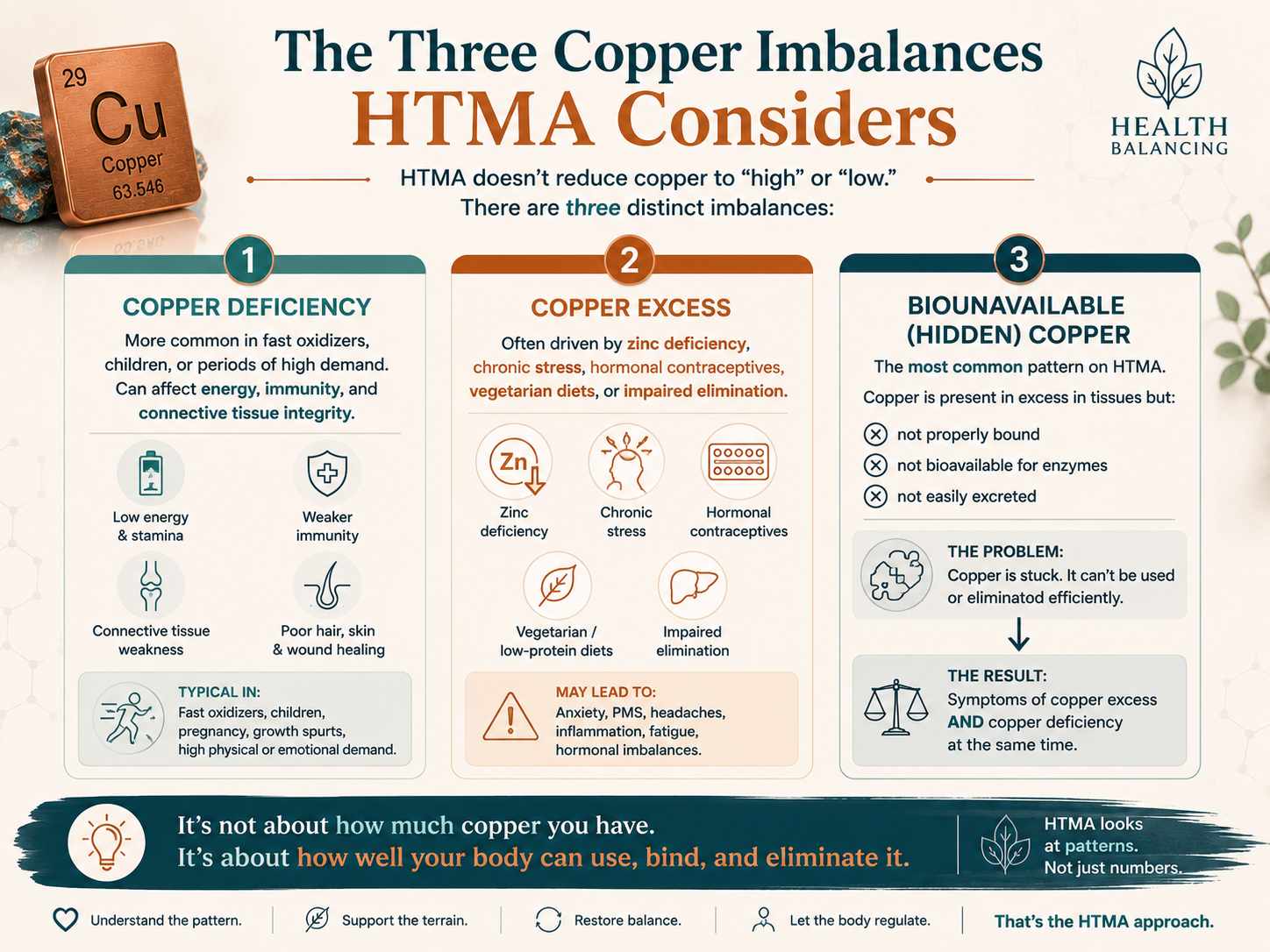
HTMA doesn’t reduce copper to “high” or “low.”
There are three distinct imbalances:
Copper deficiency
More common in fast oxidizers, children, or periods of high demand. Can affect energy, immunity, and connective tissue integrity.
Copper excess
Often driven by zinc deficiency, chronic stress, hormonal contraceptives, vegetarian diets, or impaired elimination.
Biounavailable (hidden) copper
The most common pattern on HTMA.
Copper is present in excess in tissues but:
- not properly bound
- not bioavailable for enzymes
- not easily excreted
This is why someone can experience symptoms of copper excess and copper deficiency at the same time.
How HTMA identifies copper imbalance
Copper is not assessed by the copper number alone.
Common HTMA indicators include:
- very low hair copper (often < ~1.5 mg%, especially in slow oxidizers)
- elevated calcium with low potassium
- low sodium/potassium (Na/K) ratio
- slow or very slow oxidation
- copper appearing alongside mercury or other metals
- stress-related patterns such as calcium shell, four lows, sympathetic dominance, bowl or step-down patterns
A low copper number does not automatically mean deficiency.
In many cases, it reflects retention and poor elimination, not a need to supplement copper.
Why “detoxing copper” often backfires
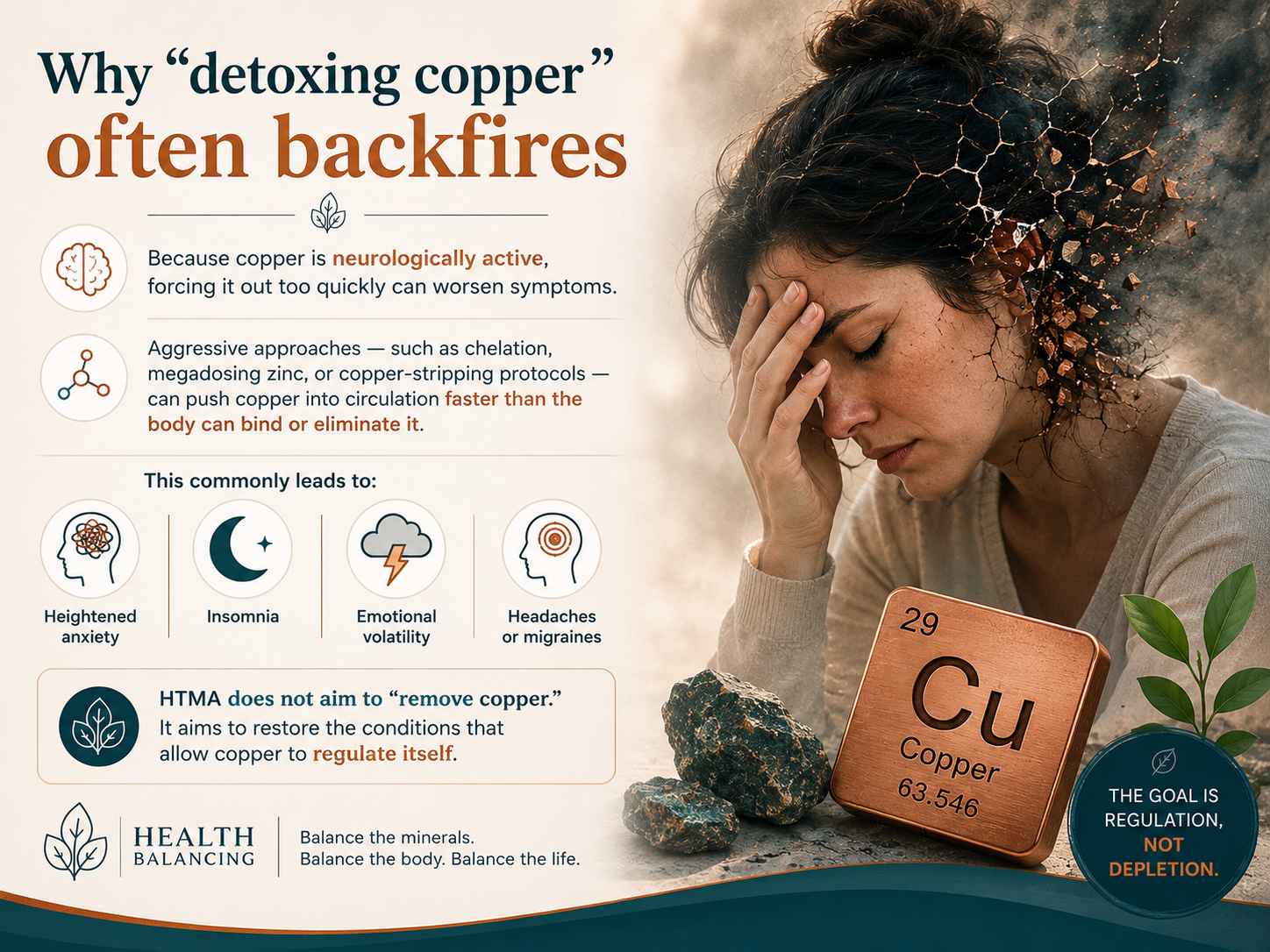
Because copper is neurologically active, forcing it out too quickly can worsen symptoms.
Aggressive approaches — such as chelation, megadosing zinc, or copper-stripping protocols — can push copper into circulation faster than the body can bind or eliminate it.
This commonly leads to:
- heightened anxiety
- insomnia
- emotional volatility
- headaches or migraines
HTMA does not aim to “remove copper.”
It aims to restore the conditions that allow copper to regulate itself.
How HTMA addresses copper imbalance
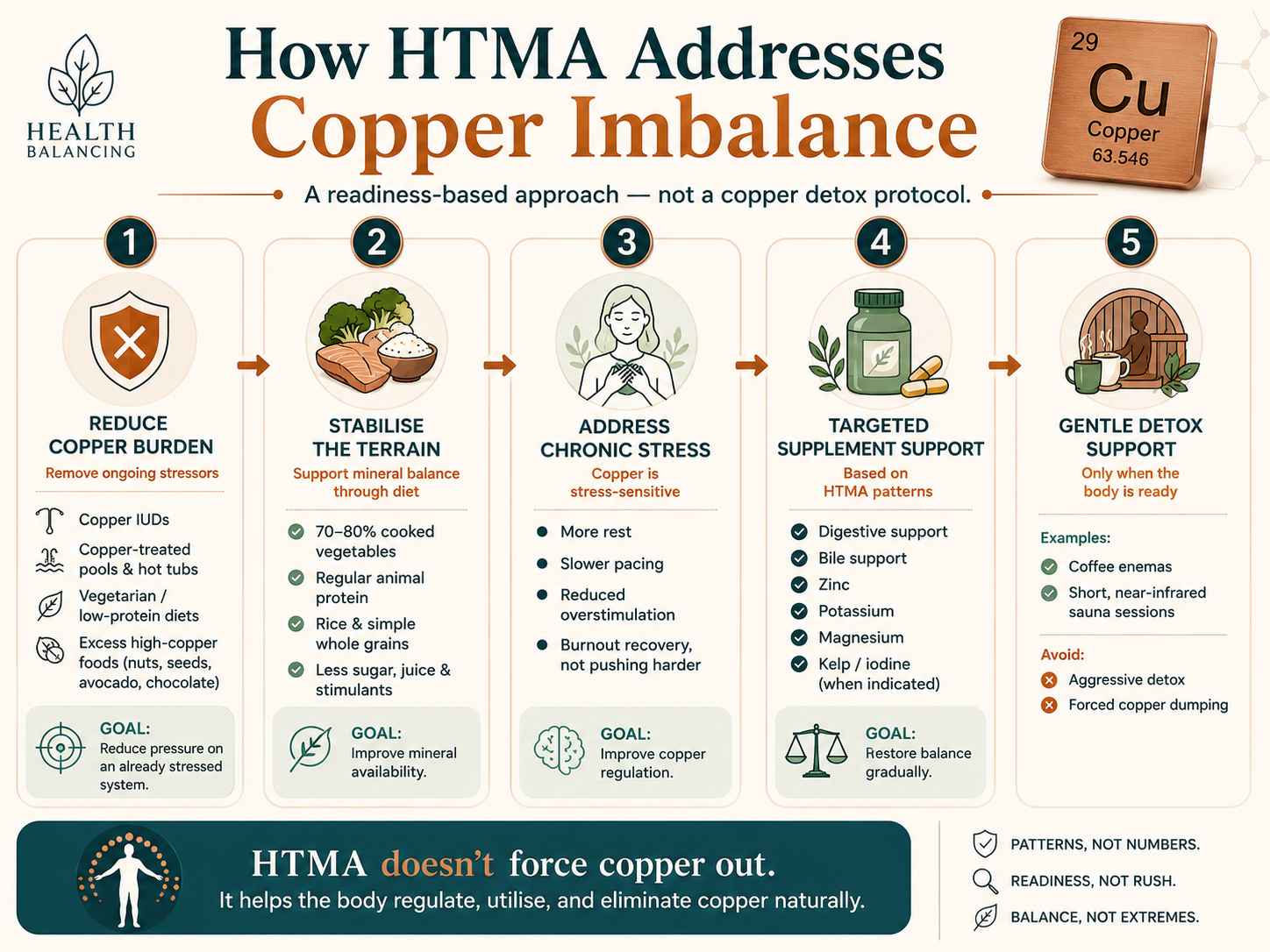
HTMA uses a layered, readiness-based approach.
1) Reduce ongoing copper burden
Depending on the pattern, this may include reviewing:
- copper IUDs
- frequent swimming in copper-treated pools or hot tubs
- vegetarian or low-protein diets
- high-copper foods (nuts, seeds, avocado, chocolate)
This reduces pressure on an already stressed system.
2) Diet: stabilising the terrain
For many people (especially slow oxidizers), HTMA-aligned nutrition emphasizes:
- 70–80% cooked vegetables
- regular animal protein (as tolerated)
- simple whole grains such as rice or corn
- minimal sugar, fruit, fruit juice, and stimulants
Vegetarian diets often aggravate copper imbalance long-term by increasing copper intake while reducing zinc availability.
3) Lifestyle: copper is stress-sensitive
Copper dysregulation is strongly linked to chronic stress.
HTMA often emphasizes:
- more rest and slower pacing
- reducing overstimulation
- rebuilding after burnout, not pushing harder
Stress directly interferes with copper binding and elimination.
4) Targeted supplementation (HTMA-guided)
HTMA doesn’t treat copper with a single supplement.
Programs typically include:
- digestive and bile support
- oxidation-type multi-nutrient support
- gradual mineral repletion (especially zinc, potassium, magnesium)
- kelp or iodine support when indicated
Copper antagonists are used carefully and contextually — never to force detox.
5) Gentle detox support (when appropriate)
When patterns show readiness, gentle support may include:
- coffee enemas
- short, non-depleting near-infrared sauna sessions
Aggressive detox methods are avoided.
Copper elimination: sometimes uncomfortable — often worth it
When the body finally becomes ready to release stored copper, temporary symptoms can happen.
Some people notice short-lived fatigue, emotional sensitivity, headaches, skin changes, or disrupted sleep. Occasionally, old symptoms briefly resurface.
This doesn’t mean something is wrong.
It often means the body now has enough energy, mineral support, and adrenal signaling to move copper out of long-term storage.
HTMA doesn’t rush this process. When elimination happens as a result of improved regulation, symptoms tend to be self-limiting and ease as the organs of elimination strengthen.
The benefits that follow
As excess or biounavailable copper clears, many people experience:
- Stronger immune resilience (fewer infections, better recovery)
- Clearer mental and emotional stability (less anxiety, fewer mood swings, improved sleep)
- Improved hormonal balance (milder PMS, steadier cycles, fewer reproductive or postpartum challenges)
- Better energy and tissue repair (healthier skin, hair, nails, steadier energy)
- Long-term protection (less strain on the liver, nervous system, cardiovascular system over time)
Copper elimination symptoms — when they occur — are temporary.
The benefits are often long-lasting.
Key takeaway
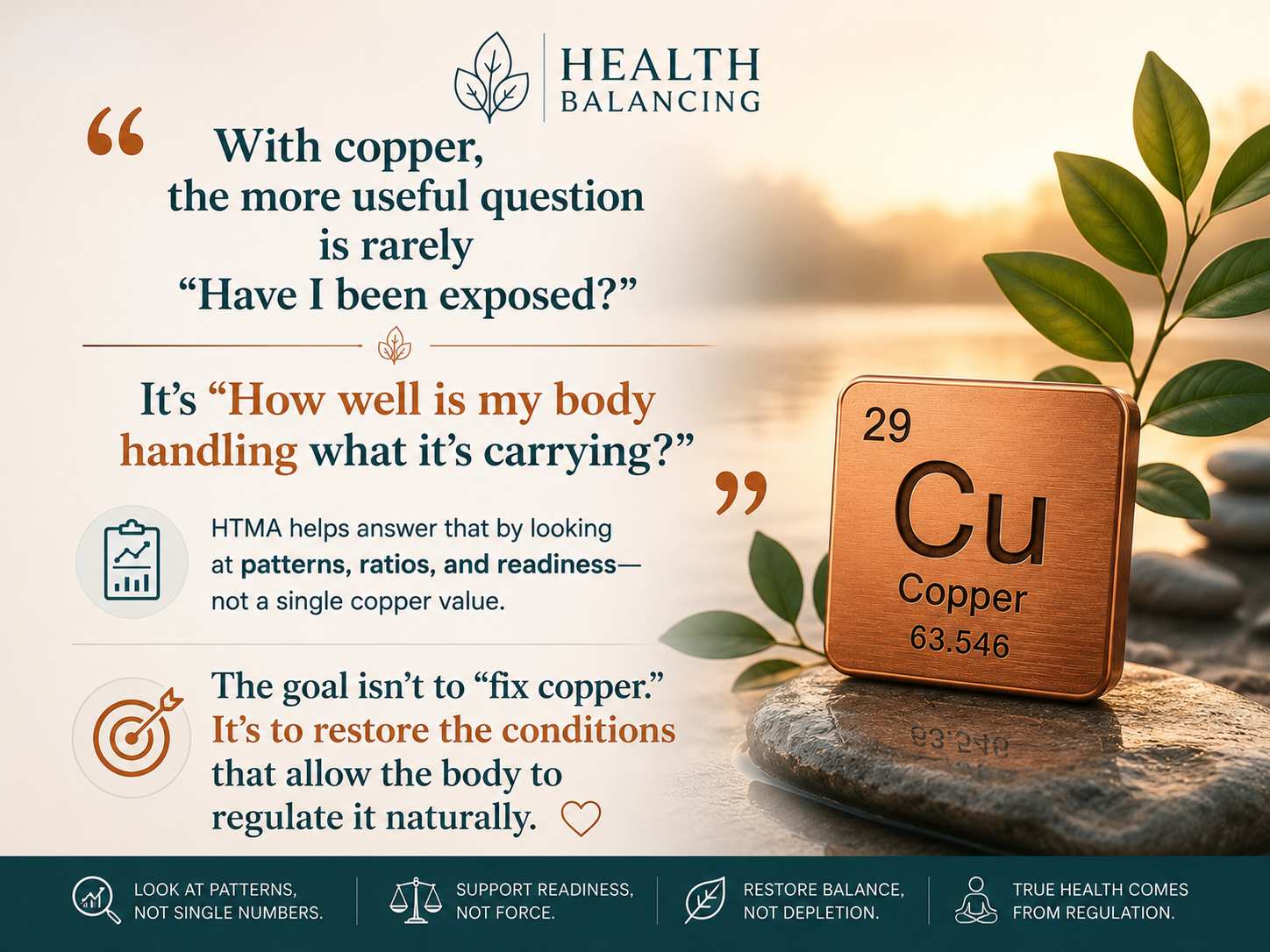
With copper, the more useful question is rarely “Have I been exposed?”
It’s “How well is my body handling what it’s carrying?”
HTMA helps answer that by looking at patterns, ratios, and readiness — not a single copper value.
The goal isn’t to “fix copper.”
It’s to restore the conditions that allow the body to regulate it naturally.
Next step: Understand your HTMA results
If copper patterns appear on your HTMA, the focus is not aggressive detox.
It’s interpretation, pacing, and follow-up — stabilising first, then letting go when the body is ready.
👉 Understand your HTMA results
Frequently Asked Questions