Toxic Metals on HTMA: What They Mean for Healing

Toxic metals on HTMA explained, including lead, mercury, aluminum, and cadmium, with a calm health balancing approach to hair tissue mineral analysis.

How to Understand Their Presence Without Panic

Toxic Metals on HTMA: What They Mean for Healing

Seeing toxic metals on a Hair Tissue Mineral Analysis (HTMA) report can be unsettling.

  • Mercury.
  • Lead.
  • Aluminum.
  • Cadmium.

It’s easy to assume their presence means something is wrong — or that something must be removed immediately.

But HTMA does not work as a simple exposure test, and toxic metals on a hair report rarely mean what people expect at first glance.

This page explains, at a high level, what toxic metals on HTMA generally reflect, how they can affect health, and why interpretation always depends on context rather than numbers alone.

First Things First: What HTMA Is — and Isn’t

HTMA does not diagnose heavy metal poisoning.
It does not measure how much metal is stored in organs or the brain.

Instead, HTMA offers insight into:

  • tissue-level trends over time
  • how well the body is eliminating
  • whether substances are being released, retained, or conserved
  • overall detox capacity, not detox urgency

Think of HTMA as a process snapshot, not a verdict.

Why Toxic Metals Appear on an HTMA

Toxic metals can appear on an HTMA for more than one reason.

They may reflect:

  • recent or ongoing exposure
  • long-stored material being released
  • impaired elimination, where metals are retained rather than excreted
  • a mix of burden and limited capacity

This is why interpretation never relies on a single value.

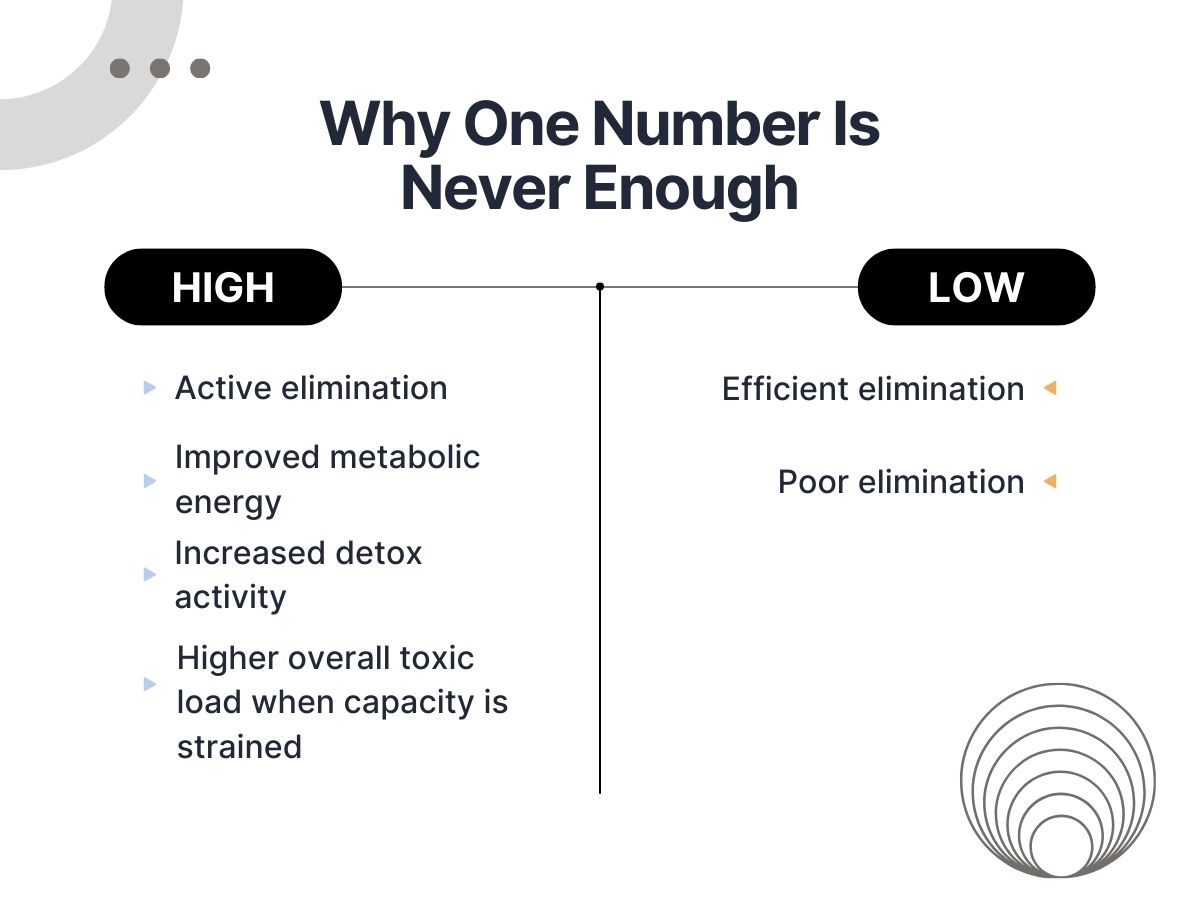
Diagram explaining why one health number is never enough, comparing high and low detox elimination, metabolic energy, and overall toxic load.

In long-term stress or exhaustion, the body sometimes uses short-term strategies to keep functioning. This can include holding onto toxic metals that provide temporary stimulation or support. In this context, toxic metals may reflect adaptation rather than failure — and rushing detox is often less helpful than rebuilding first.

High metals can mean:

  • active elimination
  • improved metabolic energy
  • increased detox activity
  • or higher overall toxic load when capacity is strained

Very low metals can mean:

  • efficient elimination
  • or poor elimination, where metals are being held in tissues

Low metal levels don’t always mean there are no metals. Sometimes the body is holding onto them instead of releasing them. When elimination improves, metal levels can go up on a retest — which often means the body is letting go, not getting worse.

Context determines meaning.

How Toxic Metals Can Affect Health

When retained over time, toxic metals can interfere with multiple biological systems. Their effects are rarely isolated and often develop gradually.

Common areas affected include:

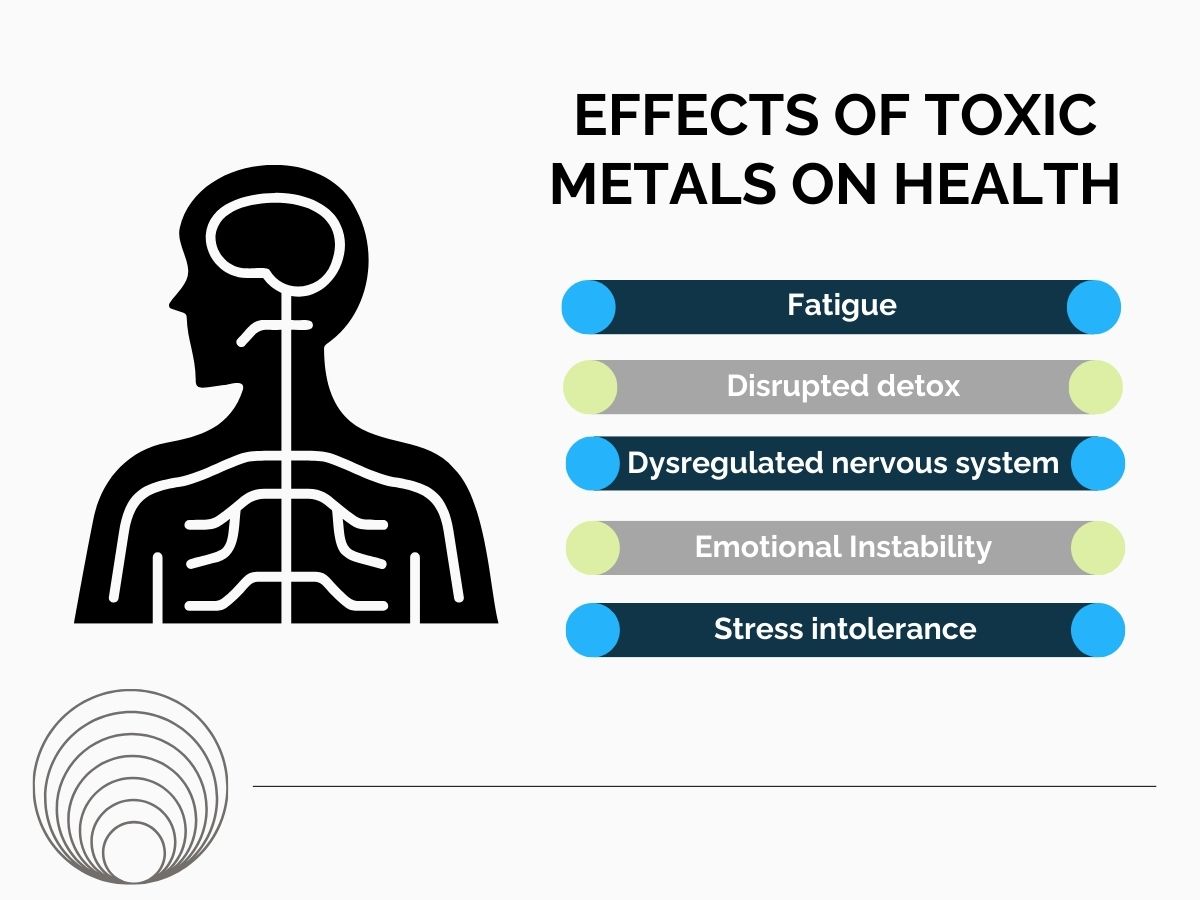
Energy production
Toxic metals can interfere with mitochondrial function and the enzymes the body relies on to produce energy. When this happens, energy production becomes less efficient, and the body may rely more on stress-driven chemistry to function. Over time, this can show up as persistent fatigue, slower recovery, or feeling depleted even with adequate rest.

Mineral balance and nutrient utilisation
Many toxic metals compete with or displace essential minerals such as zinc, magnesium, selenium, and iron. This can disrupt enzyme systems, hormone signalling, and detox pathways — even when dietary intake appears adequate.

Nervous system regulation
Some metals are neuroactive. When retained, they may interfere with neurotransmitter balance and stress regulation, contributing to anxiety, irritability, poor focus, sleep disruption, or heightened sensitivity.

Hormonal and metabolic signalling
By disrupting mineral-dependent enzymes, toxic metals can affect thyroid signalling, adrenal response, blood sugar regulation, and inflammatory balance. These effects often go undetected on standard blood tests.

Emotional and stress resilience
Because minerals and metals influence nervous system signalling, long-term retention may affect emotional stability and stress tolerance. As elimination improves, emotional shifts can sometimes occur alongside physical changes.

Importantly, these effects depend not just on the presence of metals, but on:

  • mineral reserves
  • energy availability
  • nervous system state
  • elimination capacity

This is why two people with similar metal readings can feel very different.

Infographic showing the effects of toxic metals on health, including fatigue, disrupted detoxification, nervous system dysregulation, emotional instability, and stress intolerance.

Why Numbers Alone Don’t Tell the Story

HTMA interpretation always looks at patterns, not isolated values.

This includes:

  • mineral ratios
  • oxidation rate
  • sodium and potassium status
  • calcium and magnesium balance
  • stress and conservation patterns

These factors help determine whether the body is:

  • ready to eliminate
  • temporarily holding
  • overwhelmed
  • or rebuilding capacity

Without this context, metal numbers can easily be misread.

Common Toxic Metals Seen on HTMA

People most commonly ask about the following metals when reviewing an HTMA report:

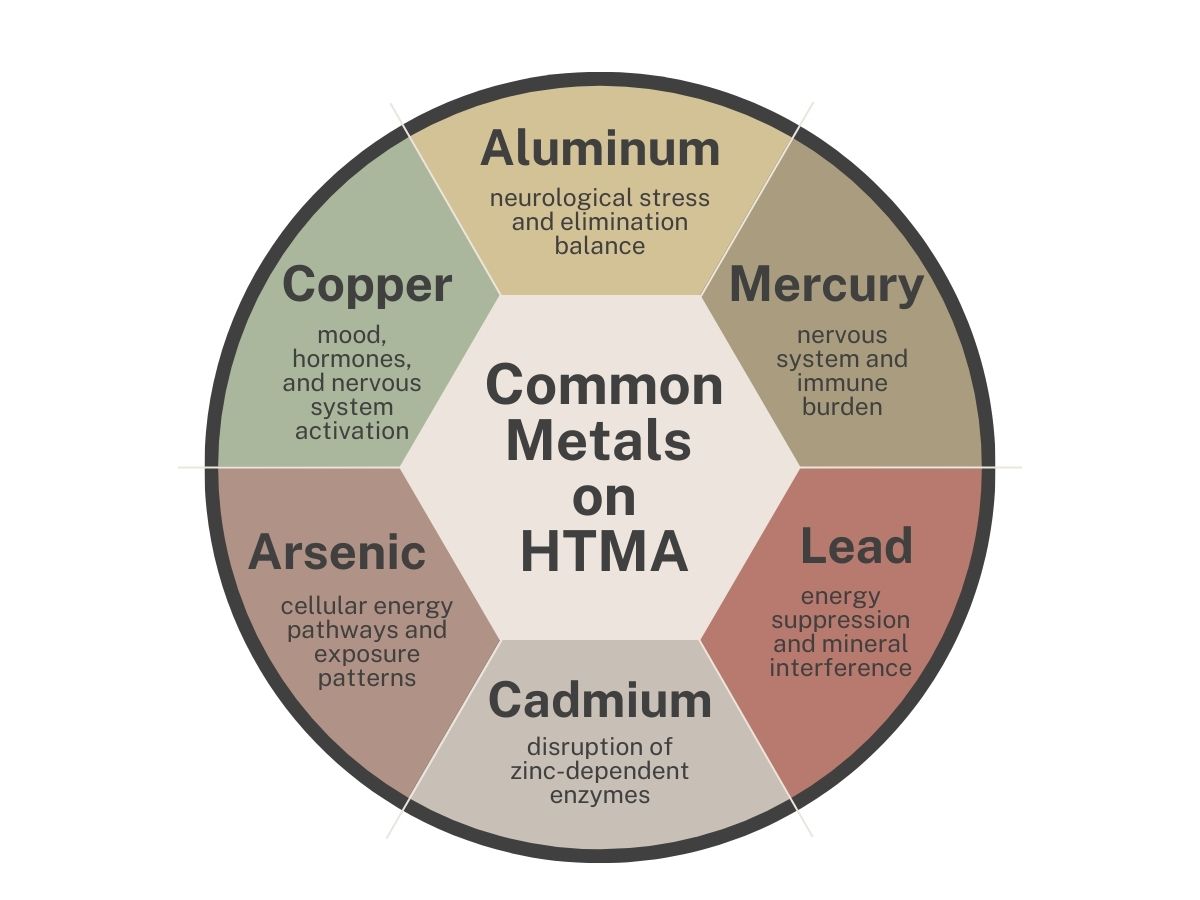
  • Aluminum — often discussed in relation to neurological stress, skin sensitivity, and overall elimination capacity
  • Mercury — commonly associated with nervous system strain, immune burden, and long-term retention patterns
  • Lead — linked with suppressed energy production and interference with essential mineral activity
  • Arsenic — may affect cellular energy pathways and reflect specific exposure or metabolic patterns
  • Cadmium — known to disrupt zinc-dependent enzymes and stress detoxification systems
  • Copper (toxic or dysregulated forms) — can influence mood, hormonal balance, and nervous system activation when not properly regulated

These findings do not stand alone. Their meaning always depends on the broader mineral picture, including energy availability, key mineral ratios, and the body’s current capacity to eliminate rather than retain.

Circular infographic showing common metals on HTMA testing, including aluminum, mercury, lead, cadmium, arsenic, and copper, with their associated biological effects.

When Detox Feels Hard — or Makes Symptoms Worse

If detox has ever made you feel worse rather than better, this usually reflects timing, not failure. In some cases, the body has been using temporary workarounds to keep functioning. When elimination begins, these supports may shift before energy and mineral reserves are fully rebuilt. This can feel like worsening symptoms, but it usually reflects that elimination is moving faster than the body’s current capacity.

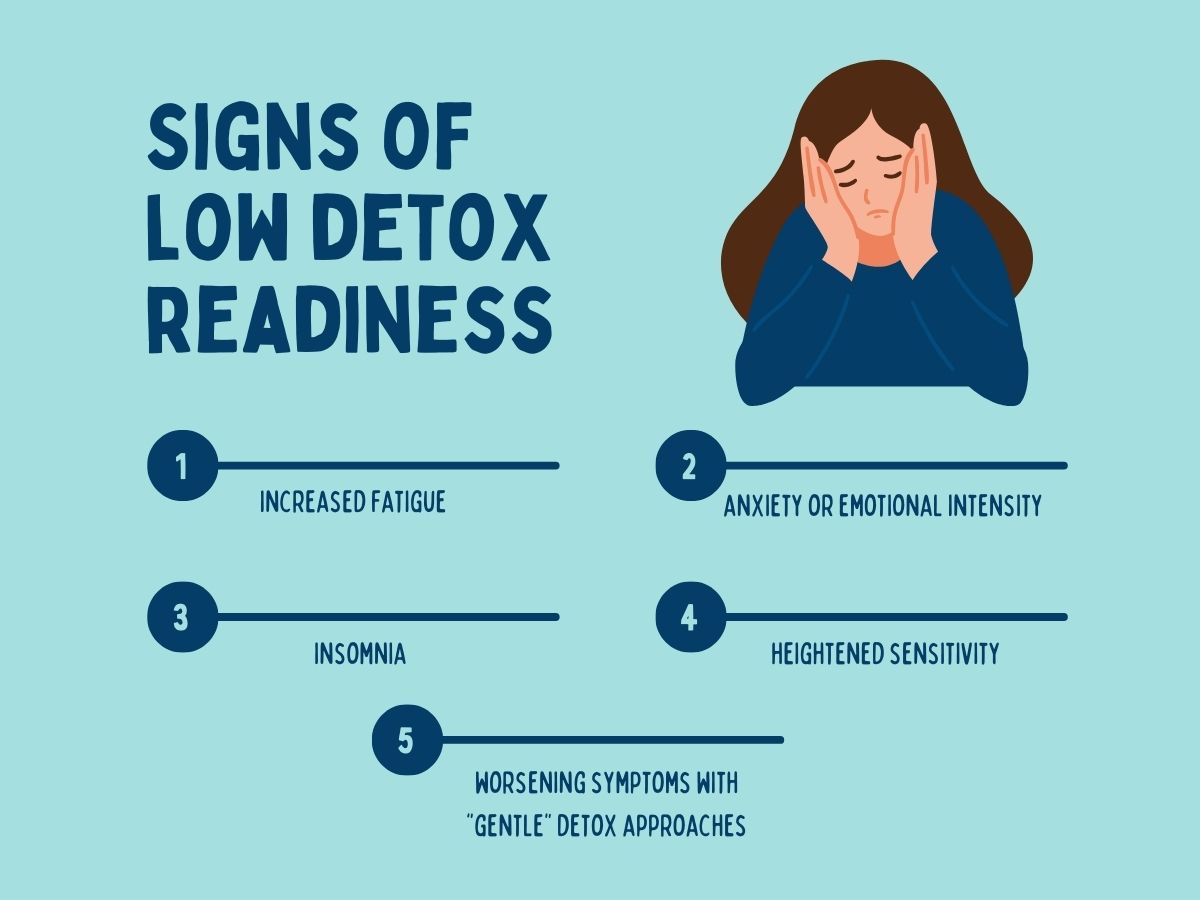
Common signs of low detox readiness include:

  • increased fatigue
  • anxiety or emotional intensity
  • insomnia
  • heightened sensitivity
  • worsening symptoms with “gentle” detox approaches

HTMA helps assess whether the body has the energy, mineral support, and nervous system stability required for detox — or whether rebuilding needs to come first.

Read: Detox Readiness — Why Energy Matters More Than Elimination

Illustration showing signs of low detox readiness, including increased fatigue, anxiety or emotional intensity, insomnia, heightened sensitivity, and worsening symptoms with gentle detox approaches.

For a Deeper Understanding

This page provides orientation and context.

If you want a deeper explanation of:

  • how metals are retained and released
  • poor eliminator and armoring patterns
  • emotional and neurological aspects of detox
  • why metals may rise on a retest

Read:
How HTMA Looks at Toxic Metals
Heavy Metals on HTMA: What Their Presence Really Means


Gentle Takeaway

Seeing toxic metals on an HTMA is not a diagnosis and not a cause for panic.

It is information about:

  • timing
  • capacity
  • adaptation

Sometimes metals reflect exposure.
Often they reflect long-stored release.
Always, they require context.

Healing is not about forcing detox.
It is about restoring enough energy, mineral support, and nervous system safety for the body to let go — quietly, gradually, and in the right order. As mineral reserves, energy availability, and nervous system stability improve, the body no longer needs to rely on compensatory strategies — and release can occur naturally, without force.

Woman sitting peacefully in meditation during a health balancing detox, emphasizing energy restoration and mineral balance for holistic wellness.