

Understanding Detox Readiness, Capacity & Timing
Detox & Heavy Metals
Detoxification is a constant biological process — not something the body switches on and off.
However, how smoothly and safely detox happens depends on energy availability, mineral reserves, and nervous system state.
This section explains how HTMA looks at detox and heavy metals, why timing matters, and where to go next depending on what your body needs first.
If detox has ever made you feel worse instead of better, start here.
Start Here: When Detox Feels Harder Than Healing
This foundational article explains:
- why detox often backfires in exhausted bodies
- why energy and nervous system state matter more than detox methods
- why rebuilding comes before elimination
This page sets the framework for everything else in this section.
Suggested reading:
When Detox Makes You Feel Worse — And What the Body Needs First
How HTMA Looks at Detox & Heavy Metals
Hair Tissue Mineral Analysis (HTMA) does not diagnose toxicity.
It provides insight into tissue-level mineral status, stress patterns, and elimination capacity.
HTMA helps assess:
- whether the body has the mineral reserves needed for detox
- how stress patterns affect elimination
- whether toxic elements are being retained or released
If you want a deeper explanation of how metals appear on a hair test, see:
Suggested reading:
How HTMA Looks at Toxic Metals
Heavy Metals on HTMA: What Their Presence Really Means
These articles explain why detection ≠ danger, and why metals often appear when the body is ready to move them — not when exposure occurred.
Detox Readiness Is More Important Than Detox Methods
Not everyone benefits from detox at the same time.
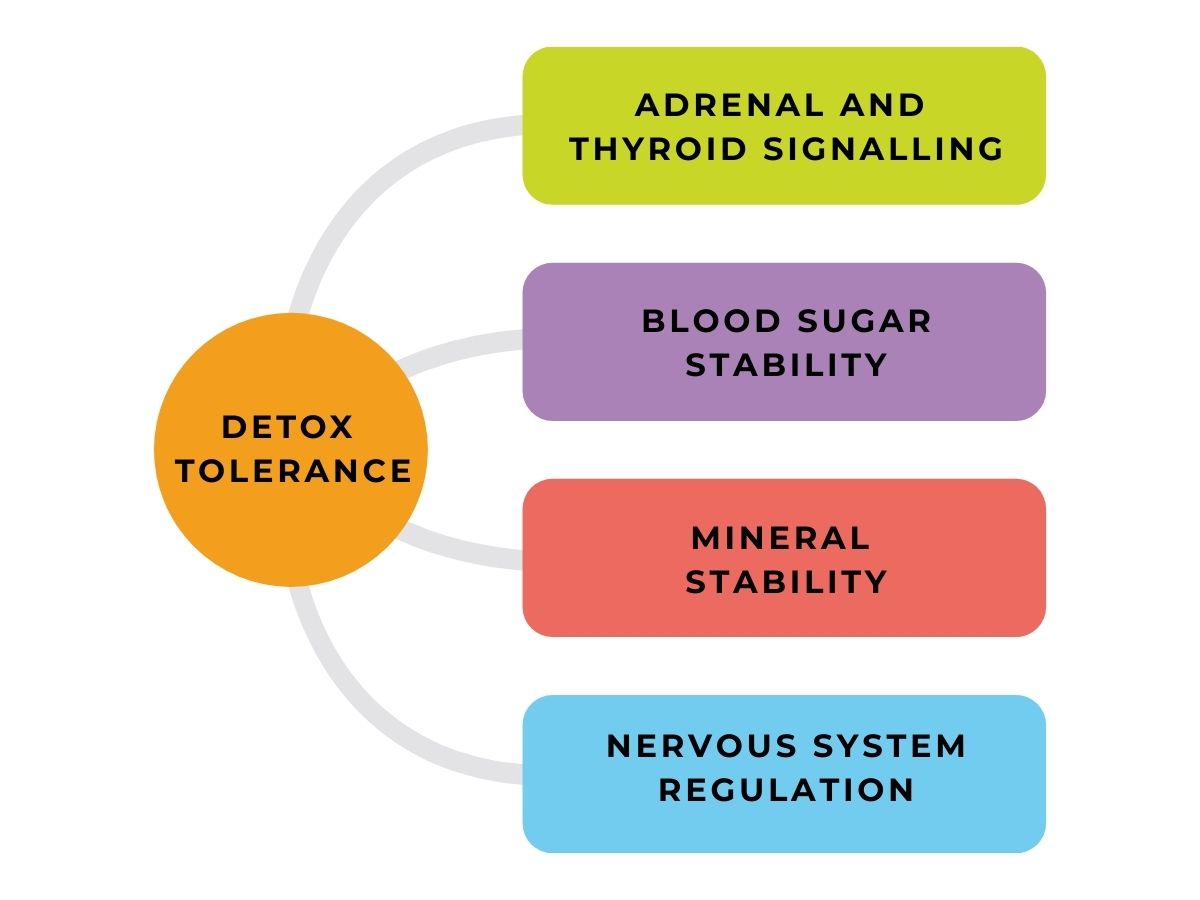
Detox tolerance is strongly influenced by:
- adrenal and thyroid signalling
- blood sugar stability
- mineral availability
- nervous system regulation
This is why some people feel better with gentle detox support, while others feel significantly worse.
To explore readiness more deeply, start with:
When Detox Makes You Feel Worse — And What the Body Needs First
When Detox Feels Especially Difficult
Certain mineral patterns are commonly associated with poor detox tolerance, stronger reactions, or stalled elimination.
This doesn’t mean something is “wrong.”
It often reflects what the body is prioritising first — stability, energy conservation, and nervous system regulation.
Patterns often linked to this state include:
- Three or Four Lows pattern
- Low sodium & potassium
- Unbalanced sodium-to-potassium ratio
- Very slow oxidation rate
- Impaired elimination patterns
When these patterns are present, the body may focus on rebuilding and regulation before active detox can proceed comfortably.
Understanding Common Toxic Metals
If specific metals appeared on your HTMA and you’re unsure what they mean, these pages provide context without fear-based interpretation:
- Copper on HTMA: Dysregulation vs Toxicity
- Lead on HTMA: What It Often Reflects
- Mercury on HTMA: Timing, Not Just Exposure
- Aluminum on HTMA: Stress, Absorption & Elimination
These articles focus on patterns and readiness, not aggressive removal.
The Takeaway
Detox is not something to push.
When the body has:
- sufficient energy
- adequate minerals
- calm nervous system signalling
Detox happens quietly and safely, without forcing.
Understanding timing changes everything.

Not Sure Where to Start?
The Start Here page walks through:
- what HTMA shows
- how to recognise detox readiness vs depletion
- why timing matters — and why detox isn’t always the first step
Continue here:
Start Here: Discover How HTMA Can Help You Heal from the Inside Out